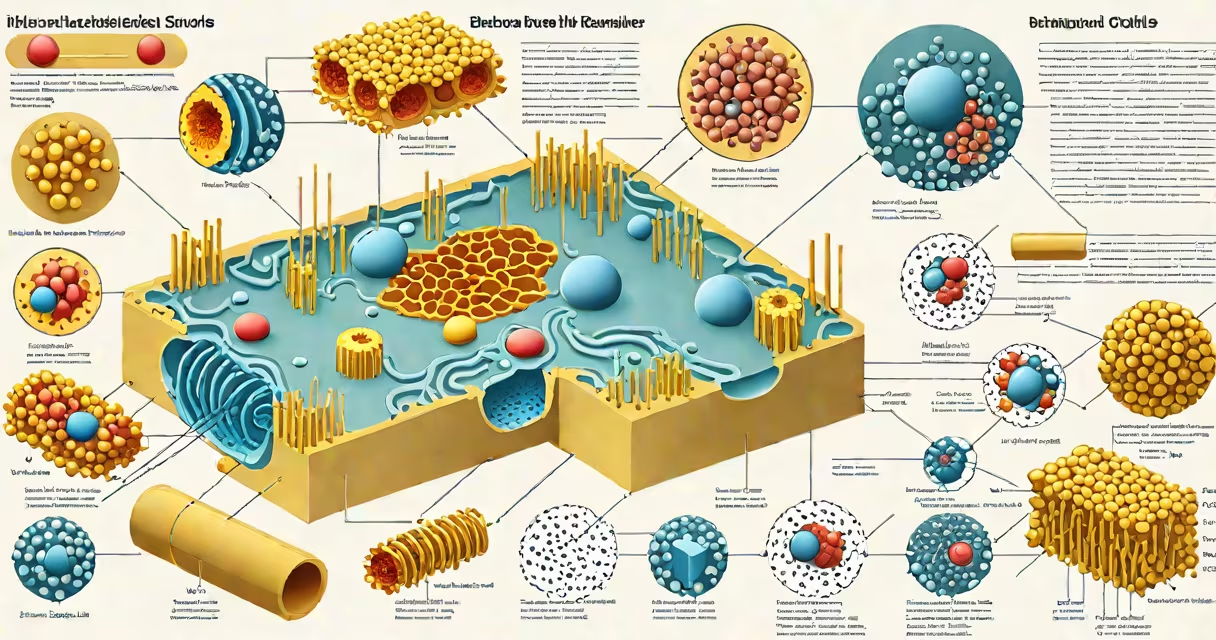
All bacterial cells share five essential structural components: the cell membrane, cytoplasm, ribosomes, DNA, and cell wall. These elements form the foundation of prokaryotic life, enabling basic metabolic functions, genetic control, and environmental resilience.
Bacteria are single-celled organisms classified as prokaryotes. Unlike eukaryotic cells, they lack a nucleus and membrane-bound organelles. Yet their minimal architecture supports complex behaviors such as rapid growth, nutrient uptake, and adaptation. The five core components listed are present in every known bacterial species, regardless of environment or morphology.
The cell membrane forms the boundary between the cell's interior and external surroundings. Composed of a phospholipid bilayer with embedded proteins, it regulates ion flow, nutrient transport, and waste expulsion. This selective barrier maintains homeostasis under varying osmotic conditions. For example, *Escherichia coli* uses transmembrane proteins like LamB to import maltose from its environment.
Cytoplasm is the gel-like matrix filling the cell interior. It contains ions, metabolites, enzymes, and dissolved proteins. This medium enables biochemical reactions such as glycolysis and protein folding. In *Bacillus subtilis*, cytoplasmic pH is tightly regulated via proton pumps to sustain ATP synthesis even under acidic stress.
Ribosomes are molecular machines responsible for translating mRNA into polypeptide chains. Bacterial ribosomes are 70S complexes made of 50S and 30S subunits. They bind to Shine-Dalgarno sequences upstream of start codons to initiate translation. A single *E. coli* cell may host over 10,000 ribosomes during exponential growth, supporting protein synthesis rates exceeding 20 amino acids per second.
DNA is stored in a single circular chromosome located in the nucleoid region. Unlike eukaryotes, no nuclear envelope separates DNA from the cytoplasm. The chromosome averages 4.6 million base pairs in *E. coli*, encoding approximately 4,300 genes. Replication initiates at a single origin (*oriC*) and proceeds bidirectionally, completing in about 40 minutes under optimal conditions.
The cell wall provides mechanical strength and shape maintenance. Composed primarily of peptidoglycan, it resists osmotic lysis. Gram-negative bacteria have a thin peptidoglycan layer surrounded by an outer membrane containing lipopolysaccharides. Gram-positive bacteria possess a thick peptidoglycan layer but lack an outer membrane. This structural difference determines antibiotic susceptibility: penicillin disrupts transpeptidase activity in peptidoglycan cross-linking.
| Component | Function | Example in Action |
|---|---|---|
| Cell membrane | Regulates transport and energy production | *E. coli* imports glucose via the phosphotransferase system |
| Cytoplasm | Site of metabolic reactions and protein synthesis | ATP synthase generates ATP in the membrane while substrates diffuse through cytoplasm |
| Ribosomes | Translate mRNA into proteins | Translation of beta-lactamase enzyme begins within 10 seconds of transcription initiation |
| DNA | Stores genetic information and directs replication | Replication forks move at ~1,000 bp/second in *Thermus aquaticus* |
| Cell wall | Prevents bursting due to osmotic pressure | Penicillin inhibits transpeptidase, causing cell lysis in *Streptococcus pneumoniae* |
Flagella and pili are common but not universal. Some bacteria lack flagella entirely and rely on passive diffusion. Others use flagella for motility, but not all species possess them. For example, *Mycobacterium tuberculosis* lacks flagella and moves slowly through tissues via surface adhesins. This variation underscores that while flagella improve survival in certain niches, they are not required for bacterial viability.
A key misconception is that all bacterial cells have a capsule. Capsules are protective polysaccharide layers found in some pathogenic strains like *Klebsiella pneumoniae*. However, many non-pathogenic species, including *Lactobacillus acidophilus*, do not produce capsules. The absence of a capsule does not impair cellular function, confirming that it is not a core component.
During a lab experiment, I cultured *Salmonella enterica* on agar plates and observed live cells using phase-contrast microscopy. After staining with fluorescent dyes targeting DNA (DAPI), ribosomes (anti-ribosomal antibody), and the cell wall (fluorescent vancomycin), I confirmed the presence of all five components in every cell. No cell lacked one of these features, even under nutrient-deprived conditions.
Understanding these components is critical for developing antibiotics and antimicrobial strategies. Targeting the cell wall with beta-lactams or disrupting ribosome function with macrolides exploits differences between bacterial and human cells. The specificity of these drugs arises from structural distinctions in the five core components.
These five components-cell membrane, cytoplasm, ribosomes, DNA, and cell wall-are fundamental to bacterial existence. They enable life processes essential for survival across diverse environments, from soil to human gut microbiomes. Their consistent presence defines the bacterial domain and informs medical, ecological, and biotechnological applications.