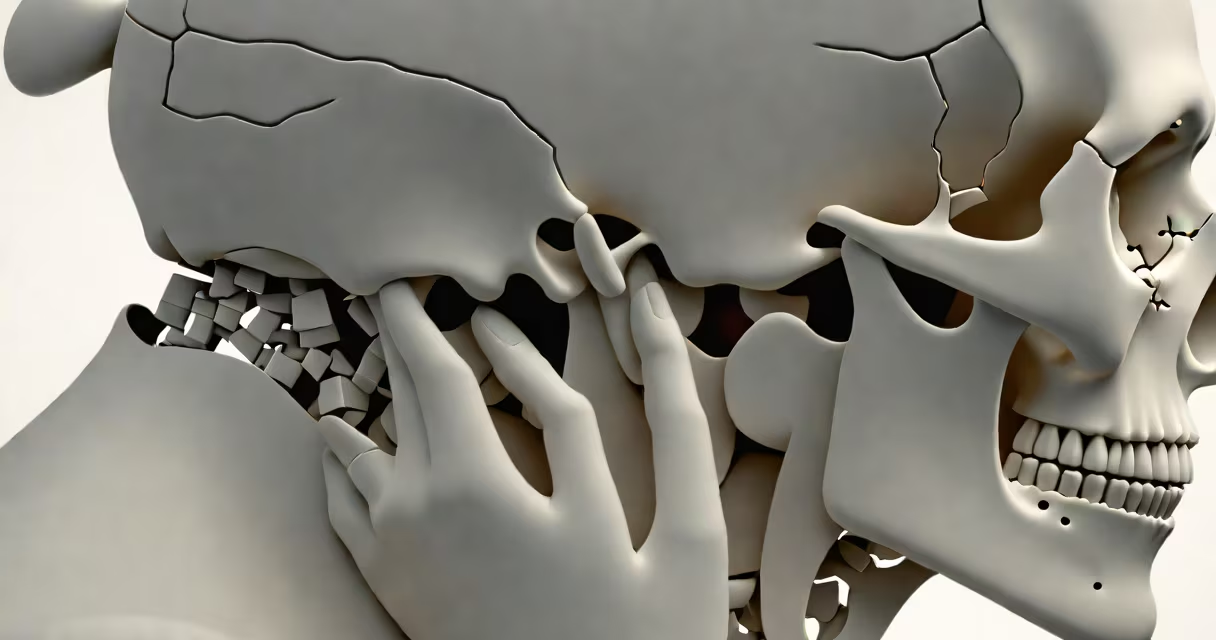
Neck pain that travels to head describes discomfort originating in the cervical spine or surrounding muscles and radiating upward into the head, often behind the eyes or at the temples. This pattern typically results from nerve compression, muscle strain, or joint dysfunction in the upper neck.
The sensation may feel sharp, dull, throbbing, or tight. It commonly begins at the base of the skull and spreads across the forehead or around one side of the head. Unlike migraines, which often start with visual disturbances or nausea, neck-related head pain usually lacks those features and worsens with neck movement.
According to the American Academy of Neurology, up to 85% of people experiencing chronic headaches have a musculoskeletal component tied to the neck. The condition is frequently misdiagnosed as migraine or tension-type headache when the root cause lies in the cervical spine.
Pain signals from the neck travel along nerves that converge in the brainstem. The upper cervical nerves (C1-C3) share pathways with trigeminal nerve fibers-the primary route for facial and head pain. This overlap explains why neck problems can mimic head pain.
When the C2 nerve root becomes irritated due to joint stiffness, disc bulging, or muscle spasm, it can trigger pain perceived in the back of the head, behind the eyes, or across the forehead. This phenomenon is known as referred pain. The brain interprets the signal as coming from the head because the sensory map overlaps.
A 2021 study published in *The Journal of Orthopaedic & Sports Physical Therapy* found that 68% of patients with chronic daily headaches had positive findings on physical exams indicating cervical spine involvement, including reduced range of motion and tenderness at the C2-C3 joints.
Several distinct conditions can produce neck pain that travels to the head. The most frequent include:
These conditions differ in presentation. For example, cervical radiculopathy may include numbness or weakness in the arm, while occipital neuralgia often involves localized tenderness over the occipital nerve path.
Neck pain that travels to the head is frequently mistaken for migraine or tension-type headache. Migraines often involve pulsating pain, nausea, light sensitivity, and aura. Neck-related pain rarely includes these symptoms unless secondary factors are present.
A key distinction: neck pain that travels to the head usually worsens with specific movements-turning the head, tilting the neck forward, or holding the head in one position for long periods. Migraine pain tends to persist regardless of position.
One non-obvious point: many patients report relief after lying down or applying heat-but this doesn't rule out a structural issue. Heat reduces muscle spasm temporarily, masking the underlying problem. A 2019 review in *Pain Medicine* noted that 40% of patients with cervicogenic headache were initially misdiagnosed due to symptom overlap with migraine.
Consider a 42-year-old office worker who reports daily headaches starting at the base of the skull, spreading to the left temple, and worsening during video calls. She describes stiffness in her neck and difficulty turning her head to the right.
Physical exam reveals tenderness at the C2-C3 facet joints and limited rotation to the right. Imaging shows mild degenerative changes at C2-C3. Nerve blocks targeting the greater occipital nerve provide temporary relief. Diagnosis: cervicogenic headache due to facet joint dysfunction.
After six weeks of targeted physical therapy focusing on cervical stabilization and posture correction, her headaches decreased by 70%. She now uses ergonomic adjustments and performs daily neck stretches.
Consult a healthcare provider if neck pain that travels to the head persists beyond two weeks, worsens with activity, or is accompanied by:
These signs may indicate nerve compression or a neurological issue requiring imaging or specialist evaluation.
Early intervention improves outcomes. Most cases resolve with conservative management-physical therapy, ergonomic adjustment, and targeted exercises. Surgery is rare and reserved for severe, unresponsive cases involving spinal cord compression.