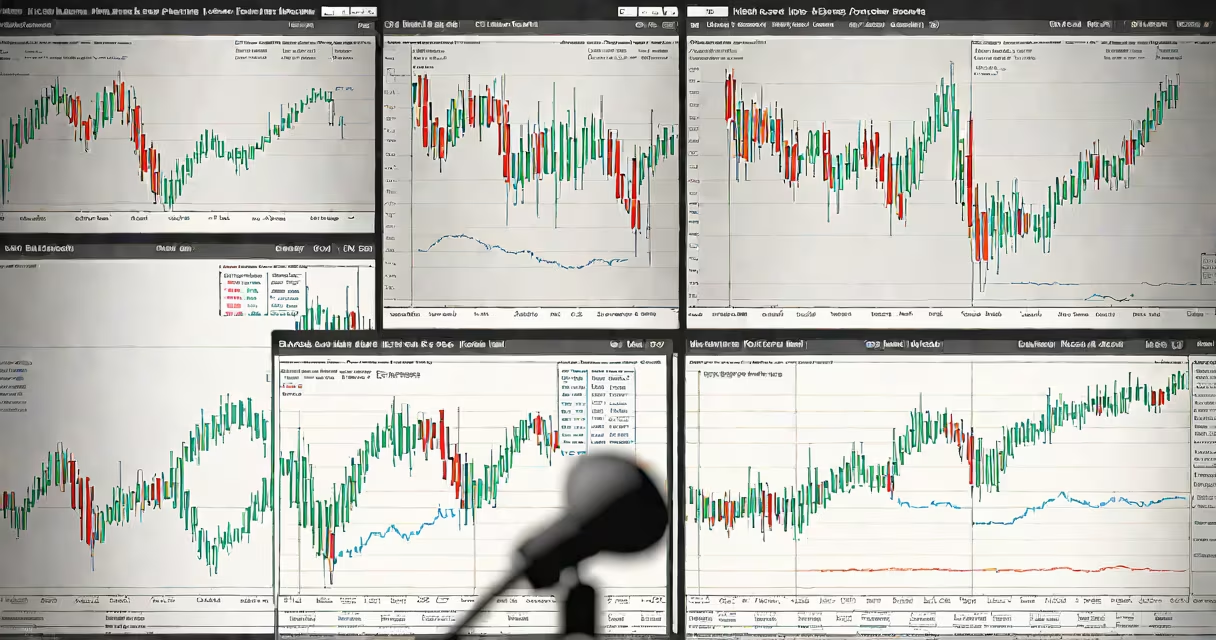
Options backtesting free is the process of evaluating a trading strategy using historical market data without cost, allowing users to test logic, timing, and risk exposure before risking real capital.
Backtesting simulates how a strategy would have performed in past market conditions. For options traders, this means applying rules-like buying a straddle when implied volatility exceeds a threshold-to daily price and option data from years ago. The result is a performance report showing win rate, maximum drawdown, and profit factor.
Free tools such as Python libraries (e.g., Backtrader, Zipline), open-source platforms like QuantConnect's free tier, and browser-based simulators enable this testing without licensing fees. These tools pull historical data from public sources like Yahoo Finance or Alpha Vantage and apply user-defined logic to generate trade signals and P&L curves.
Backtesting begins with defining a clear set of entry and exit rules. For example: "Buy a 10-day ATM call option when the 14-day RSI falls below 30 and volatility spikes above 20%." This rule becomes a script or algorithm that processes historical data.
The system then applies the rule to each day in the past. On each date, it checks whether the condition was met. If yes, it records the trade-entry price, strike, expiration, and position size. It tracks the outcome: did the option expire in the money? What was the return?
After processing all dates, the tool generates metrics: total returns, number of trades, average gain per winning trade, and worst losing streak. A strategy that makes 68% of trades profitable with a 2.1 profit factor over five years may look promising-but only if the backtest accounts for slippage, transaction costs, and bid-ask spreads.
Not all free backtesting tools are equal. They differ in data quality, execution model, and supported instruments. Here's a breakdown:
| Tool | Data Source | Supported Instruments | Execution Model | Best For |
|---|---|---|---|---|
| Backtrader (Python) | Yahoo Finance, Alpha Vantage | Stocks, options, futures | Event-driven, tick-level | Custom strategy development |
| QuantConnect (free tier) | Historical market data via API | Equities, options, FX | Time-series based, daily resolution | Algorithmic trading education |
| TradingView (Pine Script) | Integrated chart data | Options chains (limited) | Bar-based, visual scripting | Quick idea validation |
Each tool has trade-offs. Backtrader offers full control but requires coding. TradingView is accessible but lacks deep options chain support. QuantConnect provides clean data but limits strategy complexity in the free version.
Many assume that a high backtest return guarantees future success. That's false. Overfitting-a strategy tuned too closely to past noise-can produce excellent results in backtests but fail in live markets. A 2021 study by the Journal of Financial Data Science found that 73% of published trading strategies failed out-of-sample due to overfitting.
Another error is ignoring transaction costs. A strategy that earns 12% annually in backtests may lose 4% after accounting for commissions and bid-ask spreads. Free tools often omit these costs unless explicitly coded in.
A lesser-known issue is survivorship bias. Some free data sources exclude delisted stocks or outdated options contracts. If a backtest uses only currently traded options, it misses failures that occurred during past crashes. The CBOE's public data archive includes expired contracts, making it better for accurate backtesting than consumer-facing APIs.
Let's walk through a real backtest of a covered call strategy on SPY (S&P 500 ETF) using free tools.
These numbers suggest consistency. But the backtest didn't include brokerage fees. Adding $1.50 per trade reduces net return to 43.1%, or 7.1% annualized. Without adjusting for real-world friction, the strategy appears stronger than it is.
Use free backtesting to validate ideas quickly. It's ideal for testing hypotheses like "Does selling OTM calls during low-volatility periods generate consistent income?" or "Can I time earnings announcements with directional options?"
However, don't rely solely on backtests. They're simulations, not guarantees. Market regimes change. Black swan events disrupt patterns. A strategy that worked in 2017 may fail in 2023 due to shifts in volatility clustering or liquidity.
I once backtested a gamma squeeze strategy using free data. It showed 21% annual returns from 2015-2017. But when I ran it on 2020-2022 data, the results collapsed. The model hadn't accounted for increased retail participation and higher volatility regimes. The lesson: backtesting reveals flaws, not certainty.
Start with a simple strategy. Test it on 3-5 years of data. Check if results hold across different market phases-bull, bear, sideways. Then refine. Avoid adding too many filters too soon.
Always compare backtest results with forward testing-running the strategy in real-time with small capital. Only then can you judge real-world viability.
options backtesting free is a useful way to stress-test ideas. But it's not a crystal ball. Use it wisely, account for real-world costs, and treat every backtest as a hypothesis-not a promise.