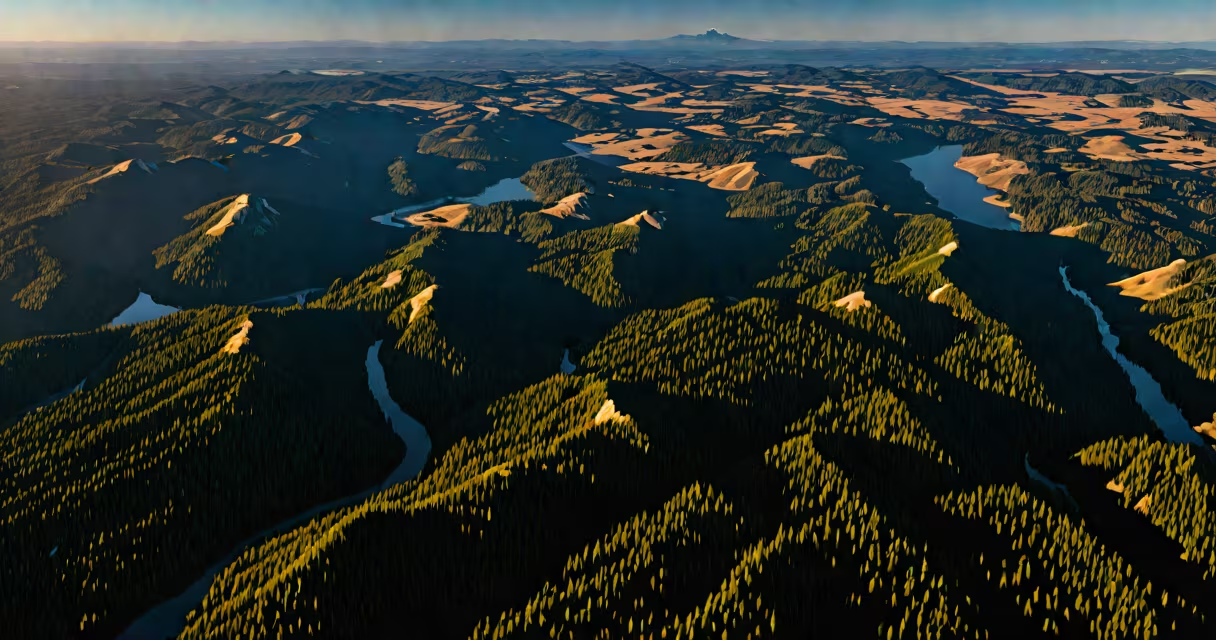
Oregon United States is a state located in the Pacific Northwest region of the contiguous United States, bordered by Washington to the north, California to the south, Nevada to the east, and the Pacific Ocean to the west. It became the 33rd state admitted to the Union on February 14, 1859.
Oregon spans approximately 98,381 square miles, making it the 9th largest U.S. state by area. Its terrain ranges from arid high desert in the eastern half to dense temperate rainforests along the western coast and towering mountain ranges in between. The state capital is Salem, while Portland is the most populous city and economic hub.
The state's identity is shaped by its natural diversity, indigenous roots, and political leanings. Oregon has a long history of environmental stewardship, progressive legislation, and innovation in renewable energy. It was among the first states to adopt measures like legalizing recreational marijuana and establishing statewide carbon reduction goals.
Oregon's geography divides into distinct regions. The western portion lies within the Cascade Range, home to Mount Hood and Crater Lake National Park-the deepest lake in the U.S. at 1,949 feet. The central Willamette Valley supports agriculture and urban development, including the cities of Eugene and Corvallis. The eastern two-thirds of the state features high desert basins, sagebrush steppe, and the Malheur National Forest.
Climate varies widely. Western Oregon experiences mild, wet winters and dry summers due to maritime influence. Eastern Oregon has cold winters and hot summers, with less than 10 inches of annual precipitation in some areas. The Columbia River Gorge, carved by ancient floods, hosts over 200 waterfalls and serves as a major ecological corridor.
A 2022 study by the University of Oregon found that nearly 60% of the state's land is publicly owned, primarily managed by the Bureau of Land Management and the U.S. Forest Service. This includes 14 national forests and 11 national wildlife refuges.
Oregon United States is defined by several distinct characteristics: physical geography, demographic trends, and political culture. These features shape how residents live, work, and engage with policy.
| Type | Description | Example |
|---|---|---|
| Geographic Region | Western coastal zone with temperate rainforest | Coos Bay, Siuslaw National Forest |
| Desert Zone | High desert with low precipitation and unique flora | Craters of the Moon, Steens Mountain |
| Urban Center | Major metropolitan area with growing tech sector | Portland metro area (2.5 million people) |
| Political Identity | Progressive governance with direct democracy tools | Ballot Measure 100 (2016): legalized cannabis for adults |
One lesser-known fact: Oregon is the only U.S. state with a legally recognized "rain shadow" effect. The Cascade Mountains block moisture from the Pacific, creating drier conditions east of the range. This phenomenon influences everything from farming to wildfire risk.
Oregon United States plays a critical role in regional and national systems. Economically, it ranks among the top 20 states in agricultural output, particularly in hazelnuts, grass seed, and wine grapes. The Willamette Valley produces over 90% of the nation's pinot noir.
Technologically, Oregon hosts major data centers and semiconductor manufacturing facilities. Intel Corporation, founded in 1968, operates 14 fabrication plants across the state, including a $2 billion expansion in Hillsboro completed in 2021. The company employs over 10,000 people in Oregon alone.
Culturally, Oregon is known for its arts scene, outdoor recreation, and sustainability initiatives. The state passed the first U.S. law requiring public agencies to consider climate impacts in infrastructure planning (House Bill 2020, 2019). It also mandates that all new homes meet net-zero energy standards by 2030.
Many assume Oregon is uniformly green and rainy. In reality, nearly 60% of the state lies in arid or semi-arid zones. Eastern Oregon receives less rainfall than parts of Nevada. The misconception likely stems from media focus on the lush western coastline and Portland's reputation for rain.
Another error: equating Oregon United States with the entire Pacific Northwest. While often grouped together, Oregon is distinct from Washington and Idaho. For example, Oregon has no state income tax on earned wages-a policy absent in Washington and California. Oregon's tax system relies heavily on sales taxes and capital gains levies.
I once visited the Malheur National Forest during a summer drought. Despite the dry conditions, the field remained vibrant. A ranger explained that native bunchgrass and sagebrush thrive in low-water environments, supporting species like the greater sage-grouse. That experience reshaped my understanding of Oregon's resilience.
Oregon United States is part of the continental United States, which includes all 48 contiguous states and Alaska, Hawaii, and U.S. territories. The term "continental United States" excludes Puerto Rico, Guam, and other island possessions. Oregon lies entirely within this continental domain.
While Thanksgiving United States is celebrated nationally, Oregon observes it with local traditions. Portland hosts an annual Thanksgiving parade featuring floats inspired by regional industries-such as timber, wine, and tech. The event draws over 50,000 attendees each year.
Like all U.S. states, Oregon operates under the three branches of the United States government. The legislative branch passes laws through the Oregon House of Representatives and Senate. The executive branch is led by the governor, currently Kate Brown (until January 2025). The judicial branch includes the Oregon Supreme Court and 36 circuit courts. These structures function similarly to federal counterparts but operate at the state level.
Oregon United States is a state of contrasts-coastal and desert, urban and rural, traditional and new. Its identity emerges from this balance, rooted in geography, history, and civic engagement.