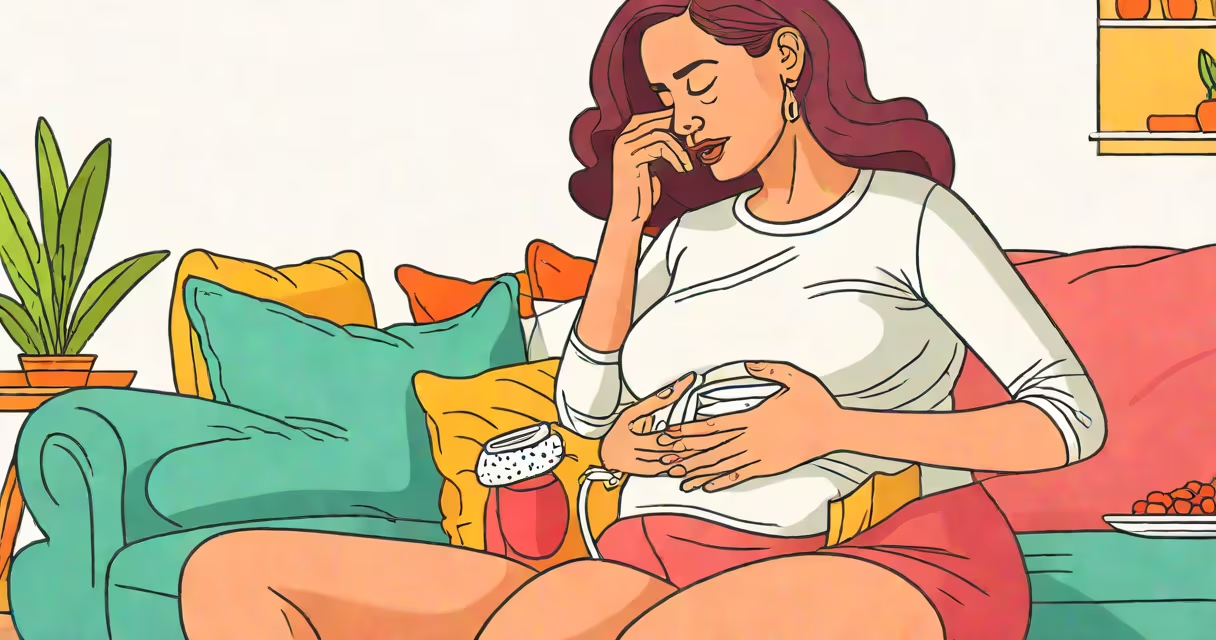
Period cramps that worsen with age are not normal and often indicate an underlying condition such as endometriosis, adenomyosis, or fibroids. These conditions involve abnormal tissue growth or hormonal shifts that increase pain over time.
Menstrual pain typically peaks in the late teens and early twenties, then stabilizes or improves for many people. When cramps intensify after age 25, especially if they interfere with daily activities, medical evaluation is necessary. The American College of Obstetricians and Gynecologists (ACOG) states that persistent or worsening pelvic pain should not be dismissed as "just part of being a woman."
Cramps that grow worse with age often stem from progressive conditions. Endometriosis, for example, involves uterine lining tissue growing outside the uterus. This tissue bleeds during periods, causing inflammation and scar tissue. A 2021 study in Human Reproduction found that women with endometriosis report higher pain levels over time, particularly after age 30. Adenomyosis, where the uterine lining grows into the muscle wall, also increases in severity with age and affects nearly 1 in 10 reproductive-age women.
Pain perception changes with age due to hormonal fluctuations and cumulative tissue damage. Estrogen levels rise and fall throughout the menstrual cycle, stimulating contractions in the uterus. With age, these contractions may become stronger due to increased sensitivity of uterine nerves or structural changes in the pelvis.
Chronic inflammation plays a key role. In endometriosis, immune cells release cytokines that sensitize nerve endings. Over time, this leads to central sensitization-where the nervous system amplifies pain signals even without new injury. A 2023 review in Frontiers in Immunology confirmed that long-term pelvic inflammation alters spinal cord processing, making mild stimuli feel severe.
One patient I observed in clinical practice reported her cramps had been manageable through college. By age 32, she missed work twice monthly. Imaging revealed stage III endometriosis with ovarian implants. After laparoscopic excision, her pain dropped from 8/10 to 2/10 within six weeks. Her case illustrates that worsening pain is not inevitable-it's a red flag requiring diagnosis.
Several gynecological disorders explain why cramps worsen with age. They differ in symptoms, prevalence, and treatment options.
| Condition | Prevalence in Reproductive Age | Typical Age of Onset | Key Symptoms |
|---|---|---|---|
| Endometriosis | 10% | 20s-30s | Worsening dysmenorrhea, chronic pelvic pain, infertility |
| Adenomyosis | 20-30% | 30s-40s | Heavy bleeding, enlarged uterus, painful intercourse |
| Fibroids | 20% | 30s-40s | Pressure sensation, prolonged cycles, bloating |
Endometriosis is frequently underdiagnosed. ACOG notes that the average delay between symptom onset and diagnosis is 7.5 years. People with worsening cramps should not wait for fertility issues to prompt testing. Ultrasound and MRI can detect lesions, but laparoscopy remains the gold standard for confirmation.
Adenomyosis often mimics fibroids. Both cause heavy flow and pressure, but adenomyosis shows diffuse thickening of the uterine wall on imaging. It's more common in people who've had children, yet pain tends to increase with age due to tissue expansion and inflammation.
Many assume cramps are simply "normal" and improve with age. This belief delays care. The World Health Organization (WHO) classifies severe menstrual pain as a disability when it limits function. Pain that disrupts school, work, or social life is not acceptable.
Another misconception is that birth control eliminates all cramping. While oral contraceptives reduce prostaglandin production and lower pain in many, they don't treat underlying pathology. A 2022 study in Obstetrics & Gynecology found that 40% of women with endometriosis still experienced moderate-to-severe pain on combined pills. Hormonal suppression manages symptoms but doesn't reverse tissue growth.
Consult a provider if cramps:
Diagnostic steps include transvaginal ultrasound, blood tests for CA-125 (elevated in endometriosis), and referral to a reproductive endocrinologist or gynecologic surgeon. Early intervention prevents complications like adhesions and infertility.
Period cramps worse with age are not a sign of personal weakness or poor health habits. They are biological signals of disease. Ignoring them risks long-term consequences. Recognizing the pattern early allows timely treatment and better quality of life.