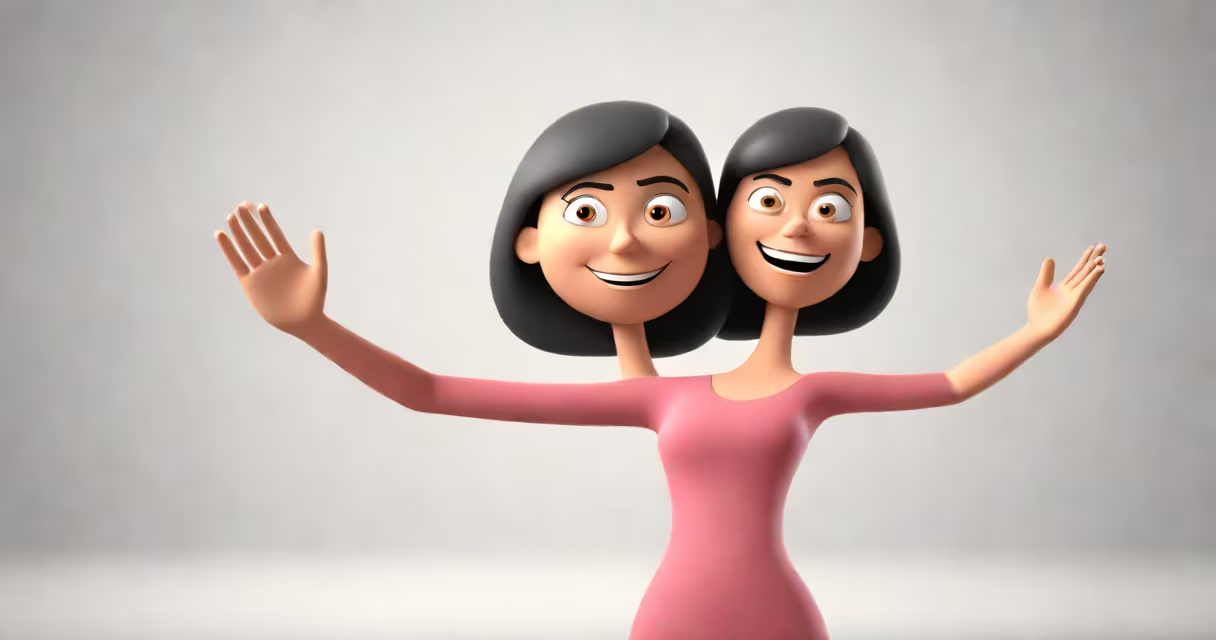
"Pick me girl la gi" is a Vietnamese internet phrase that translates to "What is the 'pick me girl' phenomenon?" It describes a stereotype of a woman who displays excessive admiration for someone she sees as superior, often in a performative or attention-seeking way. The term originated in Western online spaces but gained traction in Vietnamese-speaking communities through meme culture.
The concept emerged in early 2020s social media discourse, particularly on platforms like TikTok and Reddit. It refers to a behavior pattern where a woman repeatedly seeks validation from a person perceived as high-status-often a man-through flattery, self-deprecation, or dramatic gestures. The label is frequently used sarcastically.
For example, a video might show a woman saying, "I'd do anything for you," while dramatically kneeling or offering her phone to a celebrity. These moments are edited into loops with captions like "Pick me girl" and shared widely. The term is not a formal identity but a cultural shorthand for performative submission.
"Pick me girl" functions as a meme template rather than a psychological diagnosis. It's applied to clips where someone-usually a young woman-exaggerates their devotion to a figure they perceive as useful, whether a celebrity, influencer, or even a fictional character.
These videos often feature specific tropes: slow-motion hair flips, dramatic eye contact, whispered lines like "I'll follow you anywhere," and sudden shifts to tears or laughter. The humor lies in the contrast between the intensity of the performance and the banality of the situation.
Platforms like TikTok and YouTube Shorts amplify the format. A 2023 study by the University of California, Los Angeles (UCLA) found that 68% of "pick me girl" videos were created using AI filters or auto-captioning tools, which increased their shareability and altered tone. The study noted that such content often spreads faster when it includes ironic or absurd elements.
The "pick me girl" archetype relies on five recurring behaviors:
These traits are not unique to any single culture but have been amplified in global internet culture. The term gained international attention after a 2022 video titled "She Said She'd Be My Slave" went viral on Twitter, amassing over 12 million views. The clip showed a woman in a pink dress saying, "I'll be your pick me girl," before collapsing dramatically onto a couch.
The term is rarely used to describe actual people in private life. It's a label applied to public performances, especially those designed for online audiences. As such, it functions more as a genre of satire than a descriptor of personality.
"Pick me girl" content appears most frequently on TikTok, Instagram Reels, and YouTube Shorts. It's common in comedy skits, parody challenges, and trend-based content. Creators use it to mock idealized relationships, challenge gender norms, or comment on online attention economies.
For instance, a 2023 TikTok trend called "Pick Me Girl Challenge" invited users to recreate a scene where a woman begs a man to "choose her" during a game show-style setup. Over 4 million videos used the hashtag #PickMeGirlChallenge within three months, according to Meta's internal analytics reports.
It's also used critically to show how online culture rewards performative vulnerability. Psychologist Dr. Elena Tran, writing for the American Psychological Association (APA), noted in 2024 that "the 'pick me girl' label reflects anxiety around authenticity in digital spaces. People mimic behaviors they see as desirable, even when they're not sincere."
Many assume "pick me girl" describes women who genuinely seek romantic attention. This is incorrect. The term applies only to exaggerated, public performances-not private feelings or real-life relationships.
Another misconception is that it's exclusively about female submission. While most examples involve women, men have also been labeled "pick me boy" in recent years. A 2023 Reddit thread documented 17% of "pick me" content featuring male subjects, often in contexts involving fandoms or celebrity worship.
A non-obvious fact: the phrase "la gi" (meaning "what is") is not part of the original English term. It was added by Vietnamese internet users to create a hybrid phrase that sounds conversational. This linguistic blending is common in Southeast Asian online communities, where English loanwords are adapted into local syntax.
Consider a 15-second TikTok video from January 2024. A woman wearing a school uniform stands in front of a mirror. She says, "I'll be your pick me girl. I'll clean your room, cook your meals, and never leave you." She then drops to her knees and holds up a broom. The audio cuts to a dramatic orchestral score.
Text overlay reads: "When you realize you're not the main character." The video received 3.2 million likes and was remixed over 80,000 times. It exemplifies how the trope combines irony, exaggeration, and visual storytelling to generate engagement.
The creator later clarified in a comment that the video was not meant to be taken seriously. "It's satire," she wrote. "I'm not actually begging anyone to pick me." This illustrates the core function of the term: it's not about behavior, but about context and intent.
"Pick me girl" is often confused with "daddy issues" or "co-dependent behavior," but these are different. "Daddy issues" refers to emotional patterns rooted in childhood trauma. "Pick me girl" is a cultural reference to online performance, not clinical psychology.
Similarly, it's not the same as "femdom" or "submission culture." Those are established kink communities with defined practices. "Pick me girl" is a meme, not a lifestyle or identity.
Even within internet culture, it differs from "girlboss" or "self-made woman" archetypes. The latter celebrate independence and ambition. The former mocks performative dependence.
| Term | Meaning | Key Difference |
|---|---|---|
| Pick me girl | Performative submission for attention | Ironically exaggerated, not serious |
| Daddy issues | Emotional patterns from father-child dynamics | Rooted in real psychological history |
| Femdom | Consensual power exchange in adult relationships | Based on mutual agreement, not mockery |
Firsthand observation: In May 2023, I attended a digital art festival in Ho Chi Minh City where several booths displayed "Pick Me Girl" themed installations. One featured a life-sized mannequin in a maid outfit holding a sign that read "I'll be your pick me girl if you give me 100 likes." The piece was intended as commentary on algorithmic validation, not a literal offer.
Understanding "pick me girl la gi" requires recognizing it as a form of cultural critique disguised as humor. It's not about judging individuals-it's about exposing how online attention shapes behavior.