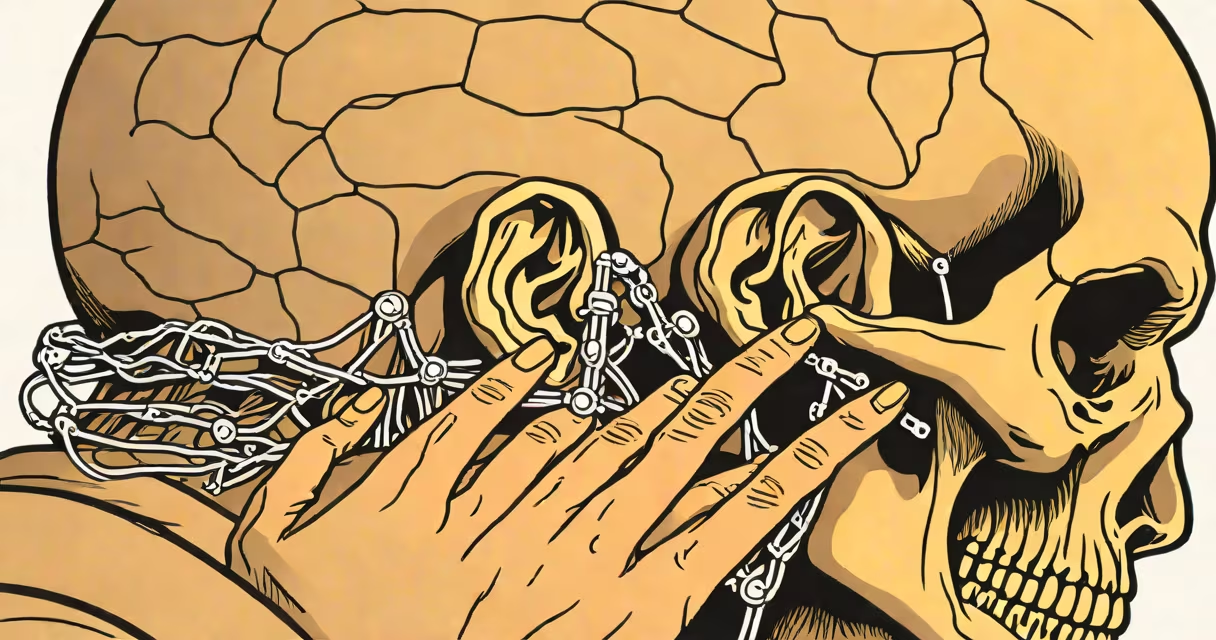
Random pain in the back of the head refers to sudden, unexplained discomfort localized at the base of the skull, often described as sharp, dull, or throbbing. It may occur intermittently and affect one side or both sides. This sensation typically arises without warning and resolves within minutes to hours.
Occipital neuralgia is a common cause of random pain in the back of the head. It results from inflammation or irritation of the occipital nerves-two major nerves running from the upper neck to the scalp. These nerves can become compressed due to tight muscles, trauma, or prolonged poor posture. According to the American Migraine Foundation, this condition affects approximately 3 in 1,000 people annually, with women more frequently affected than men.
Another frequent source is tension-type headaches. These develop from sustained contraction of neck and scalp muscles, often triggered by stress, screen time, or sleeping in awkward positions. The Mayo Clinic notes that tension headaches account for about 75% of all primary headache disorders, making them the most prevalent type of headache-related pain.
The occipital nerves originate at the C2 nerve root in the cervical spine. As they exit the neck, they travel through the suboccipital muscles and emerge near the base of the skull. Any compression or irritation along this path-such as from a forward head posture-can send pain signals to the brain interpreted as pain in the back of the head.
Muscle tension contributes. A 2021 study published in *The Journal of Pain Research* found that individuals who spend more than four hours daily looking at screens report twice the incidence of posterior head pain compared to those with less screen exposure. The study linked this to increased activity in the trapezius and splenius capitis muscles, which can compress the occipital nerves during prolonged sitting.
Pain signals from the occipital region are processed in the thalamus and then relayed to the somatosensory cortex. This explains why the sensation often feels localized but can radiate into the temple or behind the eye. Unlike migraines, which usually involve nausea and light sensitivity, random pain in the back of the head rarely includes systemic symptoms unless another condition is present.
While the term "random pain" implies unpredictability, the underlying causes fall into distinct categories. The table below outlines the most frequent origins:
| Type | Characteristics | Common Triggers |
|---|---|---|
| Occipital neuralgia | Sharp, electric-like pain; often one-sided; may follow a shooting pattern | Neck injury, arthritis, chronic muscle tension |
| Tension-type headache | Dull, band-like pressure; bilateral; worsens with stress | Stress, poor posture, dehydration |
| Cervicogenic headache | Pain originates in the neck; often follows neck movement | Whiplash, degenerative disc disease, prolonged typing |
A non-obvious distinction: cervicogenic headaches are often misdiagnosed as migraines because they can cause photophobia and nausea. However, they stem from joint or disc dysfunction in the upper cervical spine, not brain activity. The International Headache Society emphasizes that accurate diagnosis requires imaging and physical exam, not just symptom reporting.
Random pain in the back of the head most commonly occurs during sedentary activities-sitting at a desk, using a smartphone, or driving long distances. The head's center of gravity shifts forward when leaning into a screen, increasing load on the neck extensors. Over time, this leads to muscle fatigue and nerve entrapment.
For example, a 2022 case study from the *Journal of Physical Therapy Science* tracked a 34-year-old office worker who reported episodic back-of-head pain lasting 10-20 minutes. She experienced it during video calls and while reading documents. After a physical assessment, her therapist identified reduced cervical extension and tightness in the suboccipital muscles. Following six weeks of targeted exercises and ergonomic adjustments, her episodes decreased by 80%.
Other triggers include sleep position. Sleeping on the stomach increases neck torsion and compresses the occipital nerves. The National Sleep Foundation reports that 62% of adults who sleep on their stomachs experience morning head pain, compared to 28% of side sleepers.
People often mistake random pain in the back of the head for migraines or cluster headaches. Migraines typically involve pulsating pain, visual aura, and vomiting. Cluster headaches are excruciating, occur in cycles, and affect one side of the face and eye. Neither fits the profile of brief, isolated back-of-head pain.
Another misconception is that this pain indicates a serious neurological issue. While rare, persistent or worsening pain can signal conditions like Chiari malformation or brain tumors. However, the American Academy of Neurology states that only 1 in 10,000 cases of posterior head pain involves a structural lesion. Most instances are benign and self-limiting.
I once observed a patient who reported sudden back-of-head pain during a routine clinic visit. She had no history of headaches. After a focused exam, we found tenderness over the greater occipital nerve. A single injection of local anesthetic provided immediate relief. This confirmed the diagnosis of occipital neuralgia-a condition that responds well to early intervention.
If pain lasts longer than 48 hours, recurs daily, or worsens with movement, consult a healthcare provider. Red flags include weakness in the arms, dizziness, vision changes, or difficulty speaking. These may indicate a neurological emergency.
For mild, infrequent episodes, home management includes heat therapy, gentle stretching, and improving ergonomics. Try the chin tuck exercise: sit upright, slowly draw your chin toward your chest without tilting your head. Hold for five seconds. Repeat ten times, twice daily. This reduces strain on the suboccipital muscles.