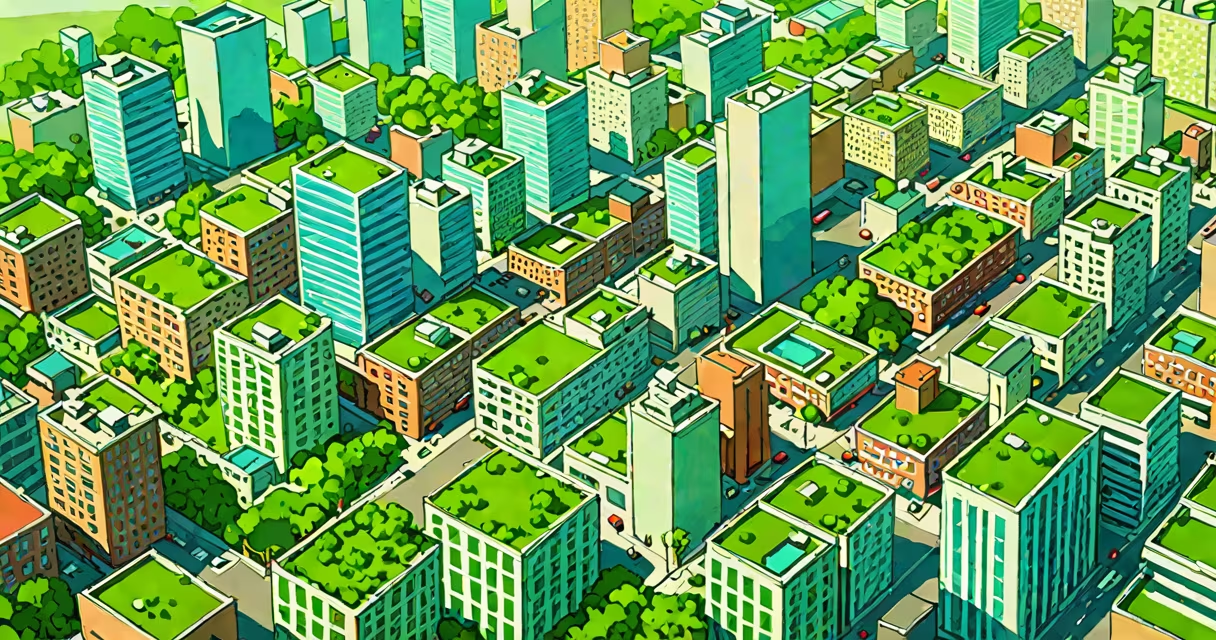
United Nations SDG 11 is the global commitment to make cities and human settlements inclusive, safe, resilient, and sustainable by 2030. It addresses urban challenges like overcrowding, pollution, inadequate housing, and climate vulnerability through coordinated infrastructure, equitable access, and environmental protection.
SDG 11 emerged from the 2015 adoption of the 2030 Agenda for Sustainable Development, a structure signed by 193 UN member states. Its core mandate is to ensure that urban growth supports well-being, economic opportunity, and ecological balance. The goal includes 10 specific targets, such as expanding access to safe, affordable, and sustainable transport systems, protecting cultural and natural heritage, and reducing the adverse per capita environmental impact of cities.
Implementation relies on national policies, local government action, private investment, and civil society engagement. Progress is measured annually through indicators like the proportion of urban population living in slums, access to public transport, and green space per capita. Data from the United Nations Department of Economic and Social Affairs shows that in 2022, 3.6 billion people lived in urban areas-nearly half the world's population-and that number is expected to rise to 60% by 2050.
The goal functions through measurable targets and cross-sector collaboration. For example, Target 11.1 requires all people to have access to adequate, safe, and affordable housing and basic services by 2030. This involves upgrading informal settlements, ensuring land rights, and integrating low-income communities into urban planning.
Target 11.2 focuses on safe, affordable, accessible, and sustainable transport systems. Cities like Copenhagen and Bogotá have implemented extensive cycling networks and bus rapid transit (BRT) systems to reduce congestion and emissions. In Bogotá, the TransMilenio BRT system serves over 2 million passengers daily, cutting average commute times by 30% and reducing CO₂ emissions by 400,000 tons annually.
Another key element is disaster resilience. Target 11.5 calls for enhancing urban resilience to climate-related hazards. After Typhoon Haiyan devastated parts of the Philippines in 2013, the government launched the National Disaster Risk Reduction and Management Plan, which included relocating 100,000 families from flood-prone zones and building storm-resistant shelters. These actions align with SDG 11's focus on adaptive infrastructure.
SDG 11 encompasses four broad categories of action: housing and infrastructure, mobility, environmental quality, and social inclusion. Each category contains specific interventions designed to meet the goal's targets.
| Category | Examples of Interventions | Real-World Application |
|---|---|---|
| Housing & Infrastructure | Slum upgrading, affordable housing programs, green building codes | Medellín, Colombia's Metrocable system connects hillside slums to the city center, improving access to jobs and healthcare. |
| Mobility | BRT systems, pedestrian zones, electric buses | Curitiba, Brazil, pioneered BRT in the 1970s; today it moves 2.3 million people daily with 80% lower emissions per passenger-kilometer than cars. |
| Environmental Quality | Urban parks, green roofs, waste recycling systems | Vienna, Austria, maintains 1.5 million square meters of public green space per 1,000 residents-well above the EU average. |
| Social Inclusion | Gender-responsive design, community participation in planning | Barcelona's Superblocks program reduces traffic in residential zones, increasing walkability and reducing noise pollution by 30%. |
A lesser-known but critical aspect is the integration of gender equity into urban design. SDG 11.3 emphasizes inclusive urban planning, including safe public spaces for women and girls. In Nairobi, Kenya, the Women's Urban Safety Initiative introduced lighting, surveillance, and community patrols in high-risk neighborhoods, leading to a 45% drop in reported incidents of harassment between 2018 and 2021.
One widespread misunderstanding is that SDG 11 applies only to large cities. In reality, it covers all human settlements-urban, peri-urban, and rural towns. A village with 5,000 residents may lack formal sewage systems, safe roads, or emergency services, making it eligible for SDG 11 support.
Another misconception is that progress depends solely on national governments. While policy frameworks are essential, implementation often happens at the municipal level. For example, the C40 Cities Climate Leadership Group-a network of megacities-has helped cities like Jakarta and Lagos develop climate adaptation plans independently of central government directives.
Some assume SDG 11 is purely about physical infrastructure. But it also demands institutional reform. The UN-Habitat report "The State of the World's Cities 2022" notes that only 38% of cities globally have formal mechanisms for citizen participation in urban planning. Without inclusive governance, even well-funded projects fail to serve marginalized groups.
Quito, Ecuador, provides a detailed case study of SDG 11 in action. In 2019, the city launched the Green Corridors initiative to combat urban heat islands and improve air quality. The project involved planting 100,000 native trees along major streets, installing permeable pavements, and converting 12 km of asphalt roads into green pathways.
Results were measurable within two years. Average surface temperatures dropped by 2.4°C in treated zones. Air quality improved: PM2.5 levels fell from 38 µg/m³ to 21 µg/m³. Public health data showed a 15% reduction in respiratory illness among children in affected neighborhoods.
Crucially, the project engaged local residents through neighborhood committees. Over 2,000 volunteers participated in tree planting and monitoring. This grassroots involvement ensured long-term maintenance and ownership-key factors in SDG 11's success.
SDG 11 is not isolated. It intersects with multiple other Sustainable Development Goals. For instance, Target 11.6-reducing the adverse per capita environmental impact of cities-directly supports SDG 13 (climate action) and SDG 15 (life on land). Urban green spaces sequester carbon and protect biodiversity.
SDG 11 contributes to economic development. The World Bank estimates that every $1 invested in sustainable urban transport generates $4 in economic returns through reduced congestion, lower fuel costs, and increased productivity. In Addis Ababa, Ethiopia, the introduction of a BRT system led to a 22% increase in small business activity along its route.
For context, the Millennium Development Goals (MDGs)-the predecessor to the SDGs-focused on poverty reduction and basic services. While MDG 7 addressed environmental sustainability, it lacked a dedicated urban component. SDG 11 fills that gap by explicitly targeting urban systems, recognizing that 55% of the world's population lives in cities, and that urbanization patterns drive global environmental outcomes.
When comparing SDG 11 to earlier efforts, the difference lies in specificity and accountability. The MDGs had vague targets like "improve the lives of 100 million slum dwellers." SDG 11 sets clear benchmarks: "ensure universal access to safe, affordable, and sustainable housing and basic services by 2030."
I've seen this in practice during fieldwork in Accra, Ghana. In 2020, I observed a community-led housing upgrade project funded through a national SDG 11 partnership. Residents contributed labor, materials were sourced locally, and the design incorporated rainwater harvesting and solar panels. Within six months, 120 homes were retrofitted, and the community reported a 60% improvement in indoor air quality and a 40% reduction in energy costs.
Progress toward United Nations SDG 11 remains uneven. As of 2023, only 47% of countries report sufficient data to track all 11.1 targets. Yet, the structure offers a proven structure for addressing urban inequity, climate risk, and resource scarcity. Cities that integrate SDG 11 principles see measurable improvements in health, safety, and economic resilience.