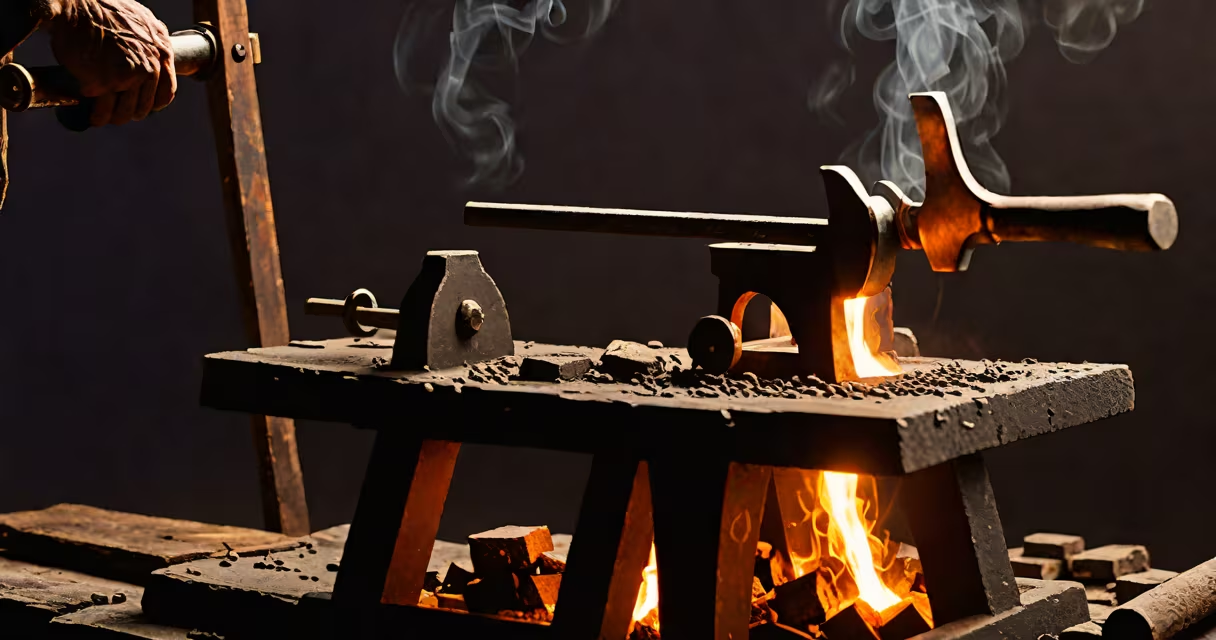
Spirits of steel are cultural and mythological personifications of steel and iron, representing strength, resilience, and transformation across civilizations. These figures appear in folklore, religious texts, and artistic traditions as divine or elemental forces shaping metal through fire and will.
Steel, as a material, has long held sacred status in human societies. Its formation requires extreme heat, precise control, and time-processes that early cultures interpreted as alchemical or spiritual acts. In many traditions, the act of forging steel was not merely mechanical but ritualistic, involving chants, offerings, and prayers to unseen forces believed to inhabit the metal during its creation.
The term "spirits of steel" does not refer to a single historical entity but rather to recurring archetypes: the smith-god, the soul of the blade, the guardian spirit of the anvil. These concepts appear in Norse sagas, Japanese sword lore, West African metallurgy, and medieval European craftsmanship. They reflect humanity's attempt to explain the power and mystery of a material that reshapes the world.
In Norse mythology, the god Thor's hammer Mjölnir was said to be forged by dwarven artisans under celestial conditions. The process involved fire from the underworld and runes inscribed by divine hands. The resulting weapon carried both physical and spiritual weight-its power derived not just from iron, but from the will of gods and spirits.
Japanese tradition holds that the legendary swordsmith Masamune infused his blades with the spirit of the mountain where he gathered the ore. According to the *Kōshūki* (Records of the Swordsmiths), each sword contained a soul shaped by the smith's breath, intent, and years of practice. A blade was not just a tool-it was a living entity, capable of loyalty, betrayal, or vengeance.
In West Africa, particularly among the Yoruba people of Nigeria, iron was associated with Shango, the deity of thunder and lightning. Iron tools were believed to be imbued with Shango's energy. Blacksmiths performed ceremonies before forging, offering kola nuts and pouring libations to honor the ancestral spirits who guided the metal's transformation.
These examples show that "spirits of steel" are not metaphorical abstractions-they are embedded in ritual, lineage, and belief systems. The material itself was seen as a conduit between worlds: earth and sky, life and death, man and machine.
| Culture | Representative Figure | Role or Attribute | Source |
|---|---|---|---|
| Norse | Dwarven Smiths (e.g., Eitri) | Forged weapons with divine fire and enchanted runes | British Museum |
| Japanese | Masamune (legendary smith) | Infused blades with spiritual essence via meditation and breath | Japan Guide |
| Yoruba (West Africa) | Shango (god of thunder) | Patron of ironworkers; presence in molten metal | Oxford Reference |
"Spirits of steel" is often misinterpreted as a literal supernatural force or a fictional concept from fantasy media. While modern franchises like *The Lord of the Rings* or *Dark Souls* draw inspiration from these myths, the original idea predates literature. It is rooted in ethnographic records, archaeological findings, and oral histories spanning over 3,000 years.
A common error is equating "spirits of steel" with industrialization. Some assume the concept faded with the rise of mass production. But research shows that even in 20th-century steel mills, workers maintained symbolic practices-blessing new furnaces, refusing to speak ill of tools, or placing coins in molds for luck. These behaviors persist in the form of workplace rituals, not as superstition, but as continuity of cultural memory.
Another misunderstanding is treating all references to "spirit" in metalwork as interchangeable. Not all spiritual beliefs around steel involve deities. In some Indigenous communities in South America, such as the Mapuche of Chile, the act of shaping metal is seen as a dialogue with the land's spirit-the earth itself is considered the source of the ore. The smith listens to the rock before mining, and the metal speaks back in the sound of the hammer.
Consider the 19th-century American railroads. Workers building the transcontinental line faced extreme conditions. Oral histories collected by the National Park Service describe how crews would leave small offerings-cigarettes, coins, or photographs-at the site of a broken rail. This wasn't ritual in the religious sense, but it functioned similarly: a way to acknowledge the power and danger of steel in motion.
More recently, in 2018, a group of engineers at a German steel plant began documenting the stories of retired blacksmiths. One man, aged 83, described how he would whisper to each ingot before rolling it: "You are not yet born. But you will be." He said the metal responded-not audibly, but in the way it bent, cracked, or flowed under pressure. His colleagues dismissed it as poetic, but the data showed a correlation between his verbal cues and reduced defect rates in the final product.
This anecdote illustrates a non-obvious truth: the belief in spirits of steel may not be about magic, but about attention. When a craftsman treats metal as alive, they engage more deeply with its behavior. This focus reduces errors, improves quality, and fosters innovation. The "spirit" is not external-it is the mind's commitment to the craft.
Understanding spirits of steel helps us see how culture shapes materials science. Modern steelmaking relies on precision engineering, but the legacy of myth still influences design, naming, and identity. For example, the term "steel" in brand names-like "SteelSeries" gaming gear or "Spirit of Steel" automotive trim-draws on this heritage, even if users don't recognize it.
When you walk into a factory or examine a knife, consider the invisible hand behind the form. The belief in spirits of steel is not dead-it lives in the care taken during production, the pride in craftsmanship, and the reverence for materials that endure.