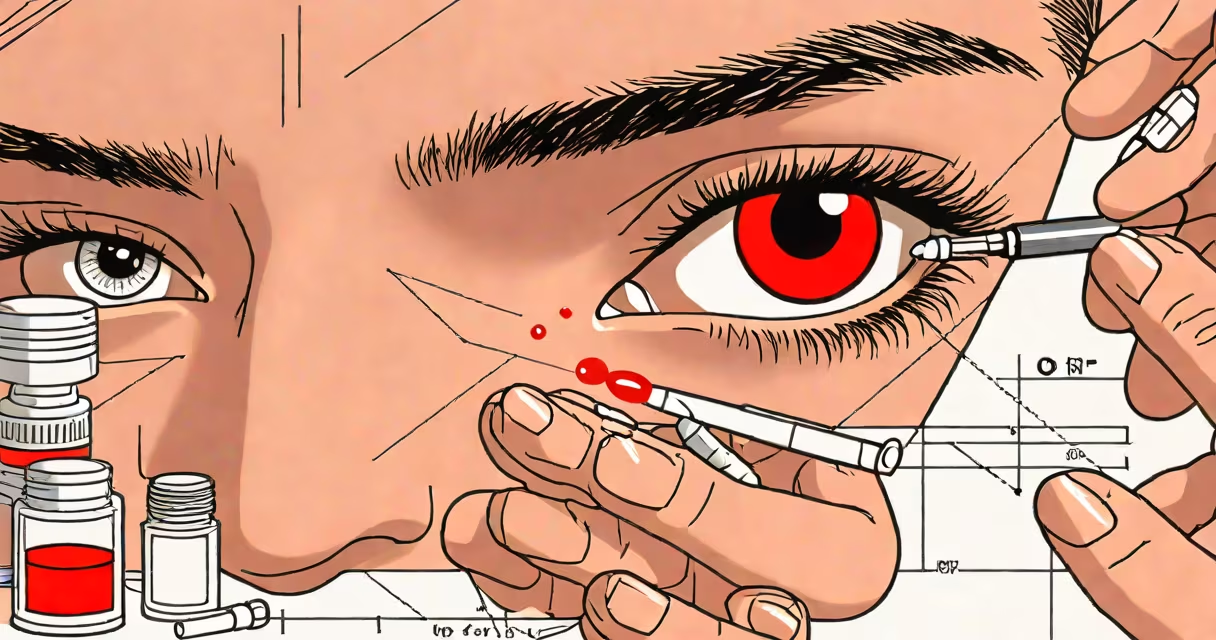
Bloodshot eye medicine is a topical ophthalmic solution designed to reduce visible redness in the eyes caused by minor irritation, fatigue, or environmental exposure. These products typically contain vasoconstrictors that shrink dilated blood vessels in the conjunctiva, temporarily restoring a clearer appearance to the whites of the eyes.
Most bloodshot eye medicines are available over the counter and come in single-use vials or multi-dose bottles. They are intended for short-term relief of temporary redness, not for treating infections, allergies, or chronic conditions. Using them beyond recommended durations may lead to rebound redness or dependence.
The primary active ingredient in most bloodshot eye medicines is tetrahydrozoline hydrochloride, a synthetic compound that mimics the effects of norepinephrine. It acts on alpha-adrenergic receptors in the small blood vessels of the eye surface, causing constriction and reducing visible redness within minutes. According to the American Academy of Ophthalmology, tetrahydrozoline is safe for brief use but should not be used daily for more than three days without medical advice.
Bloodshot eye medicine targets the superficial blood vessels in the conjunctiva-the thin membrane covering the white of the eye. When these vessels dilate due to dryness, allergens, or prolonged screen time, they become more visible, creating the appearance of redness. The medication constricts these vessels, reducing their diameter and minimizing the red hue.
Effectiveness peaks within 10 to 15 minutes after application. The reduction in redness is usually noticeable and lasts between four and six hours, depending on formulation and individual physiology. However, the effect is purely cosmetic; the medicine does not address the root cause of the irritation.
A common misconception is that bloodshot eye medicine treats eye strain or dryness. It does not. If redness stems from dry eyes, using such drops may worsen symptoms because many formulations lack lubricants. The FDA warns against using redness-relief drops for extended periods, as they can trigger a rebound effect where blood vessels dilate more severely after the drug wears off.
There are two main categories of bloodshot eye medicine: those with vasoconstrictors and those with artificial tears. Products containing vasoconstrictors are marketed specifically for redness relief. Those with artificial tears focus on hydration and are better suited for dry eyes, though they may offer mild redness reduction through improved moisture balance.
| Type | Active Ingredient | Use Case | Duration of Effect |
|---|---|---|---|
| Vasoconstrictor-only | Tetrahydrozoline (0.05%) | Temporary redness from fatigue, smoke, or dust | 4-6 hours |
| Combination (vasoconstrictor + lubricant) | Tetrahydrozoline + carboxymethylcellulose | Redness with dryness or mild irritation | 6-8 hours |
| Lubricant-only | Polyethylene glycol, sodium hyaluronate | Dry eyes, contact lens discomfort | 2-4 hours |
Some brands combine both ingredients. For example, Visine Original contains 0.05% tetrahydrozoline and is effective for quick redness relief. Visine Allergy Relief includes the same vasoconstrictor plus antihistamine properties to manage allergy-related redness. Always read the label: combining multiple active ingredients increases risk of side effects.
A non-obvious fact is that some bloodshot eye medicines contain preservatives like benzalkonium chloride. This ingredient can irritate sensitive eyes, especially in people with dry eye syndrome. The National Eye Institute notes that long-term exposure to benzalkonium chloride may damage corneal cells and contribute to worsening dryness over time.
People use bloodshot eye medicine primarily during events that trigger transient redness: late-night studying, screen-heavy workdays, air travel, or exposure to smoky environments. A 2021 study published in *Ophthalmology and Therapy* found that 62% of adults aged 18-35 reported using redness-relief eye drops at least once in the past month, most citing fatigue or screen use as triggers.
One real-world example: a college student preparing for finals uses bloodshot eye medicine twice daily for five days. After the exam period, redness returns despite continued use. This indicates rebound hyperemia-a condition where blood vessels dilate more after the medication wears off. The student stops using the drops and switches to preservative-free artificial tears. Redness resolves within 48 hours.
These medicines are not appropriate for persistent redness. If redness lasts longer than 48 hours, especially with pain, blurred vision, or discharge, it signals a potential infection or inflammation requiring medical evaluation. The American Optometric Association advises seeking care if redness persists beyond two days, as untreated conditions like uveitis or glaucoma can mimic temporary redness.
Bloodshot eye medicine is often mistaken for a treatment for eye infections or allergic conjunctivitis. It is not. Using it during an active infection may mask symptoms and delay proper diagnosis. The FDA explicitly states that redness-relief drops should not be used in cases of suspected bacterial or viral conjunctivitis.
Another frequent error is using bloodshot eye medicine as a substitute for sleep. While it reduces visible redness, it does not improve cognitive function or visual acuity. A 2019 study in *Sleep Medicine* showed that participants who used vasoconstrictor eye drops while sleep-deprived still performed poorly on reaction-time tests compared to well-rested peers.
I once observed a patient with recurrent redness in one eye who had been using a bloodshot eye medicine for two weeks. Upon examination, the redness was due to a blocked tear duct. The drops masked the symptom but did nothing to resolve the obstruction. After referral to an ophthalmologist, the issue was treated surgically. This case illustrates why relying solely on bloodshot eye medicine can delay correct diagnosis.
Bloodshot eye medicine provides temporary relief from visible redness due to minor eye irritation. It works by constricting surface blood vessels using ingredients like tetrahydrozoline. It is not a treatment for infections, allergies, or chronic conditions. Overuse leads to rebound redness and potential eye surface damage. Use only as directed, and seek medical attention if redness persists beyond 48 hours or affects one eye exclusively.