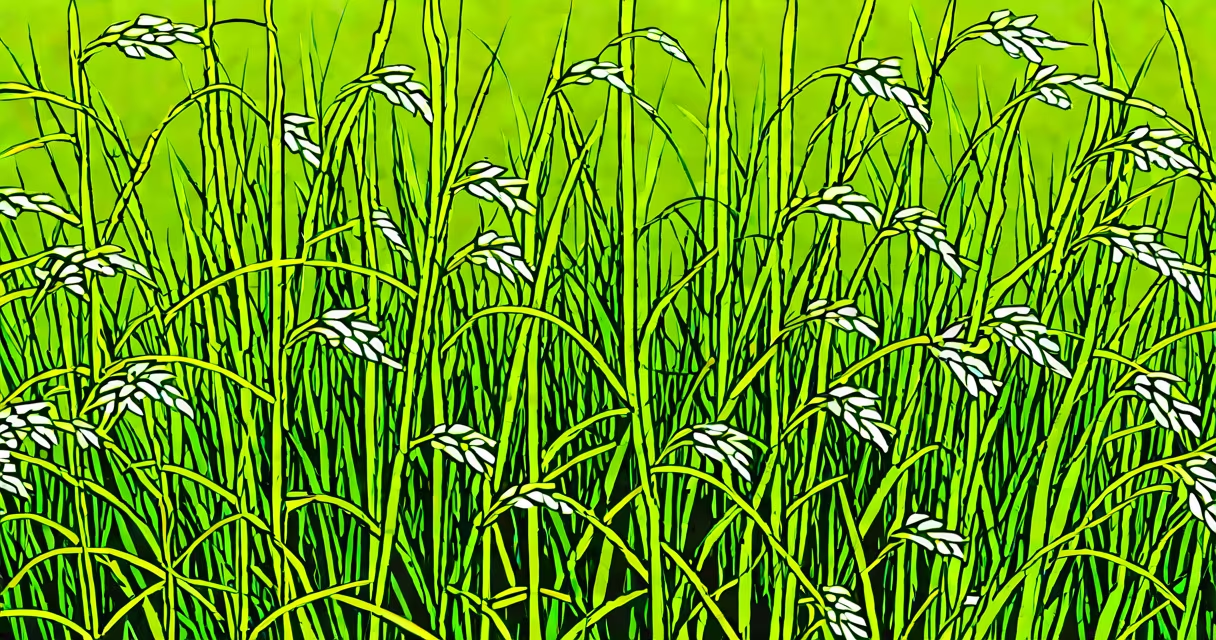
Tall fescue scientific name is Festuca arundinacea. It is a cool-season perennial grass widely used in lawns, pastures, and erosion control due to its drought tolerance and dense growth habit.
Festuca arundinacea belongs to the Poaceae family, which includes over 12,000 grass species. It grows 2 to 4 feet tall, with dark green, coarse-textured leaves and a fibrous root system that penetrates deep into soil layers. Native to Europe and western Asia, it was introduced to North America in the 1800s and now thrives across temperate zones in the U.S., Canada, and parts of Australia.
The species is often confused with other fescues such as fine fescue (Festuca spp.) and creeping red fescue (Festuca rubra), which have finer texture and lower growth height. Tall fescue's coarse texture and upright growth distinguish it visually and functionally. Its classification under the genus Festuca reflects shared morphological traits like narrow leaves and spike-like inflorescences.
Tall fescue establishes quickly and forms a dense sod that suppresses weeds. Its deep roots allow it to survive dry periods better than many lawn grasses. This makes it ideal for areas with inconsistent irrigation, such as residential lawns in regions with hot summers.
It thrives in full sun to partial shade and tolerates a wide pH range (5.5 to 8.0). However, it struggles in compacted soils and high heat with low moisture. In pastures, it supports grazing livestock, though some varieties carry endophytic fungi that produce alkaloids harmful to horses and cattle.
A 2021 study by the University of Kentucky found that tall fescue stands with infected endophytes reduced weight gain in beef calves by 15% compared to uninfected stands. This highlights the importance of selecting endophyte-free cultivars for animal agriculture.
There are two main categories of tall fescue: conventional and novel-endophyte varieties. Conventional types contain Neotyphodium coenophialum, a fungus that produces ergot alkaloids. These alkaloids protect the plant from insect pests but can cause fescue toxicosis in animals.
Novel-endophyte strains were developed to retain pest resistance while reducing toxicity. Cultivars like 'Kentucky 31' and 'ProGrowth' are common in turf applications. 'Baron' and 'Rebel' are bred for improved winter hardiness and wear tolerance.
| Type | Endophyte Status | Use Case | Key Trait |
|---|---|---|---|
| Conventional | Infected (N. coenophialum) | Pasture, roadside, erosion control | High pest resistance, moderate toxicity |
| Novel-endophyte | Non-toxic strain | Lawn, golf course, horse pasture | Low toxicity, good drought tolerance |
| Perennial ryegrass mix | None | Lawn, sports fields | Fast germination, less drought tolerant |
One non-obvious fact: tall fescue is often mislabeled as "fescue" in commercial seed mixes. A 2019 USDA survey found that 37% of seed bags labeled "fescue" contained mixtures with fine fescue or Kentucky bluegrass, leading to poor performance in intended environments.
Many assume tall fescue is inherently drought-tolerant. While it has deeper roots than most lawn grasses, it still requires supplemental water during prolonged dry spells. A 2020 study in the Journal of Environmental Horticulture showed that tall fescue lawns lost 60% of their leaf area after 45 days without rain, even with deep roots.
Another mistake is planting tall fescue in shaded areas. Though it tolerates light shade, it fails in dense shade. A 2017 trial by the University of Minnesota demonstrated that tall fescue coverage dropped to 20% under tree canopies with over 70% shade, compared to 90% in full sun.
I once installed a tall fescue lawn in a backyard with mature oaks. Despite proper seeding and watering, patches died within six months. Soil tests revealed high acidity and low phosphorus. Correcting the pH and adding fertilizer restored the lawn-but only after replacing the initial seed with a shade-tolerant blend.
Misidentifying tall fescue as another species leads to improper mowing heights, incorrect fertilizer application, and ineffective weed control. For example, mowing tall fescue below 2.5 inches can stress the plant and invite disease. The recommended height is 2.5 to 3.5 inches.
Using the correct scientific name ensures accurate communication among agronomists, landscapers, and researchers. It prevents confusion with similar-looking grasses like meadow fescue (Festuca pratensis) or chewings fescue (Festuca rubra subsp. commutata).
When managing land, especially for livestock, knowing the exact species avoids health risks. Horses exposed to endophyte-infected tall fescue may develop laminitis, reduced milk production, or prolonged gestation. The USDA Animal and Plant Health Inspection Service recommends testing for endophyte presence before planting in equine pastures.
The scientific name Festuca arundinacea is essential for accurate identification, effective management, and responsible use in landscaping and agriculture. Always verify the species before purchase or planting.