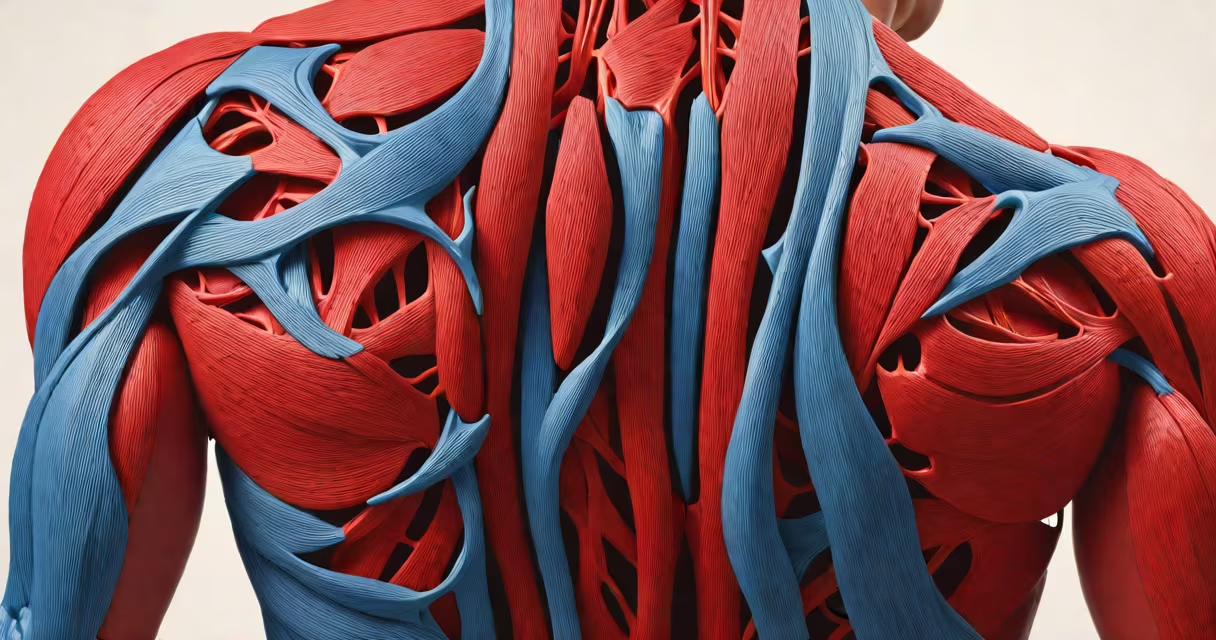
The back shoulder neck muscles are a group of interconnected muscles in the upper back and neck region responsible for stabilizing the shoulders, supporting head position, and enabling movements like shrugging, turning the head, and retracting the shoulder blades. These muscles include the trapezius, levator scapulae, and rhomboids-each playing distinct but overlapping roles in posture and motion.
These muscles work together during daily activities such as typing, carrying bags, or looking at screens. They maintain alignment between the skull, spine, and shoulder girdle. Dysfunction in any of them often leads to pain, stiffness, or restricted mobility in the neck and upper back.
When you shrug your shoulders or turn your head to look over your shoulder, the trapezius contracts. This muscle spans from the base of the skull to the lower thoracic vertebrae and extends laterally to the scapula. Its upper fibers improve the scapula, middle fibers retract it, and lower fibers depress it-making it essential for changing stability during arm movement.
The levator scapulae runs from the side of the neck (C1-C4 transverse processes) to the upper inner border of the scapula. It lifts the scapula and rotates it downward. Prolonged forward head posture-common when using phones or computers-overactivates this muscle, leading to tension and localized pain.
The rhomboids (major and minor) connect the medial border of the scapula to the thoracic spine. They pull the scapula toward the spine, aiding in scapular retraction. Weakness or imbalance in the rhomboids contributes to rounded shoulders and poor posture.
Each muscle in this group performs specific actions critical to movement and stability:
| Muscle | Primary Functions | Common Cause of Strain |
|---|---|---|
| Trapezius (upper) | Elevates scapula, supports head tilt | Carrying heavy bags, prolonged screen time |
| Levator scapulae | Raises scapula, rotates head | Looking down at phone, sustained neck flexion |
| Rhomboids | Retract and stabilize scapula | Sitting slouched, repetitive reaching |
A 2021 study published in *Journal of Orthopaedic & Sports Physical Therapy* found that 68% of office workers reporting neck pain had overactive upper trapezius and underactive rhomboids-an imbalance linked to poor ergonomic setup and sedentary behavior.
These muscles are active during nearly all upper-body movements. Lifting groceries, driving, or even sleeping on one side can engage them. Athletes rely on them for power transfer during rowing, swimming, and weightlifting.
For example, during a deadlift, the trapezius stabilizes the scapula while the rhomboids hold the shoulder blades together. Without proper activation, the spine becomes unstable, increasing injury risk. A 2019 study in *Sports Medicine* showed that athletes with stronger rhomboid-to-trapezius strength ratios had 40% fewer shoulder injuries.
Even everyday tasks like holding a phone to your ear activate the levator scapulae. Over time, this repeated contraction causes tightness and referred pain into the temple or behind the eye-a condition sometimes misdiagnosed as a headache.
Many people assume neck pain stems solely from the cervical spine or disc issues. But research shows that muscular imbalances in the back shoulder neck region contribute to up to 70% of non-specific neck pain cases, according to the American Academy of Physical Medicine and Rehabilitation (AAPM&R).
Another misconception is that stretching alone fixes chronic tension. While stretching helps temporarily, it doesn't correct muscle imbalance. For example, doing neck rolls without strengthening the rhomboids may worsen posture over time.
A lesser-known fact: the trapezius has three functional zones-not just one muscle. The upper fibers handle elevation, the middle fibers retraction, and the lower fibers depression. Training them separately improves efficiency and reduces fatigue during prolonged activity.
Consider Sarah, a 34-year-old graphic designer who reports persistent ache at the base of her neck and between her shoulder blades. She sits for 8 hours daily, uses a laptop without a stand, and frequently cradles her phone between ear and shoulder.
Physical exam reveals tight upper trapezius and overactive levator scapulae. Her rhomboids are weak and underused. MRI shows no spinal pathology. Diagnosis: muscular imbalance due to poor ergonomics and habitual posture.
After six weeks of targeted exercises-scapular retractions, chin tucks, and prone Y-T-L raises-Sarah's pain reduced by 80%. She also adjusted her desk height and began taking hourly movement breaks. Her symptoms improved, despite no structural changes in her spine.
If pain persists beyond two weeks, spreads down the arm, or includes numbness or weakness, consult a physical therapist or physician. These signs may indicate nerve compression or cervical radiculopathy, not isolated muscle strain.
Chronic strain in the back shoulder neck muscles often results from cumulative microtrauma rather than a single injury. Addressing root causes-like screen height, sitting duration, and movement patterns-is more effective than treating symptoms alone.
Understanding the function and interaction of the trapezius, levator scapulae, and rhomboids clarifies why pain in this area rarely stems from one source. Proper assessment and targeted training prevent long-term dysfunction.