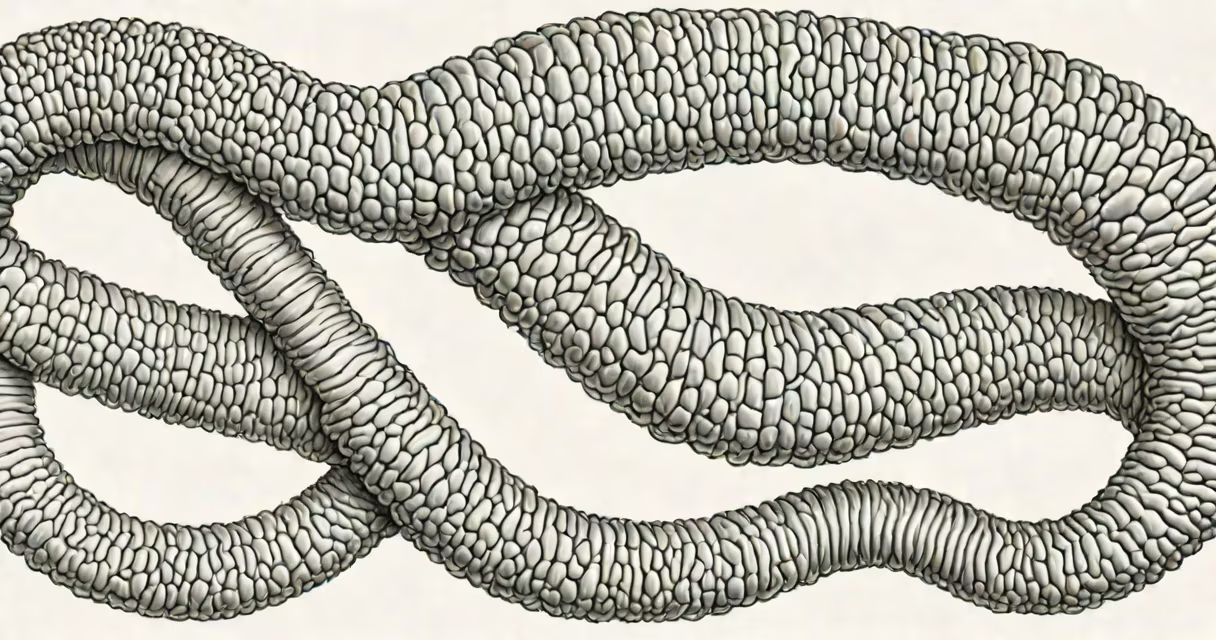
A tapeworm in humans is a parasitic flatworm that attaches to the intestinal lining and absorbs nutrients from the host's digested food. These worms can grow up to several meters long and survive for years without treatment. They are typically acquired through ingestion of contaminated food or water containing tapeworm eggs or larvae.
Tapeworms belong to the class Cestoda and include species such as Taenia solium (pork tapeworm), Taenia saginata (beef tapeworm), and Diphyllobothrium latum (fish tapeworm). Each species has distinct life cycles and transmission routes. For example, T. solium infects humans via undercooked pork, while D. latum spreads through raw or poorly cooked freshwater fish.
The most common route of infection is consuming food or water contaminated with tapeworm eggs shed in the feces of infected individuals. Once ingested, the eggs hatch into larvae that migrate through the bloodstream and may form cysts in tissues such as muscle, brain, or liver. This condition, known as cysticercosis, can lead to severe neurological complications if the brain is affected.
After ingestion, tapeworm eggs hatch in the small intestine, releasing oncospheres that penetrate the intestinal wall. These larvae travel via the bloodstream and settle in various organs. In the case of T. solium, they develop into cysticerci-fluid-filled cysts that can remain dormant for years.
When the larva reaches the intestine, it matures into an adult worm. The adult forms a head called a scolex, equipped with hooks and suckers that anchor it to the intestinal lining. From this attachment point, the worm grows a long chain of segments called proglottids, each capable of producing thousands of eggs. As the worm ages, mature proglottids detach and exit the body through feces, continuing the life cycle.
Adult tapeworms do not cause significant damage during their intestinal phase, but their presence leads to nutrient depletion. A single T. solium worm can absorb up to 20% of the host's daily caloric intake without causing noticeable symptoms in many cases.
Three primary tapeworm species cause human infections. Their differences lie in origin, transmission, and clinical impact.
| Species | Common Name | Transmission Route | Primary Host | Key Risk Factors |
|---|---|---|---|---|
| Taenia solium | Pork tapeworm | Undercooked pork or contaminated soil/water | Pig (intermediate), human (definitive) | Living in endemic regions, poor sanitation, eating raw pork |
| Taenia saginata | Beef tapeworm | Undercooked beef | Cattle (intermediate), human (definitive) | Consumption of beef in areas with poor meat inspection |
| Diphyllobothrium latum | Fish tapeworm | Raw or undercooked freshwater fish | Salmonid fish (intermediate), human (definitive) | Eating sushi or traditional dishes with raw fish |
While T. saginata rarely causes tissue invasion, both T. solium and D. latum can lead to systemic disease. D. latum is notable for causing vitamin B12 deficiency due to competition for absorption in the ileum, leading to megaloblastic anemia.
Tapeworm infections are most prevalent in tropical and subtropical regions with limited access to clean water and proper sewage systems. According to the World Health Organization (WHO), over 50 million people worldwide are infected with T. solium, with the highest burden in sub-Saharan Africa, Latin America, and parts of Asia.
Transmission occurs through fecal-oral contamination. In rural communities, open defecation near fields or water sources allows tapeworm eggs to enter the environment. Pigs and cattle then ingest these eggs from contaminated grass or water, becoming intermediate hosts. Humans become definitive hosts when they consume undercooked meat from these animals.
Urban migration and global food trade have increased the risk of imported cases. In the United States, approximately 1,000 cases of T. solium are reported annually, mostly among immigrants from endemic countries or travelers returning from high-risk areas.
Many confuse tapeworms with roundworms or intestinal parasites like giardia. Unlike roundworms, which have a complete digestive tract, tapeworms lack a mouth and gut. They absorb nutrients directly through their outer surface, making them highly efficient at extracting energy from the host.
A common error is assuming that tapeworms cause immediate, severe symptoms. Most adults with intestinal tapeworms report no symptoms at all. When symptoms do occur, they are often mild-such as occasional nausea, abdominal discomfort, or unexplained weight loss. This lack of overt signs delays diagnosis and increases transmission risk.
Another misconception is that tapeworms live in the stomach. They reside exclusively in the small intestine, specifically the jejunum and ileum. The adult worm attaches to the mucosal lining using its scolex, which can be seen under a microscope as a circular structure with four suckers and two rows of hooks in T. solium.
Diagnosis begins with identifying tapeworm segments or eggs in stool samples. A single sample may miss low-level infections, so multiple tests are recommended. Imaging techniques such as CT scans or MRI are used when cysticercosis is suspected, especially if neurological symptoms like seizures or headaches appear.
Standard treatment involves antiparasitic drugs. Praziquantel is effective against all major tapeworm species and is administered orally in a single dose of 5-10 mg/kg. Niclosamide is an alternative, particularly for T. saginata, though it requires fasting before administration and is less effective in children.
For cysticercosis involving the brain, treatment is more complex. Albendazole combined with corticosteroids is used to reduce inflammation and kill larvae. However, this regimen must be carefully monitored due to the risk of worsening swelling in the central nervous system.
As a personal observation, I once examined a stool sample from a patient in Guatemala who had traveled to a remote village. Microscopic analysis revealed numerous T. solium proglottids-flat, ribbon-like structures with visible reproductive organs. After treatment with praziquantel, the patient passed the entire worm in a single bowel movement, a rare but documented occurrence.
Preventing tapeworm infection relies on improving sanitation, cooking meat thoroughly, and avoiding consumption of raw fish or undercooked pork. In endemic areas, mass drug administration programs targeting schoolchildren have reduced T. solium prevalence by up to 60% over five years, according to WHO reports.
Public health efforts also focus on educating farmers and butchers about safe meat handling. In Peru, a national campaign to vaccinate pigs against T. solium reduced human infection rates by 75% in pilot zones.
Untreated tapeworm infections can lead to serious complications. Neurocysticercosis-the most dangerous form-causes epilepsy in up to 30% of affected individuals, according to the Centers for Disease Control and Prevention (CDC).