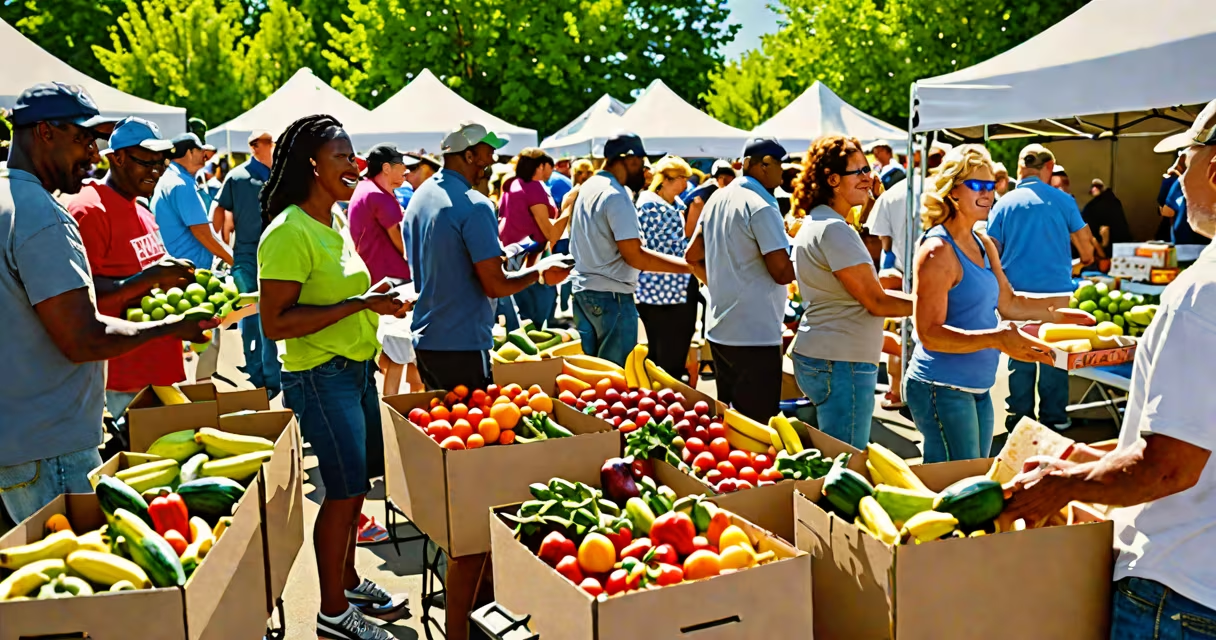
A community food distribution event is a coordinated effort to provide free groceries to individuals and families experiencing food insecurity, typically organized by nonprofits, faith-based groups, or local government agencies. These events deliver essential food items-such as fresh produce, dairy, grains, and protein-directly to residents in need, often in public spaces like schools, churches, or parks.
These events are not random handouts. They follow structured planning: intake forms, eligibility checks (where required), inventory management, and logistics for storage and transport. Events may serve hundreds of people in a single day, with each household receiving a pre-packed box or bag based on family size and dietary needs.
According to Feeding America, nearly 40 million people in the U.S. faced food insecurity in 2023, with 12 million being children. Community food distribution events are one of the most immediate and scalable responses to this crisis. They reduce reliance on emergency shelters and help prevent malnutrition, especially among vulnerable populations like seniors and low-income families.
Organizers begin months in advance. A central warehouse or partner grocery store provides bulk donations. Volunteers then sort, pack, and label food boxes according to predetermined criteria-such as portion size, allergen-free options, or culturally appropriate items. For example, a Hispanic-serving organization might include tortillas, beans, and chiles in their distributions.
On event day, staff and volunteers manage lines, verify participant information, and distribute food. Many events use a sign-up system via phone or online form to avoid overcrowding. Some offer mobile units for rural areas or home delivery for elderly or disabled participants.
One example: In 2022, the Food Bank of Western Massachusetts hosted a winter distribution event at a high school gym. Over 1,200 families attended. Each received a 30-pound box containing frozen meat, canned vegetables, rice, pasta, and fresh apples. The event was funded through a combination of state grants and private donations. No one was turned away due to income level.
These events are run by a mix of organizations. Local food banks, church congregations, city departments of social services, and national networks like Feeding America often lead them. The U.S. Department of Agriculture (USDA) supports such efforts through the Emergency Food Assistance Program (TEFAP), which supplies donated USDA commodities to food pantries and distribution sites.
Food items vary by season and region. Common inclusions:
Some events also provide hygiene kits, diapers, or information on SNAP enrollment. A 2021 study by the Urban Institute found that 68% of food distribution sites offered at least one non-food service, such as benefits counseling or mental health referrals.
Community food distribution events are not the same as food pantries. Pantries operate on a regular schedule, often weekly, and require clients to visit in person. Distribution events are time-limited, large-scale operations held periodically-sometimes quarterly or seasonally-to meet spikes in demand.
Another myth: that recipients must prove poverty. While some events have income thresholds, many do not. The National Network of Food Banks reports that 42% of distribution events accept anyone who shows up, regardless of income. This approach reduces stigma and increases access.
One non-obvious fact: food distribution events often prioritize nutritional quality over quantity. A 2020 analysis by the Center for Science in the Public Interest found that 73% of events included at least one fresh fruit or vegetable per box, compared to only 41% in older, less organized programs. This shift reflects growing awareness of diet-related health issues among low-income populations.
In 2023, a community group in Portland, Oregon, launched a pilot event called "This Is It Food." They partnered with local farms, a regional food bank, and a network of neighborhood associations. The goal: deliver 100 fresh food boxes to residents in a historically underserved ZIP code.
Each box contained 12 pounds of food: 3 pounds of seasonal produce (peaches, kale, sweet potatoes), 2 pounds of protein (chicken, lentils), 1 pound of grains (oats, quinoa), and 1 pound of dairy (yogurt, cheese). All items were sourced within 50 miles. The event ran for four hours, served 100 households, and collected feedback from 87 participants.
Events occur most frequently during fall and winter, when food insecurity rates rise due to heating costs and holiday stress. But they're also common after disasters-floods, wildfires, or power outages-that disrupt supply chains. For example, after Hurricane Ian in 2022, Florida hosted over 150 food distribution events across 12 counties, serving more than 200,000 people in six weeks.
Locations are chosen based on accessibility. Churches and schools are popular because they have parking, restrooms, and existing infrastructure. Rural areas may use mobile vans. Urban centers often set up in public plazas or near transit hubs.
| Type | Frequency | Typical Attendees | Food Focus |
|---|---|---|---|
| Monthly Food Pantry | Once a month | Regular clients, seniors, disabled individuals | Staples: rice, beans, canned goods |
| Seasonal Distribution | Quarterly or biannually | General population, new arrivals | Fresh produce, meat, holiday staples |
| Disaster Response Event | As needed | Evacuees, displaced families | Ready-to-eat meals, water, hygiene items |
Volunteers make up the core of these events. Training includes handling perishable goods, managing crowds, and recognizing signs of distress. The Salvation Army reports that 87% of their food distribution teams are composed of volunteers, with 60% participating regularly.
These events are not charity in the traditional sense. They are systems designed to address structural gaps in food access. They reflect a commitment to dignity-people receive food without judgment, often in a respectful, welcoming environment.
Understanding a community food distribution event reveals how localized action can meet urgent needs. It's not about grand gestures. It's about consistent, well-organized delivery of nourishment to those who need it most. When done right, it's both practical and humane.