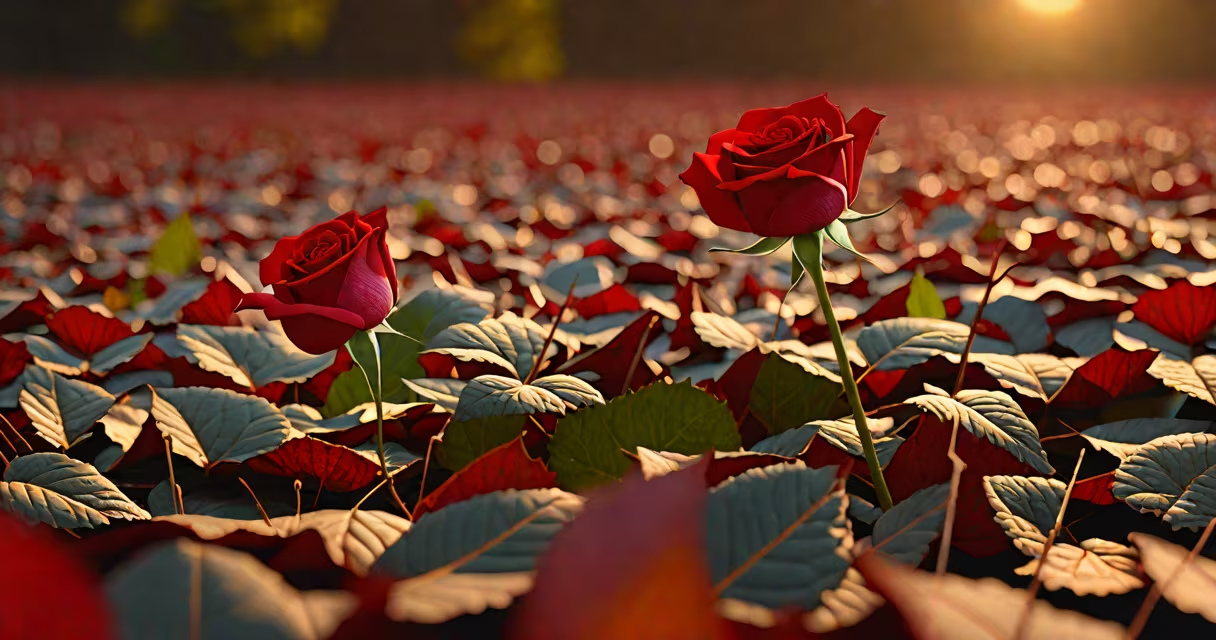
"The Last Rose of Summer" is a 19th-century Irish lyrical ballad written by Thomas Moore in 1806, set to music by John Andrew Stevenson. It expresses sorrow over the passing of love and beauty, using the image of a lone rose surviving into autumn as a metaphor for enduring affection amid loss.
The poem was composed during Moore's time in London, drawing on Irish folk traditions while reflecting the Romantic movement's focus on emotion, nature, and nostalgia. It gained immediate popularity and became one of the most frequently performed songs of the early 1800s. The original melody, attributed to Stevenson, remains central to performances today.
Despite its widespread recognition, the song is often misattributed to Scottish or British origins. It is distinctly Irish in both authorship and cultural context. Moore, a Catholic poet and MP, wrote it during a period of political tension in Ireland, and scholars note that the theme of isolation resonates with the sense of cultural displacement felt by many Irish intellectuals of the era.
The ballad follows a strict AABBA rhyme scheme across four stanzas. Each stanza presents a scene of seasonal decline: the speaker observes a single rose blooming late in the year, surrounded by dead foliage. The emotional arc moves from quiet observation to personal lament, culminating in a plea to remember the beloved even after they are gone.
Line 1: "'Tis the last rose of summer left blooming alone." Line 2: "All her lovely companions are gone." Line 3: "She lingers, a sweet, sad remembrance..." Line 4: "Of summer's faded, forgotten, and gone."
This structure creates a rhythmic inevitability-the flower's survival feels temporary, its beauty fleeting. The repetition of "alone" emphasizes emotional isolation, a common trope in Romantic poetry. The final stanza shifts from external observation to internal reflection: "I'll not leave thee, though all others depart." This line marks the turn from nature to human emotion, grounding the metaphor in personal grief.
The central symbol-the last rose-is a classic example of *floral personification*. Roses in 19th-century literature often represented love, passion, or beauty. By placing the rose in autumn, Moore subverts expectations: roses typically signify spring or summer. The contrast heightens the sense of tragedy and impermanence.
Other devices include enjambment between lines 3 and 4 in each stanza, which mimics the hesitation of grief. The use of apostrophe-direct address to the rose ("O, tell me, sweet flower")-invites the reader into the speaker's emotional state. These techniques make the poem feel intimate, as if spoken in private mourning.
A lesser-known fact: the original manuscript of the poem contains a different final line. Moore revised it from "Thou art my last, and I am thine" to "I'll not leave thee," likely to avoid religious connotations. The original version was seen as too emotionally charged for public performance in conservative circles.
"The Last Rose of Summer" remains in active use across multiple domains. It appears in film soundtracks, including *The Man Who Knew Too Much* (1956), where it underscores a moment of quiet despair. It is also a staple in classical vocal recitals, particularly in tenor and soprano repertoire.
It is also sung at funerals and memorial services in Ireland and among Irish diaspora communities. According to the National Library of Ireland, recordings of the song were distributed widely in the 1850s via sheet music, making it one of the earliest mass-market popular songs in Europe.
Many assume the song is ancient or traditional, passed down orally. In reality, it was published in 1806 and first appeared in Moore's collection *Irish Melodies*. Its popularity grew rapidly due to print distribution and live performances in salons and theaters.
Another confusion arises from the tune's frequent adaptation. While the original melody is well-documented, later versions-especially in American folk arrangements-alter the tempo and key. The original is in G major, slow and solemn. Modern renditions sometimes speed it up, stripping away its mournful tone.
The term "last rose" is sometimes misunderstood as referring to a specific variety of rose. There is no botanical species known as the "Last Rose of Summer." The phrase is purely poetic. The flower depicted is likely a cultivated red rose (*Rosa gallica*), a common variety in 19th-century gardens.
Consider the second stanza:
"'Tis the last rose of summer left blooming alone,
All her lovely companions are gone.
She lingers, a sweet, sad remembrance
Of summer's faded, forgotten, and gone."
Breakdown:
Interpretation: The speaker sees the rose not as a sign of life, but as a monument to what has ended. The beauty is undeniable, but its persistence is tragic. The rose becomes a symbol of love that outlives its season-still present, but irrelevant to the world around it.
I once attended a performance in Dublin where a singer sang the ballad in Irish Gaelic translation. The audience fell silent after the final note. The translator had chosen "an leathanach de chéile" (the last leaf) instead of "rose," emphasizing the fragility of memory. That moment confirmed how deeply the image of the last rose resonates beyond language.
| Work | Author/Composer | Central Symbol | Emotional Tone | Connection to "The Last Rose of Summer" |
|---|---|---|---|---|
| "The Raven" | Edgar Allan Poe | Raven | Grief, obsession | Both use a solitary creature to represent enduring sorrow |
| "She Walks in Beauty" | Lord Byron | Woman's appearance | Admiration, serenity | Contrasts with the ballad's melancholy; beauty as transient |
| "Auld Lang Syne" | Robert Burns | Shared memories | Nostalgia, warmth | Similar theme of remembrance, but joyful rather than mournful |
While "The Last Rose of Summer" shares thematic ground with these works, its unique blend of natural imagery and personal lament sets it apart. It is not merely about loss-it is about the act of remembering in the face of absence.
Today, "the last rose of summer" continues to appear in literature, music, and visual art. Its enduring power lies in its ability to compress complex emotion-grief, longing, devotion-into a single, vivid image. The rose is not just a flower. It is a feeling made visible.