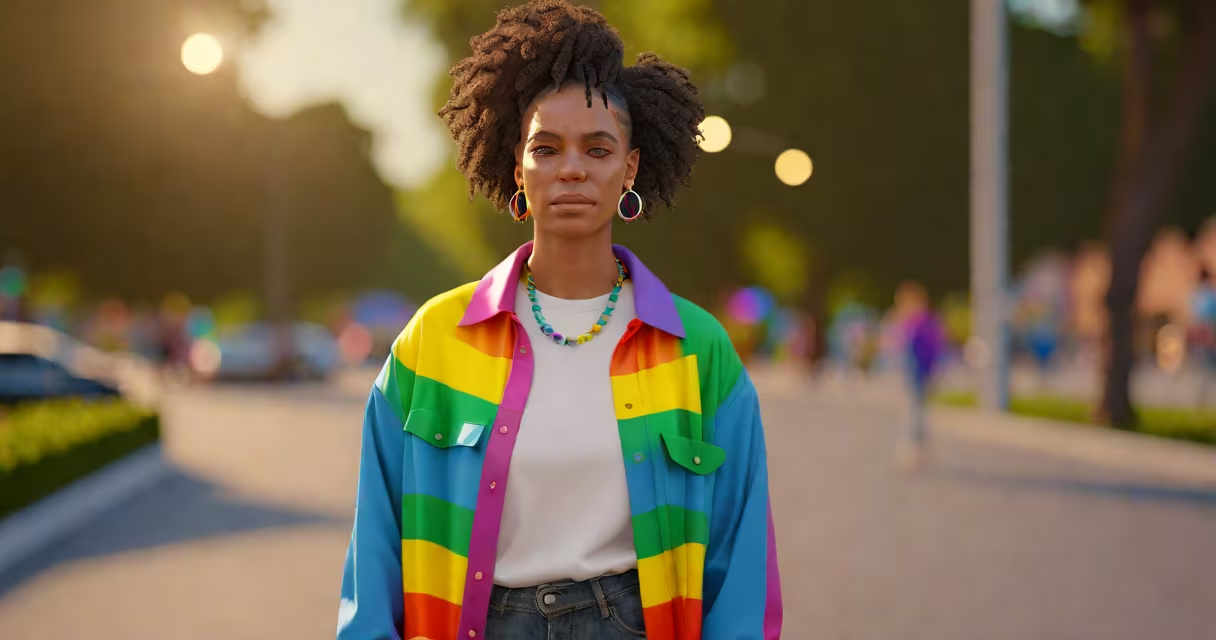
"They are non binary" identifies someone whose gender exists outside the traditional male/female binary. This term describes a gender identity, not a sexual orientation or biological sex. Non binary people may identify as both, neither, or somewhere between male and female. The statement reflects a personal understanding of self, not a medical or legal classification.
Non binary identities have existed across cultures for centuries. Ancient Mesopotamian texts reference third-gender roles, and Indigenous Two-Spirit people in North America have long held distinct gender expressions. Modern usage emerged in LGBTQ+ communities during the late 20th century, especially in response to rigid gender norms. According to the American Psychological Association, non binary is recognized as a valid gender identity under the umbrella of gender diversity.
When someone says "they are non binary," they are stating a core aspect of identity. This is not a lifestyle choice, a fashion statement, or a phase. It is a lived reality for millions. The term applies regardless of assigned sex at birth, appearance, or expression. A person assigned male at birth who feels their gender is neither man nor boy may be non binary. So may someone assigned female at birth who experiences gender as fluid or absent.
Gender identity is internal and subjective. It's not determined by anatomy, chromosomes, or social role. A non binary person may feel their gender is static, shifting, or nonexistent. Some use multiple pronouns interchangeably. Others prefer singular they exclusively. The key is consistency with the individual's self-conception.
Pronoun use is central. Using "they" as a singular pronoun is grammatically correct and widely accepted. The Merriam-Webster dictionary added "they" as a singular pronoun in 2019, citing usage in literature and everyday speech. For example, "They are going to the store" can refer to one person. This usage aligns with how many non binary people live daily.
Some non binary individuals adopt names that reflect their identity. A person might choose a name like "Riley" or "Morgan" because it feels right, not because it fits a gender category. Others may use titles like "Mx." instead of Mr./Ms. These choices affirm identity and reduce misgendering.
Non binary is not a single category. It includes diverse identities such as agender (no gender), bigender (two genders), genderfluid (shifting gender), and pangender (experiencing all genders). Not all non binary people identify with these labels. Some reject labels entirely.
| Identity Type | Description | Example |
|---|---|---|
| Agender | No gender identity | A person who feels neutral toward gender |
| Genderfluid | Gender changes over time | Someone who uses she/her one week, they/them the next |
| Two-Spirit | Cultural identity among some Native American tribes | Recognized in tribal governance and ceremonies |
| Third Gender | Recognized in some South Asian and Pacific Islander cultures | Examples include hijra in India and fa'afafine in Samoa |
These identities are not Western inventions. They are rooted in cultural traditions. The term "third gender" appears in historical records from ancient Egypt, China, and Mesoamerica. In contemporary settings, non binary people often face challenges in systems designed around binary gender, such as healthcare forms, passports, and school records.
People often confuse non binary identity with being transgender, intersex, or asexual. These are distinct categories. Transgender refers to a mismatch between gender identity and assigned sex at birth. Intersex refers to physical sex characteristics that don't fit typical definitions. Asexual means lack of sexual attraction. A non binary person may be any combination of these, but the identity is not defined by them.
Another misconception is that non binary people are "trying to be special" or "confused." This view ignores decades of research. The World Health Organization removed "transsexualism" from its International Classification of Diseases in 2019, replacing it with "gender incongruence," reflecting a shift toward dignity and clinical accuracy. The American Psychiatric Association recognizes non binary identity as valid, not a disorder.
One non-obvious fact: non binary people are not required to "prove" their identity. There is no universal test, document, or ceremony. Identity is self-defined. A person doesn't need to undergo surgery, change their name, or wear specific clothing to be non binary. The validity comes from internal experience, not external validation.
I met a non binary friend at a community center in Portland. They used they/them pronouns consistently. When asked about their identity, they said, "I've always felt like I didn't fit into either box. I'm not a man, not a woman. I'm me." Their comfort came not from labels, but from being seen and respected.
In workplaces, using correct pronouns reduces stress and increases retention. A 2022 study by the Human Rights Campaign found that 64% of non binary employees reported improved job satisfaction when colleagues used their preferred pronouns. Misgendering leads to higher rates of anxiety and depression. Simple actions-like sharing pronouns in email signatures-create inclusive environments.
Legal recognition varies. Some U.S. states allow non binary gender markers on driver's licenses and birth certificates. California, Oregon, and Washington offer this option. However, federal documents still require male or female. This gap causes real hardship. A non binary person applying for a passport may face confusion or denial unless they provide extensive documentation.
Understanding "they are non binary" begins with respect. It means honoring identity without judgment. It means asking, "What pronouns do you use?" and listening. It means recognizing that gender is not a spectrum with two ends-it is a vast, human experience with infinite variation.