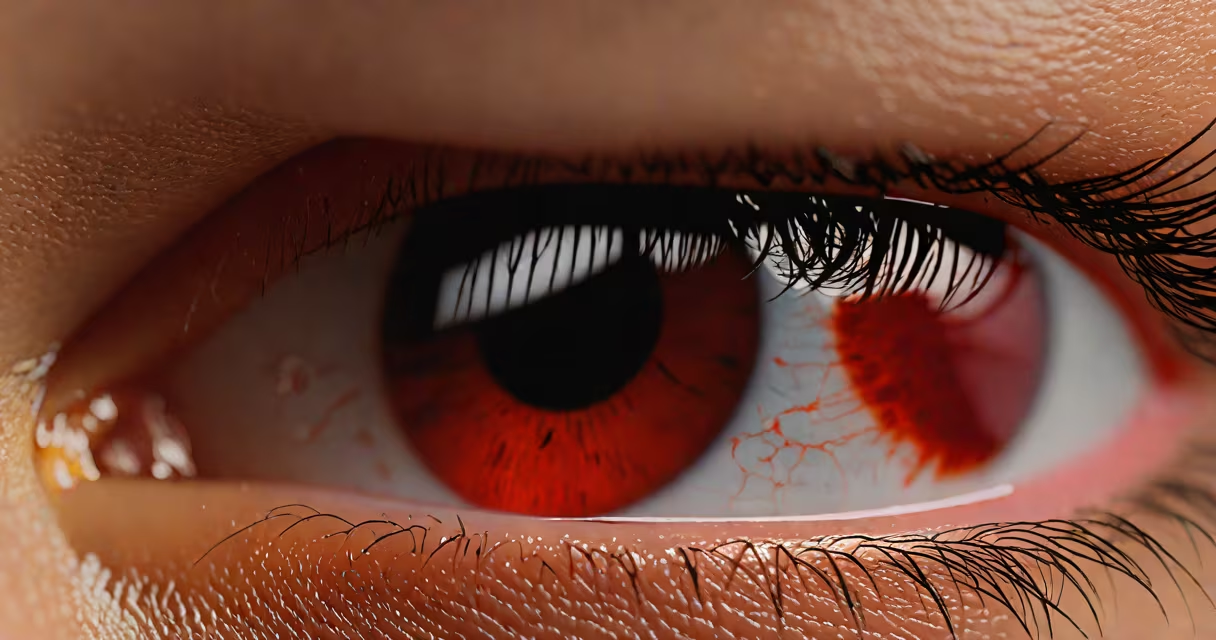
A red spot in the eye typically results from a broken blood vessel under the conjunctiva, known as a subconjunctival hemorrhage, and usually resolves on its own within 10-14 days without medical intervention. This condition appears as a bright red patch on the sclera and is often painless.
Subconjunctival hemorrhages occur when tiny blood vessels break beneath the clear surface of the eye. They are common, especially in people over 40, and can follow coughing, sneezing, heavy lifting, or trauma-even minor rubbing. The condition is not contagious and does not affect vision. According to the American Academy of Ophthalmology, most cases require no treatment beyond reassurance and monitoring.
Other causes of red spots in the eye include infectious conjunctivitis (viral or bacterial), allergic reactions, dry eye syndrome, or uveitis. These conditions may involve discharge, itching, light sensitivity, or blurred vision. A red spot accompanied by pain, vision changes, or swelling requires prompt evaluation to rule out serious issues such as glaucoma or corneal abrasions.
The conjunctiva is a thin, transparent membrane covering the white of the eye and lining the eyelids. It contains a dense network of capillaries. When pressure increases suddenly-such as during a forceful sneeze or straining-the delicate vessels can rupture. The blood pools between the conjunctiva and the sclera, creating a visible red or dark red area that spreads slowly over hours.
Unlike bruising on skin, which changes color over time, the red spot in the eye doesn't fade through purples and yellows. Instead, it gradually fades from bright red to yellowish as the body reabsorbs the blood. This process takes about 10 to 14 days, though some individuals report complete resolution in as little as seven days.
The presence of a red spot does not indicate retinal bleeding or internal eye damage. The retina is protected behind the lens and cannot be seen from the surface. A red spot on the sclera is superficial and isolated to the outer layer.
Red spots in the eye fall into several categories based on appearance and associated symptoms. The most frequent is subconjunctival hemorrhage, which accounts for over 90% of isolated red spots in otherwise healthy adults.
| Type | Appearance | Common Causes | Treatment Approach |
|---|---|---|---|
| Subconjunctival hemorrhage | Bright red, flat, no pain | Coughing, sneezing, trauma, high blood pressure | Reassurance, no medication needed |
| Conjunctivitis (pink eye) | Diffuse redness, discharge, itchiness | Virus, bacteria, allergens | Antibiotics (bacterial), antihistamines (allergic) |
| Corneal abrasion | Redness with sharp pain, tearing | Scratch from contact lens, foreign object | Pain relief, antibiotic ointment, patching |
| Uveitis | Redness with light sensitivity, blurred vision | Autoimmune disease, infection, trauma | Anti-inflammatory steroids, specialist referral |
One non-obvious distinction: a subconjunctival hemorrhage does not move with eye movement. If the red spot shifts position when you look side to side, it's likely due to inflammation or a foreign body. This difference helps clinicians distinguish between benign and concerning causes.
Another overlooked point is that people with uncontrolled hypertension or diabetes are more prone to spontaneous hemorrhages. The American Heart Association notes that elevated blood pressure can weaken small vessels, increasing rupture risk. Patients with these conditions should monitor eye health closely and report any sudden redness.
Most red spots resolve without treatment. However, you should consult an eye doctor if the redness persists beyond two weeks, worsens, or is accompanied by pain, vision loss, or discharge. These signs suggest an underlying issue requiring diagnosis and management.
I once observed a patient who ignored a persistent red spot for three weeks. It had grown larger and was now causing discomfort. Upon examination, the redness was due to chronic dry eye with secondary inflammation. After switching to preservative-free artificial tears and using a humidifier, the redness resolved in five days. This case illustrates that while many red spots are harmless, ignoring symptoms can delay effective treatment.
There is no need for medication in subconjunctival hemorrhage. Artificial tears can relieve mild irritation, but they do not speed healing. Avoid rubbing the eye, as this can worsen the bleed or introduce infection.
Prevention focuses on minimizing triggers. Use protective eyewear during activities involving dust or debris. Manage blood pressure and avoid straining during bowel movements. For contact lens wearers, ensure proper hygiene and avoid extended wear.
If redness recurs frequently, consider evaluating for systemic conditions. The National Institutes of Health reports that recurrent episodes may signal undiagnosed clotting disorders or autoimmune diseases. A hematologist or ophthalmologist can perform tests such as a complete blood count or coagulation panel if necessary.
When in doubt, seek evaluation. A red spot in the eye is rarely an emergency-but it's not always harmless either. Understanding the cause ensures appropriate care and peace of mind.