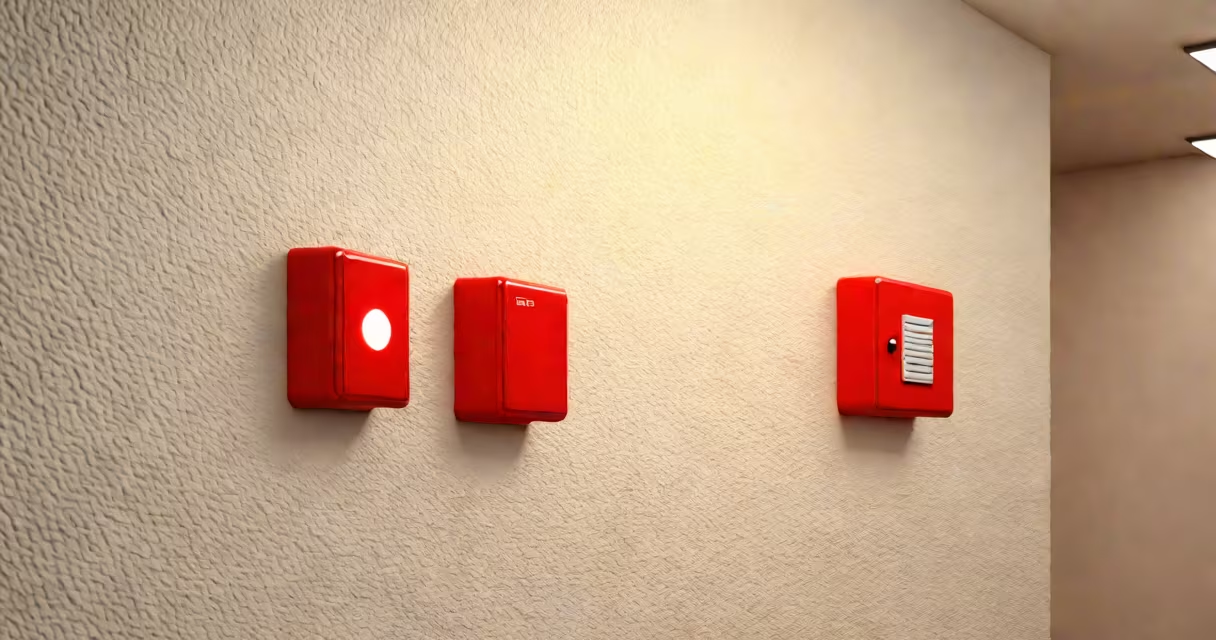
Fire alarms are electronic warning systems designed to detect signs of fire-such as smoke, heat, or flame-and immediately sound an audible alert to warn people in a building. They are critical components of fire safety infrastructure, required by law in most homes, schools, and workplaces.
These systems operate through sensors that monitor environmental changes. When thresholds are exceeded-like a sudden rise in temperature or visible smoke-the alarm activates, typically emitting a loud, continuous siren. This alerts occupants to evacuate quickly, reducing injury and fatality risk during fires.
According to the National Fire Protection Association (NFPA), having working smoke alarms in homes reduces the risk of dying in a reported home fire by nearly 50%. The U.S. Consumer Product Safety Commission (CPSC) reports that 60% of home fire deaths occur in homes without working smoke alarms, underscoring their life-saving role.
Fire alarms rely on sensor technology to detect early signs of fire. Most common models use either ionization or photoelectric sensors. Ionization alarms respond faster to flaming fires-those with high heat and low smoke-while photoelectric alarms detect smoldering fires earlier, which produce more smoke before flames appear.
When a sensor detects a threat, it triggers a control panel that powers the alarm's siren. Modern systems often include battery backup, ensuring operation during power outages. Some advanced units connect to smart home systems, sending push notifications to mobile devices when activated.
In commercial buildings, fire alarms integrate with building management systems. A single alarm can initiate multiple actions: sounding zone-specific sirens, activating sprinklers, shutting down HVAC systems to prevent smoke spread, and notifying emergency services automatically.
Fire alarms come in several forms based on detection method, installation type, and application. The table below outlines the primary categories:
| Type | Detection Method | Best For | Example Use Case |
|---|---|---|---|
| Ionization | Radioactive material ionizes air; smoke disrupts current | Fast-flaming fires (e.g., grease or paper) | Kitchen or garage installations |
| Photoelectric | Beam of light scattered by smoke particles | Smoldering fires (e.g., overheated wiring) | Bedrooms, living rooms |
| Heat Detectors | Sense rapid temperature rise or sustained high temps | Areas prone to false alarms (e.g., kitchens) | Commercial kitchens, garages |
| Combination Alarms | Use both ionization and photoelectric sensors | Maximum protection across fire types | Whole-home installations |
The NFPA recommends using dual-sensor alarms-combining photoelectric and ionization technologies-for optimal coverage. Single-sensor units may miss certain fire types, especially those that start slowly.
Fire alarms are mandatory in all residential buildings with sleeping areas, according to the International Residential Code (IRC). They must be installed inside each bedroom, outside each sleeping area, and on every level of a home-including basements.
Commercial and industrial spaces require more complex systems. A typical office building may have dozens of interconnected alarms, each linked to a central fire panel. These panels display the location of activation and can interface with emergency response systems.
A real-world example: In 2021, a fire in a New York City apartment building was detected by a photoelectric alarm in the kitchen. The occupant heard the alert, evacuated safely, and called 911. Firefighters arrived within seven minutes. The alarm prevented a fatality and limited structural damage. Without it, the fire could have spread rapidly due to flammable furnishings.
Many people assume that all fire alarms are the same. They are not. Smoke alarms and fire alarms serve similar purposes but differ in scale and function. Smoke alarms are standalone devices used in homes. Fire alarms refer to larger, integrated systems used in public and commercial buildings.
Another misconception: that alarms only activate during actual fires. In reality, they can be triggered by steam, dust, or cooking fumes. This leads to false alarms-common in kitchens. However, disabling alarms to avoid false alerts increases risk. The CPSC notes that 30% of fatal home fires occurred in homes where alarms were disabled or missing.
A lesser-known fact: fire alarms must be tested monthly. The NFPA requires testing by pressing the test button for at least 10 seconds. If the alarm fails to sound, replace the batteries immediately. Many homes fail this basic step. A 2022 study by the American Red Cross found that 38% of households had at least one non-functional smoke alarm.
I once installed a dual-sensor fire alarm in my basement during a renovation. The unit had a hardwired connection with battery backup. After two weeks, the alarm sounded during a minor electrical fault caused by a loose wire. The siren alerted me before smoke spread. I shut off the circuit, reset the alarm, and replaced the faulty wiring. That incident confirmed the value of early detection-even for non-fire events.
For maximum reliability, replace batteries annually, clean sensors quarterly, and replace entire units every 10 years. The CPSC states that older alarms lose sensitivity over time. Even if they seem to work, performance degrades. Replacing units on schedule ensures consistent protection.