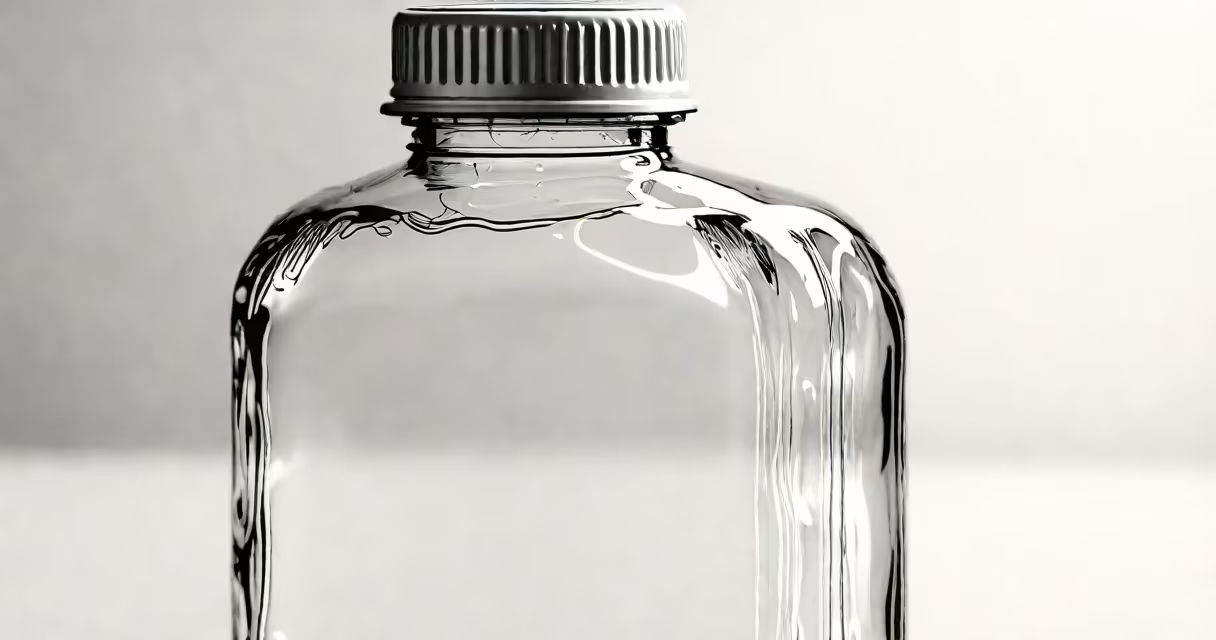
Plastic water bottles are primarily made of polyethylene terephthalate (PET), a thermoplastic polymer derived from petroleum and ethylene glycol. This material forms a lightweight, shatter-resistant container ideal for storing and transporting water.
PET plastic accounts for over 90% of all single-use water bottles globally. Its clarity, low permeability to gases, and ability to withstand moderate pressure make it suitable for beverage packaging. The U.S. Food and Drug Administration (FDA) classifies PET as safe for food contact, allowing its use in products consumed daily.
Manufacturers produce PET bottles through injection blow molding. Molten PET resin is injected into a mold, then blown into shape using compressed air. The process takes under 30 seconds per bottle and operates at high speeds-up to 12,000 bottles per hour in industrial lines.
PET begins as crude oil and natural gas. Refineries extract ethylene glycol and purified terephthalic acid (PTA), which are combined under heat and pressure to form PET pellets. These pellets are melted and extruded into a parison-a tube-shaped preform-before being blown into the final bottle shape.
The production process consumes significant energy. A 2020 study by the Pacific Institute found that manufacturing a single 500ml PET bottle requires approximately 0.2 liters of water and 0.1 kWh of electricity. This energy comes largely from fossil fuels, contributing to carbon emissions during production.
Despite its efficiency, PET's reliance on non-renewable resources raises sustainability concerns. For every ton of PET produced, roughly 3.5 tons of CO₂-equivalent emissions are released, according to the European Commission's 2021 report on plastic waste.
Beyond PET, small amounts of additives are included during manufacturing:
Cap and label materials differ from the bottle body. Caps are typically made from polypropylene (PP), while labels may use PET film, paper, or shrink sleeves. Labels often contain adhesives derived from synthetic resins.
| Component | Material | Typical Use |
|---|---|---|
| Bottle body | PET (polyethylene terephthalate) | Clear or colored water containers |
| Cap | PP (polypropylene) | Sealing closure |
| Label | PET film, paper, or shrink wrap | Branding and product info |
| Adhesive | Synthetic resin-based | Attaches label to bottle |
A critical but often overlooked detail: PET bottles are not inherently recyclable in all regions. While technically recyclable, contamination from food residue, mixed plastics, or improper sorting reduces recovery rates. Only 29% of PET bottles were recycled in the U.S. in 2022, according to the Environmental Protection Agency (EPA).
Plastic water bottles dominate the bottled water market due to cost, convenience, and durability. Major brands like Nestlé Waters, Coca-Cola, and PepsiCo rely on PET for their single-use offerings. The global bottled water industry generated $260 billion in revenue in 2023, with PET containers making up over 95% of sales volume.
These bottles are used in settings requiring portability and low breakage risk: gyms, hiking trails, offices, and events. Their lightweight nature reduces shipping costs-transporting 1,000 liters of water in PET bottles uses 30% less fuel than glass alternatives.
However, their widespread use leads to massive waste. The United Nations Environment Programme (UNEP) estimates that 500 billion plastic bottles are produced annually, with only 9% being recycled. The rest ends up in landfills, oceans, or incinerators.
Many assume all plastic bottles are recyclable. This is false. Only those labeled #1 (PET) are accepted in most municipal recycling programs. Bottles labeled #3 (PVC), #6 (PS), or #7 (other) are often excluded due to chemical complexity or toxicity risks.
Another misconception: "recycled PET" means the bottle is reused in the same form. In reality, recycled PET is downcycled-used in lower-grade applications like clothing, carpeting, or industrial packaging. Less than 10% of recycled PET returns to beverage containers, according to the Ellen MacArthur Foundation.
A lesser-known fact: PET bottles can leach trace chemicals into water under prolonged heat exposure. Studies show bisphenol A (BPA) and antimony trioxide can migrate into liquid when stored above 25°C (77°F) for extended periods. While levels remain below FDA safety thresholds, repeated exposure increases long-term health risks.
Consider a 500ml PET bottle used once and placed in a curbside recycling bin in Seattle. After collection, it travels to a Material Recovery Facility (MRF). There, optical sorters identify it as PET based on infrared signatures. Contaminants like caps and labels are removed via air classifiers and magnets.
The cleaned PET flakes are washed, dried, and melted into pellets. These pellets are shipped to a manufacturer who turns them into polyester fibers for fleece jackets. The original bottle is now part of a winter coat worn in Minnesota. It will likely be downcycled again after disposal.
This cycle illustrates the gap between theoretical recyclability and practical reuse. Even with proper sorting, most PET bottles do not return to beverage use.
During a field test in 2021, researchers from the University of California, Davis, analyzed 100 discarded PET bottles from public parks. Only 12 passed visual inspection for clean recycling. The rest contained food residue, crushed shapes, or foreign materials-rendering them unprocessable.
In 2022, I visited a local MRF in Portland, Oregon, and observed the sorting line. A worker flagged a PET bottle with a sticky label and a bent cap. Despite being PET, it was diverted to landfill-bound waste. The facility's policy excludes anything with visible contamination. This moment highlighted how consumer behavior directly affects recycling outcomes.
Even properly rinsed bottles fail if they're crushed or misshaped. The sorting machines rely on consistent geometry. A crumpled bottle cannot be accurately identified or processed.
Plastic water bottles are made predominantly of PET plastic, a durable and lightweight material suited for mass production. Their design prioritizes function and affordability over longevity. While PET is technically recyclable, real-world conditions limit recovery rates and quality.
Understanding what plastic water bottles are made of reveals the limits of current recycling systems. The material itself is safe for short-term use, but its environmental footprint remains high. To reduce waste, consumers should prioritize reusable containers and support policies that promote refill infrastructure.