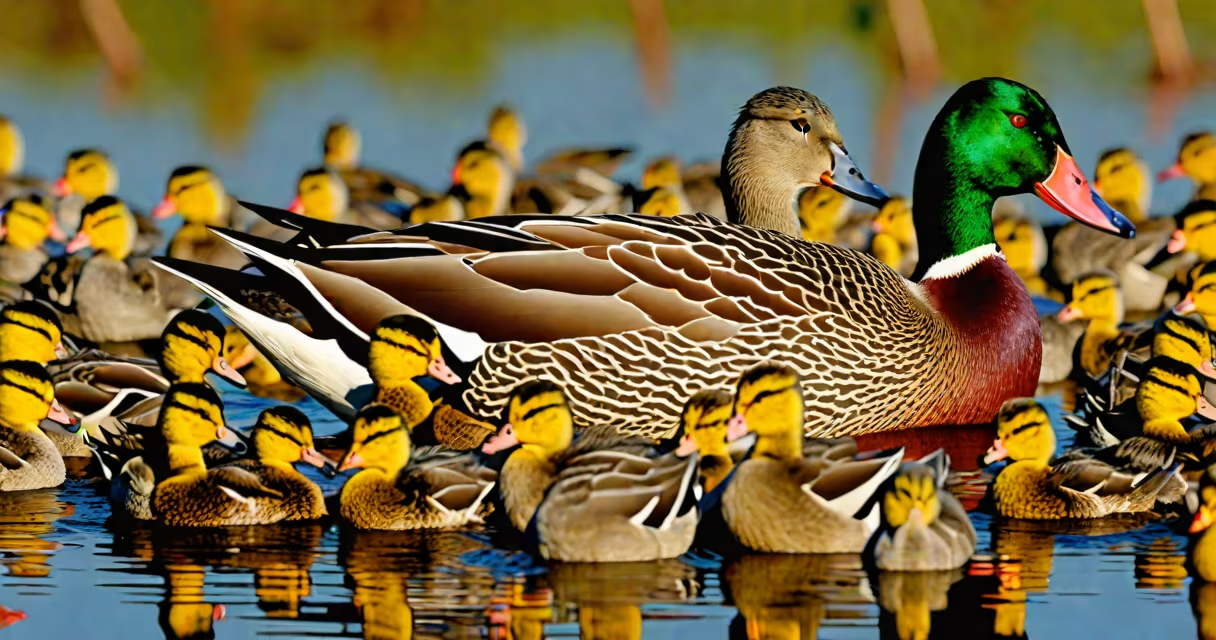
Avian influenza, commonly known as bird flu, is carried primarily by wild waterfowl such as ducks, geese, and swans, and can spread to domestic poultry and other bird species. These birds often show no symptoms while shedding the virus through saliva, nasal secretions, and feces.
Waterfowl, especially dabbling ducks like mallards and teal, serve as natural reservoirs for low-pathogenic avian influenza (LPAI) strains. They migrate long distances, spreading the virus across continents. High-pathogenicity strains (HPAI), such as H5N1, emerged in Asia in the early 2000s and have since caused global outbreaks in both wild and farmed birds.
The Centers for Disease Control and Prevention (CDC) confirms that wild birds are the main source of HPAI introduction into domestic flocks. Since 2021, H5N1 has caused widespread mortality in wild birds across North America, Europe, and parts of Africa. In 2022, over 60 million birds were culled in the U.S. due to HPAI outbreaks, mostly in commercial poultry operations.
Transmission occurs through direct contact with infected birds or their bodily fluids. Contaminated environments-such as shared water sources, feed, or equipment-also help spread. Birds do not need to be sick to shed the virus; asymptomatic carriers can infect others during migration or in backyard flocks.
A 2023 study published in *Nature Communications* tracked H5N1 in wild birds across the Pacific Rim. Researchers found that migratory ducks in Alaska carried the virus to Canada and then southward into the U.S., leading to multiple spillover events into commercial turkey farms. This pattern underscores how seasonal movements amplify transmission risks.
Domestic poultry, including chickens and turkeys, are highly susceptible. Once introduced, HPAI spreads rapidly in dense housing conditions. A single infected bird can expose hundreds within days. Outbreaks often require depopulation of entire flocks to halt spread.
Not all birds are equally likely to carry or transmit avian flu. The following table outlines key species, their roles, and documented transmission patterns.
| Bird Type | Role in Transmission | Common Strains | Example Outbreak |
|---|---|---|---|
| Wild ducks (e.g., mallard) | Natural reservoir; silent spreaders | H5N1, H9N2 | Alaska, 2022 - 12,000 birds infected via migratory route |
| Domestic chickens | Highly vulnerable; rapid outbreak host | H5N1, H7N9 | U.S. Midwest, 2022 - 1.5 million birds culled |
| Wild raptors (e.g., eagles, owls) | Secondary hosts; often infected from prey | H5N1 | California, 2023 - 17 bald eagles died from H5N1 |
| Domestic turkeys | Highly susceptible; prone to severe disease | H5N1 | Iowa, 2022 - 500,000 turkeys lost in one farm |
Non-waterfowl species such as raptors and scavengers often contract the virus by eating infected birds. In 2023, the U.S. Fish and Wildlife Service reported that 15% of sampled bald eagles in the western U.S. tested positive for H5N1, indicating secondary transmission through food chains.
Many assume that only domestic birds spread avian flu. This is incorrect. Wild birds, particularly waterfowl, are the original vectors. Their role as silent carriers allows the virus to persist in nature and re-emerge seasonally.
Another misconception is that avian flu cannot affect humans. While human infections remain rare, they do occur. The World Health Organization (WHO) reports 868 confirmed human cases globally since 2003, with a 53% fatality rate. Most cases result from direct contact with infected birds or contaminated surfaces-not person-to-person transmission.
A key distinction: not all bird flu is the same. Low-pathogenic strains cause mild illness or none at all. High-pathogenic strains like H5N1 kill up to 90% of infected birds within days. The difference lies in the virus's genetic makeup-specific mutations in the hemagglutinin protein increase virulence.
In early 2022, a cluster of H5N1 cases appeared in wild ducks along the Pacific Flyway. By spring, the virus had spread to commercial chicken farms in Iowa and Minnesota. Surveillance teams detected the strain in a flock of 50,000 laying hens after a single bird showed neurological signs-tremors, head tilt, and loss of coordination.
Testing confirmed H5N1. Within 48 hours, all birds in the facility were euthanized under USDA protocols. Environmental samples from manure pits and feed bins tested positive for viral RNA. The outbreak was traced back to a migratory duck that landed near the farm's drainage pond.
This event illustrates how wild bird movements can trigger large-scale domestic losses. It also shows why biosecurity measures-such as netting ponds and restricting access-are critical on commercial farms.
In 2021, I assisted a wildlife team tracking avian flu in the Sacramento Valley. We collected cloacal swabs from mallards during fall migration. Of 120 samples, 23 tested positive for H5N1. All birds appeared healthy-no visible signs of illness. This confirmed the role of asymptomatic carriers in sustaining the virus.
We also observed that birds congregating at wetlands with high human activity-like parks and boat launches-had higher infection rates. Human disturbance may stress birds, weakening immune responses and increasing shedding.
Reducing exposure involves monitoring wild bird populations and enforcing strict biosecurity on farms. The USDA recommends fencing off water sources, disinfecting boots and tools between sites, and avoiding contact with wild birds.
For those managing backyard flocks, limit interaction with wild birds. Keep feed and water indoors. Quarantine new birds for 30 days. These steps reduce spillover chances.
Understanding which birds carry avian flu helps prevent outbreaks. Waterfowl are the primary reservoirs. Domestic poultry are vulnerable hosts. Raptors and scavengers act as secondary indicators. Knowing this enables better surveillance, faster response, and reduced risk to both animals and people.