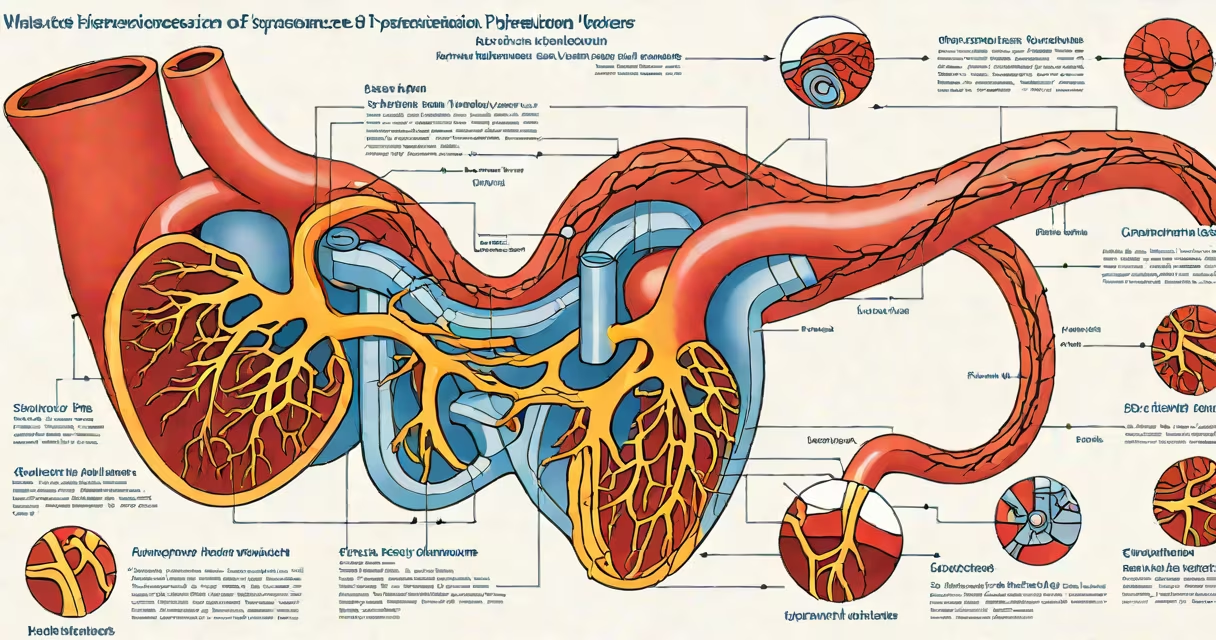
Hypertension, or persistently elevated blood pressure, causes progressive damage to arteries and important organs. Left untreated, it increases the risk of heart attack, stroke, kidney failure, vision loss, and cognitive decline. These outcomes result from sustained mechanical stress on blood vessel walls and reduced oxygen delivery to tissues.
Blood pressure is measured as systolic (top number) and diastolic (bottom number). A reading consistently above 130/80 mm Hg qualifies as hypertension according to the American Heart Association. This threshold reflects a 30% higher risk of cardiovascular events compared to normal levels (less than 120/80 mm Hg).
Arteries adapt poorly to chronic high pressure. Over time, the inner lining thickens, plaque builds up, and elasticity diminishes. This process accelerates atherosclerosis-the narrowing of arteries due to fatty deposits-and increases the likelihood of clots forming. When a clot blocks a coronary artery, a heart attack occurs. When it obstructs a cerebral artery, a stroke follows.
The heart, brain, kidneys, eyes, and blood vessels bear the brunt of uncontrolled hypertension. Damage accumulates silently over years, often without symptoms until severe complications arise.
Cardiovascular system: Hypertension forces the left ventricle to pump harder. This leads to left ventricular hypertrophy-a thickening of the heart muscle that reduces efficiency. Over time, this condition raises the risk of heart failure, arrhythmias, and sudden cardiac death. The Framingham Heart Study found that individuals with untreated hypertension had a 2.5-fold increased risk of developing heart failure within 10 years.
Brain: High pressure damages small arteries in the brain. This can cause microbleeds, white matter lesions, and reduced blood flow. These changes contribute to vascular dementia and increase stroke risk by 2-3 times. A 2021 study published in Nature Medicine linked hypertension to a 40% greater chance of cognitive impairment in adults aged 50-70.
Kidneys: The kidneys filter waste through millions of tiny capillaries. Hypertension damages these filters, reducing their ability to remove toxins. As filtration declines, protein leaks into urine-a sign of early kidney disease. Persistent hypertension leads to chronic kidney disease (CKD) and eventually end-stage renal disease requiring dialysis or transplant.
| Organ System | Primary Consequence | Risk Increase (vs. normal BP) |
|---|---|---|
| Heart | Left ventricular hypertrophy, heart failure | 2.5× |
| Brain | Vascular dementia, ischemic stroke | 2-3× |
| Kidneys | Chronic kidney disease, renal failure | 3× |
| Eyes | Retinal hemorrhage, vision loss | 2.2× |
Eyes suffer from retinal artery narrowing and bleeding. Hypertensive retinopathy appears as swollen optic discs and hemorrhages visible during eye exams. Severe cases lead to permanent vision loss. The National Eye Institute reports that 1 in 6 people with stage 3 hypertension develop vision-threatening retinopathy.
Many assume hypertension only affects older adults or those with obesity. This is incorrect. Hypertension impacts people of all ages, including children and young adults. The CDC notes that nearly 1 in 3 U.S. adults have hypertension, and 1 in 5 don't know they have it.
Another misconception is that symptoms appear early. In reality, hypertension is asymptomatic in 90% of cases. People may feel fine while silent damage progresses. Some report headaches or dizziness, but these are unreliable indicators. Relying on symptoms delays diagnosis and treatment.
A lesser-known fact: hypertension contributes to erectile dysfunction in men. The American Urological Association states that men with uncontrolled hypertension are twice as likely to experience erectile issues due to restricted blood flow to pelvic organs. This connection is often overlooked in clinical settings.
John M., a 48-year-old software engineer, had no history of heart disease. His annual physical showed a blood pressure of 158/96 mm Hg. He dismissed it as "just stress." Two years later, he suffered a mild stroke. Brain imaging revealed multiple small infarcts in the basal ganglia-damage consistent with long-standing hypertension.
After the stroke, John was diagnosed with stage 2 hypertension. He began medication and lifestyle changes. Within six months, his blood pressure dropped to 128/82 mm Hg. His doctor emphasized that the stroke could have been prevented with earlier intervention. John now attends regular monitoring appointments and takes antihypertensives daily.
This case illustrates how hypertension operates silently. The damage occurred over years before symptoms emerged. Early screening and treatment could have avoided the event entirely.
Controlling blood pressure reduces the risk of complications by up to 50%, according to the SPRINT trial. Lifestyle modifications include reducing sodium intake to less than 1,500 mg per day, increasing potassium-rich foods like bananas and spinach, exercising 150 minutes weekly, and maintaining a healthy weight.
Medications such as ACE inhibitors, calcium channel blockers, and diuretics are effective. The choice depends on comorbid conditions. For example, ACE inhibitors benefit patients with diabetes by protecting kidney function. Beta-blockers are preferred in those with prior heart attacks.
Regular monitoring is essential. Home blood pressure monitors provide accurate readings when used correctly. The American Heart Association recommends checking at home at least once daily for a week to establish baseline patterns.