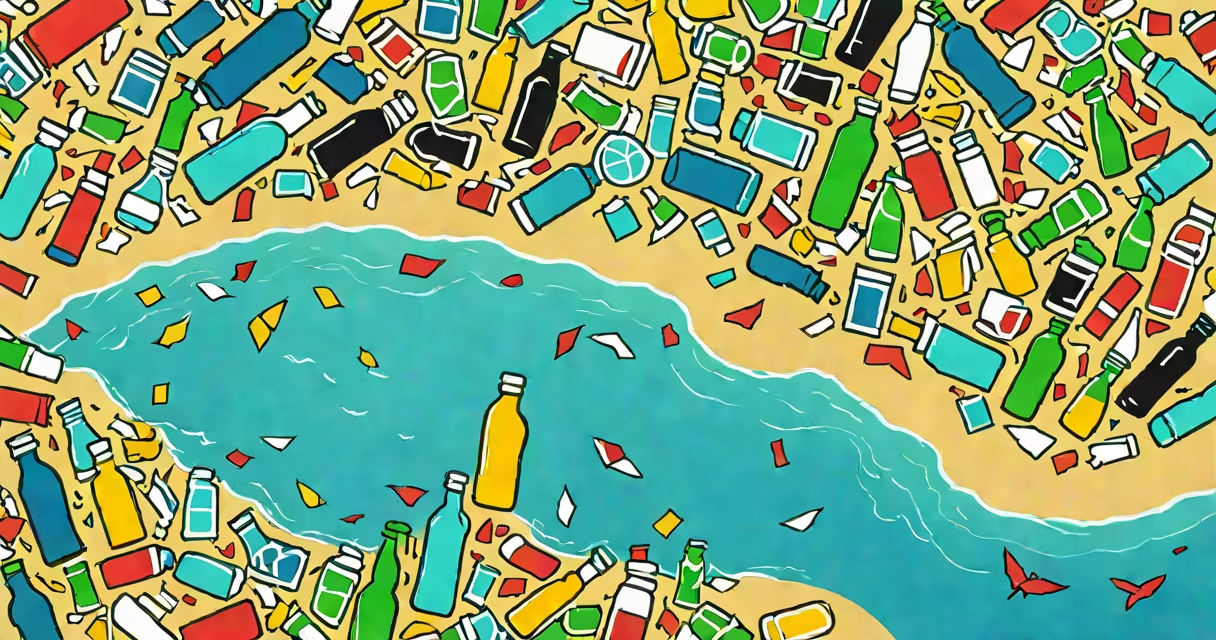
Plastic pollution results from the global overproduction and improper disposal of synthetic polymers, primarily derived from fossil fuels. These materials persist in ecosystems for centuries, accumulating in landfills, rivers, and oceans due to weak recovery systems and high consumption rates.
Plastic pollution originates from multiple stages of the product lifecycle. Industrial manufacturing releases resin pellets and production waste. Consumer use generates single-use packaging, bottles, and disposable items. After disposal, inadequate collection, recycling, and landfill management allow plastics to escape into the environment. Once released, they fragment into microplastics under sunlight and mechanical stress.
According to the United Nations Environment Programme (UNEP), over 400 million tons of plastic are produced annually, with less than 10% recycled. The Ellen MacArthur Foundation reports that by 2050, there could be more plastic than fish in the ocean by weight if current trends continue. These figures reflect systemic failures in design, policy, and infrastructure.
Single-use plastics dominate the pollution stream. Items like shopping bags, food containers, straws, and cutlery are used for minutes but persist for centuries. A 2021 study in *Science Advances* found that 40% of all plastic produced is designed for one-time use, with 79% ending up in landfills or the natural environment.
Industrial processes contribute through resin pellet spills. During transport and manufacturing, these small polymer beads-known as nurdles-frequently leak into waterways. A 2017 incident in South Africa saw 16 tons of nurdles wash ashore, contaminating beaches and entering marine food chains.
Wastewater treatment plants fail to capture microplastics. Synthetic fibers shed during laundry pass through filters and enter rivers and oceans. Research from the University of Exeter shows that a single load of washing can release over 700,000 microfibers into wastewater.
| Source Type | Common Items | Environmental Fate |
|---|---|---|
| Single-use consumer goods | Bottles, bags, food wrappers | Leak into soil and water; fragment into microplastics |
| Industrial resin pellets | Nurdles, raw material pellets | Spill during shipping; accumulate on coastlines |
| Textile fibers | Laundry lint, synthetic clothing | Pass through wastewater filters; enter marine ecosystems |
Only 9% of all plastic ever made has been recycled, according to a 2017 analysis in *Science*. Most plastic is not recyclable due to mixed resins, contamination, or degradation during use. Even when collected, sorting and processing require energy-intensive systems not available globally.
Many countries export plastic waste to nations with weaker regulations. A 2022 report by the Basel Convention found that 120 million metric tons of plastic waste were exported between 2000 and 2020, with much of it dumped or burned in low-income regions.
Recycling rates vary widely. Germany recycles 66% of its plastic packaging; the U.S. recycles 9%. This disparity reflects differences in policy, infrastructure, and public participation. Countries without formal waste collection systems see nearly all plastic waste enter the environment.
Marine animals ingest or become entangled in plastic debris. A 2020 study in *Marine Pollution Bulletin* documented 1,000 cases of sea turtles ingesting plastic, leading to internal blockages and death. Microplastics have been found in 90% of tested seabirds and 75% of sampled fish species.
Plastic additives like phthalates and bisphenol A leach into food and water. The World Health Organization (WHO) identifies these chemicals as potential endocrine disruptors linked to developmental and reproductive issues in humans. While direct health effects from microplastic ingestion remain under study, evidence suggests long-term risks.
Land-based plastic pollution contributes to soil degradation. A 2023 study in *Environmental Science & Technology* showed that microplastics reduce microbial diversity in agricultural soils, impairing nutrient cycling and crop yields.
Plastic pollution is not solely caused by individual behavior. While consumer choices matter, structural factors-such as lack of regulation, corporate production models, and global trade in waste-drive most pollution. Blaming individuals distracts from systemic reform.
Biodegradable plastics do not solve the problem. Many labeled "biodegradable" still require industrial composting facilities to break down. In natural environments, they degrade slowly and may still release toxic compounds. A 2021 review in *Nature Sustainability* found that 90% of bioplastics tested did not fully decompose in marine conditions.
Recycling is not a sustainable solution on its own. Repeated recycling degrades plastic quality. Most plastics are downcycled into lower-grade products, then discarded. True reduction requires minimizing production and designing for reuse.
The Great Pacific Garbage Patch spans 1.6 million square kilometers-twice the size of Texas. It contains over 1.8 trillion pieces of plastic, weighing 80,000 tons. Most debris consists of fishing nets, plastic bottles, and fragments from consumer goods.
Research led by The Ocean Cleanup project analyzed samples from the patch and found that 46% of plastic mass came from fishing gear. The remaining 54% originated from land-based sources, including urban runoff and improperly managed waste. The patch's persistence highlights how plastic pollution accumulates over decades in ocean gyres.
During a 2023 cleanup mission, the organization removed 1.2 million kilograms of plastic in six months. But the system still collects only 1% of the total debris annually. This illustrates the scale of the challenge: cleanup efforts cannot keep pace with ongoing inputs.
Plastic pollution arises from production, consumption, and disposal failures across global systems. Single-use items, industrial spills, and textile shedding are major contributors. Recycling alone cannot address the crisis. Effective solutions require reducing plastic use, improving waste infrastructure, and enforcing international waste trade laws.