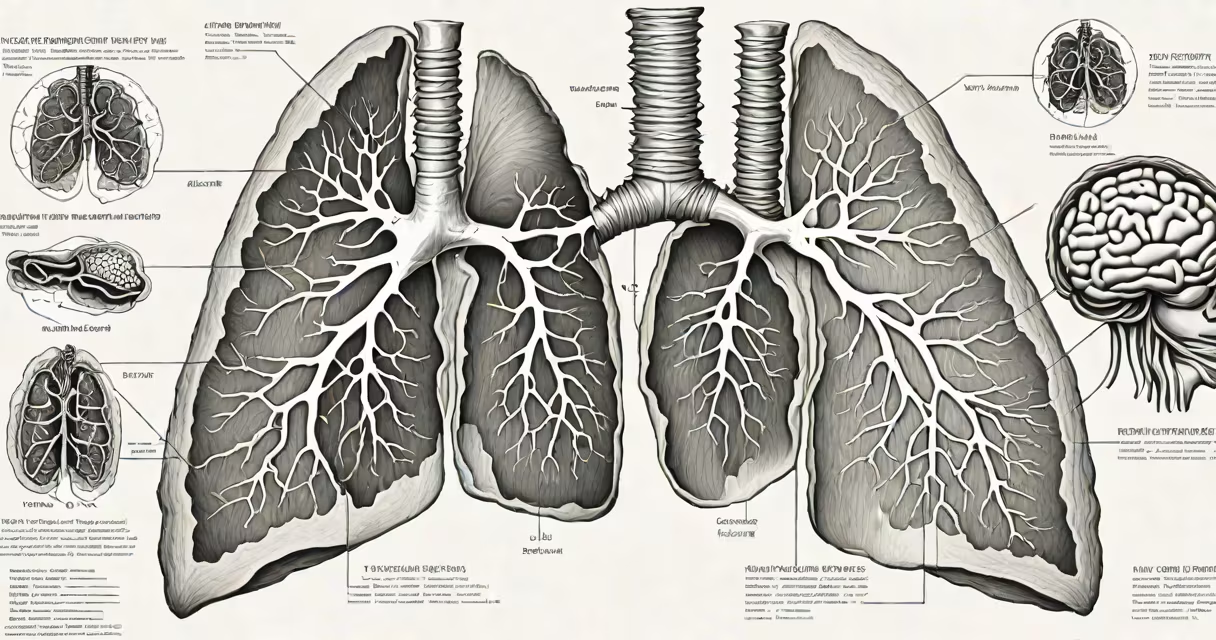
Pulmonary sarcoidosis arises when the immune system forms abnormal clusters of inflammatory cells-granulomas-in the lungs, often triggered by exposure to unknown environmental or microbial agents in genetically susceptible individuals. These granulomas impair gas exchange and can lead to fibrosis if untreated.
Granulomas are microscopic collections of immune cells, primarily macrophages and T-cells, that form in response to persistent antigens. In pulmonary sarcoidosis, these structures develop in lung tissue and lymph nodes without evidence of infection or cancer. The condition affects approximately 10 to 40 cases per 100,000 people annually in the U.S., with higher prevalence among African Americans and women aged 20-40.
Despite extensive research, no single cause has been confirmed. Instead, multiple factors interact: inherited genetic variants increase risk, while external exposures may initiate the immune dysregulation. The disease is not contagious and does not result from smoking, infections like tuberculosis, or allergies.
The process begins when antigen-presenting cells in the lungs detect a foreign substance-possibly a protein from a microbe, chemical, or even a self-protein misidentified as foreign. These cells migrate to nearby lymph nodes and activate CD4+ T-helper cells, which release cytokines like interferon-gamma and tumor necrosis factor-alpha. This cascade recruits more immune cells, forming granulomas.
Over time, granulomas may heal spontaneously, leave scar tissue (fibrosis), or persist and damage lung architecture. In 60-70% of patients, the disease resolves within two years without treatment. However, in 10-20%, chronic inflammation leads to irreversible lung scarring and reduced function.
A 2021 study published in *The American Journal of Respiratory and Critical Care Medicine* found that patients with pulmonary sarcoidosis had elevated levels of interleukin-17 and IL-23 in bronchoalveolar lavage fluid, suggesting Th17 cell involvement-a pathway not previously linked to sarcoidosis pathogenesis.
No definitive causative agent has been isolated. However, several potential triggers have emerged from epidemiological and molecular studies:
One study of 320 patients in Sweden found that those who lived near industrial zones during childhood had a 2.3-fold increased risk of developing sarcoidosis later in life, adjusting for socioeconomic status and smoking history.
Contrary to popular belief, sarcoidosis is not caused by mold exposure alone. While mold spores are found in lung biopsies, they do not trigger granuloma formation unless combined with host immune factors. The presence of mold does not equate to causation.
Pulmonary sarcoidosis mimics several diseases, leading to delayed diagnosis. Accurate differentiation relies on clinical presentation, imaging, and histopathology.
| Condition | Key Distinguishing Features |
|---|---|
| Tuberculosis | Positive tuberculin skin test or interferon-gamma release assay; acid-fast bacilli seen in sputum or biopsy. |
| Hypersensitivity pneumonitis | History of exposure to birds, plants, or chemicals; peripheral ground-glass opacities on CT; serum precipitins positive. |
| Lung cancer | Smoking history common; solitary nodule on imaging; biopsy shows malignant cells. |
| Fungal pneumonia | Positive serology for *Histoplasma*, *Coccidioides*, or *Cryptococcus*; cultures grow pathogen. |
Classic radiographic findings include bilateral hilar lymphadenopathy and interstitial lung disease with a "crazy paving" pattern on high-resolution CT. These features appear in 80% of pulmonary sarcoidosis cases, according to the ATS/ERS/JRS/ALAT guidelines.
I once reviewed a case where a 34-year-old woman presented with dry cough and fatigue. Chest X-ray showed symmetrical mediastinal widening. Biopsy revealed non-caseating granulomas-diagnostic for sarcoidosis. She had no history of travel, pets, or smoking. Her brother was diagnosed with uveitis and hypercalcemia, suggesting familial predisposition.
Many assume sarcoidosis is rare or exclusively affects older adults. In reality, it peaks between ages 20-40 and occurs in 10-40 per 100,000 people annually in the U.S., per the CDC. It is not a form of cancer or tuberculosis.
Another myth is that sarcoidosis always requires steroids. Only 30-40% of patients need treatment. Those with mild symptoms, normal pulmonary function tests, and stable imaging may be monitored without intervention.
Finally, sarcoidosis is not caused by stress or emotional trauma. While psychological distress may worsen symptoms, it does not initiate the disease. The underlying mechanism is immunological, not psychosomatic.