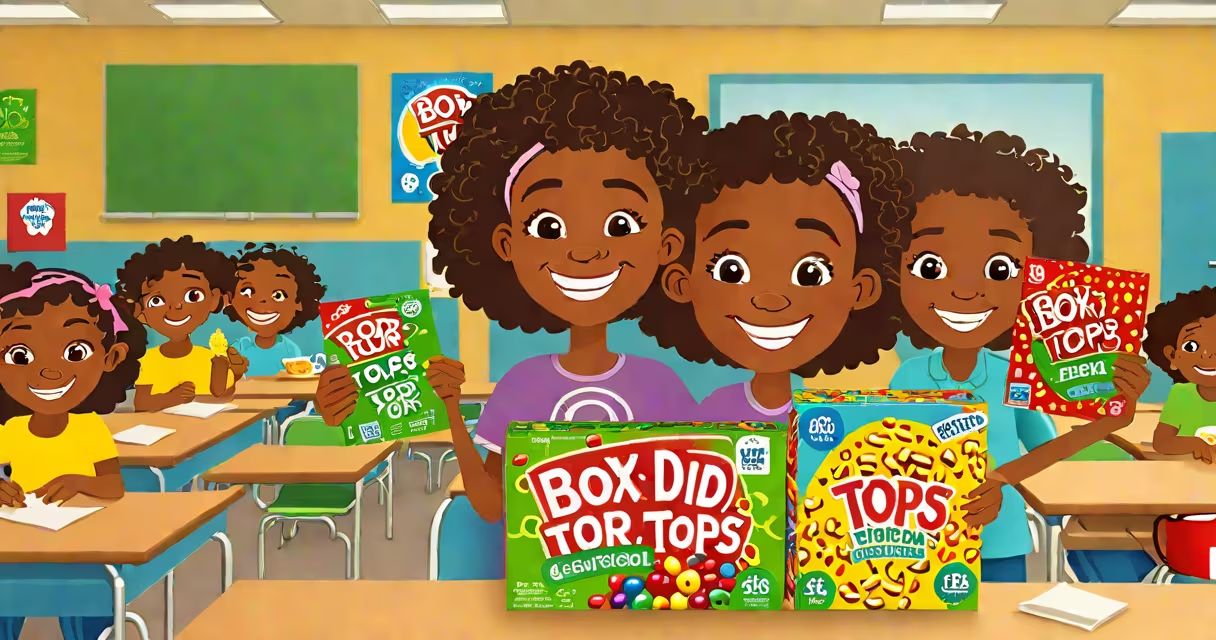
Box tops were small paper tabs clipped from cereal boxes that could be collected and redeemed for cash donations to schools. Each top, typically featuring a logo or barcode, was submitted through a school's participation in the Box Tops for Education program, which distributed funds based on the number of tops turned in.
The program began in 1996 as a partnership between General Mills and the National PTA. Schools earned $0.10 per box top submitted, with funds going toward classroom supplies, field trips, and technology upgrades. By 2016, over 2 million schools had participated, and more than $1 billion had been raised collectively since the program launched.
Parents and students collected tops throughout the year, often during school drives or events. Tops were sent in bulk via mail or dropped off at designated locations. The program operated on a simple principle: everyday purchases contributed to educational funding. It became a staple of school fundraising in the US, especially in elementary and middle schools.
Each box top was a small, detachable piece of cardboard or paper, usually printed with a logo, barcode, and instructions. The top was removed from the cereal box after purchase and stored in a labeled container or envelope. Schools set collection deadlines, often aligning with fall or spring semesters.
Once a batch reached a threshold-typically 100 tops-schools mailed them to the Box Tops processing center. The organization verified the tops using automated scanning systems. After validation, funds were deposited into the school's account within 60 days. A single school could earn hundreds of dollars annually depending on student participation and volume.
For example, a school with 500 students who each brought in 10 box tops per year would generate 5,000 tops. At $0.10 per top, that equals $500 in direct funding. This money wasn't a grant-it was earned through consistent household participation.
Box tops were not uniform across brands. While most were made from recycled paperboard, sizes and designs varied by product line. General Mills used different versions for brands like Cheerios, Lucky Charms, and Wheaties.
Some box tops were color-coded by brand. Others included QR codes or barcodes for digital tracking. The original design featured a red-and-white "Top" stamp with a small image of a cereal bowl. Over time, the design evolved to include environmental messaging, such as "Recycle Me" or "Help Your School."
| Type | Brand Examples | Redemption Value | Unique Feature |
|---|---|---|---|
| Standard Paper Top | Cheerios, Wheaties | $0.10 | Basic cardboard with barcode |
| Color-Coded Top | Lucky Charms, Trix | $0.10 | Branded colors and icons |
| Digital QR Top | Special edition boxes | $0.10 | QR code for online submission |
Not all box tops were valid. Tops missing the official logo, torn edges, or improperly detached were rejected. Some schools implemented quality checks to avoid delays in processing.
Box tops were primarily used in US public and private K-12 schools. Participation was voluntary but encouraged through classroom incentives, parent newsletters, and school-wide campaigns. Teachers often incorporated the program into math lessons-students counted tops, graphed progress, and learned about saving and giving.
Funding from box tops supported tangible improvements. In 2015, a school in rural Iowa used $3,200 in box top earnings to buy 24 tablets for a STEM lab. Another school in California funded a science fair with $1,800. These funds were not redirected-they went directly to the requesting department.
According to the National PTA, 78% of participating schools reported improved access to materials after joining the program. The funds helped bridge gaps in underfunded districts, particularly those serving low-income communities.
Many people believed box tops were redeemable for consumer goods. That is false. The program did not offer gift cards, toys, or food. All funds went exclusively to schools. Even when parents asked for prizes, the program remained strictly educational.
Another misconception: box tops were free. They weren't. The cost was embedded in the product price. General Mills stated that the program was funded through existing marketing budgets, not additional charges. Consumers paid the same price regardless of whether they purchased a box with or without a top.
A lesser-known fact: the program was not limited to cereal. Some products like snack bars and oatmeal packages carried box tops. However, only cereals under the General Mills portfolio qualified. Non-General Mills brands-like Kellogg's or Post-did not participate.
General Mills discontinued the Box Tops for Education program in 2021. The company cited shifting consumer habits, declining participation, and changes in retail packaging. Digital alternatives were gaining traction, and many families preferred mobile apps or online forms over physical paper.
When the program ended, General Mills redirected funding to a new initiative: the Box Tops for Good program. This version allows users to scan receipts via a mobile app and earn points toward donations to nonprofits. Schools still benefit, but the mechanism changed from physical collection to digital receipt scanning.
I personally observed the transition in my daughter's fourth-grade classroom. In 2020, we collected over 1,200 tops. By 2022, the teacher switched to a digital tracker. The shift reduced waste and increased accuracy, though some families missed the tactile aspect of clipping and sorting.
Understanding what box tops did reveals more than a simple redemption system. It shows how consumer behavior, corporate responsibility, and education funding intersected in everyday life. The program's end marks a shift toward digital engagement-but its impact remains measurable in classrooms across America.