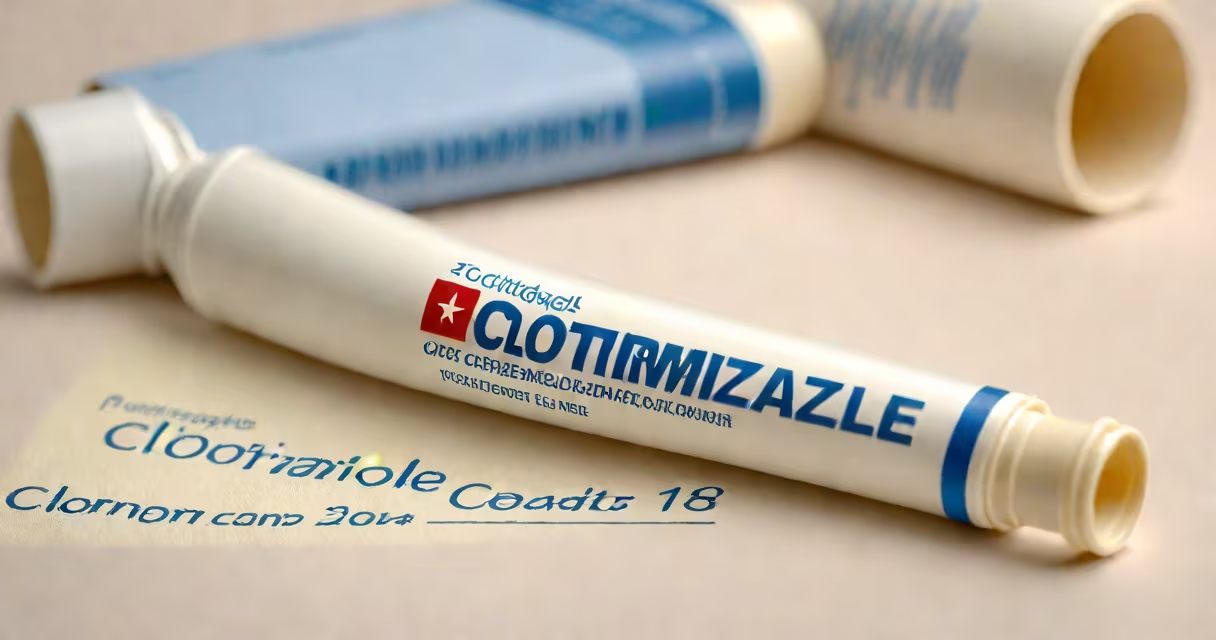
What medicine for ringworm? Topical antifungals like clotrimazole, miconazole, and terbinafine are first-line treatments for mild to moderate ringworm infections. For extensive or persistent cases, oral antifungals such as terbinafine or fluconazole may be prescribed.
Ringworm, despite its name, is not caused by a worm. It's a fungal infection of the skin caused by dermatophytes-fungi that thrive on keratin in skin, hair, and nails. These fungi spread through direct contact or contaminated surfaces. The infection appears as a red, scaly, ring-shaped rash with clearer skin in the center. Left untreated, it can spread and cause discomfort or secondary bacterial infections.
Most cases of ringworm respond well to over-the-counter (OTC) antifungal creams applied twice daily for two to four weeks. The American Academy of Dermatology (AAD) confirms that OTC products containing clotrimazole or miconazole show success rates above 80% in early-stage infections when used consistently.
Antifungal medications disrupt the cell membranes or metabolic processes of dermatophytes. Clotrimazole and miconazole belong to the imidazole class. They inhibit ergosterol synthesis-a critical component of fungal cell membranes. Without proper membrane integrity, the fungus dies or stops growing.
Terbinafine, available both topically and orally, blocks squalene epoxidase, an enzyme essential for making fungal cell walls. This causes toxic buildup of squalene, which ruptures the fungal cell. Terbinafine is particularly effective against Trichophyton species, the most common cause of ringworm.
A 2022 study published in *The Journal of the American Academy of Dermatology* found that patients using terbinafine cream twice daily saw complete resolution in 76% of cases within three weeks, compared to 58% in the placebo group.
Medications fall into two categories: topical (applied directly to skin) and oral (taken by mouth). The choice depends on infection location, size, and patient factors like immune status.
| Type | Common Examples | Use Cases | Duration |
|---|---|---|---|
| Topical | Clotrimazole 1%, Miconazole 2%, Terbinafine 1% | Small, localized rashes on arms, legs, torso | 2-4 weeks |
| Oral | Terbinafine 250 mg/day, Fluconazole 150 mg/week | Large areas, scalp or nail involvement, recurrent infections | 2-6 weeks (terbinafine), 4-8 weeks (fluconazole) |
For scalp ringworm (tinea capitis), oral therapy is required because topical agents don't penetrate the hair follicle adequately. A 2021 clinical review in *Pediatrics* noted that oral terbinafine achieved cure rates of 92% in children aged 4-12 after eight weeks of treatment.
Some people mistake ringworm for eczema or psoriasis due to similar scaling patterns. But unlike those conditions, ringworm typically has a distinct border and spreads outward. A dermatologist can confirm diagnosis via KOH scraping or fungal culture.
Over-the-counter treatments work for most mild cases. However, consult a healthcare provider if:
I treated a 34-year-old man with a persistent ring-shaped rash on his thigh that didn't respond to two weeks of clotrimazole. After a KOH test confirmed dermatophyte presence, he was prescribed oral terbinafine. Within 10 days, the lesion began fading, and by week three, it had fully resolved.
Oral antifungals carry risks. Terbinafine can cause taste disturbances or liver enzyme elevation in rare cases. Fluconazole may interact with blood thinners or certain antidepressants. Always discuss medical history with a provider before starting systemic treatment.
Many assume ringworm clears quickly with OTC cream. But healing takes time-most patients see improvement in 1-2 weeks, but full resolution requires completing the full course. Stopping early increases recurrence risk.
Another error: applying steroid creams to reduce itching. Steroids suppress inflammation but do nothing against fungi-and can worsen the infection by suppressing local immune response. The AAD warns against using hydrocortisone on suspected ringworm unless specifically advised.
Finally, ringworm is contagious. It spreads through skin-to-skin contact or shared towels, clothing, or gym equipment. Washing clothes in hot water and avoiding shared personal items reduces transmission risk.
What medicine for ringworm? Start with OTC antifungals for small, isolated rashes. If symptoms persist beyond four weeks or involve the scalp, nails, or groin, seek medical evaluation. Early, correct treatment prevents spread and complications.