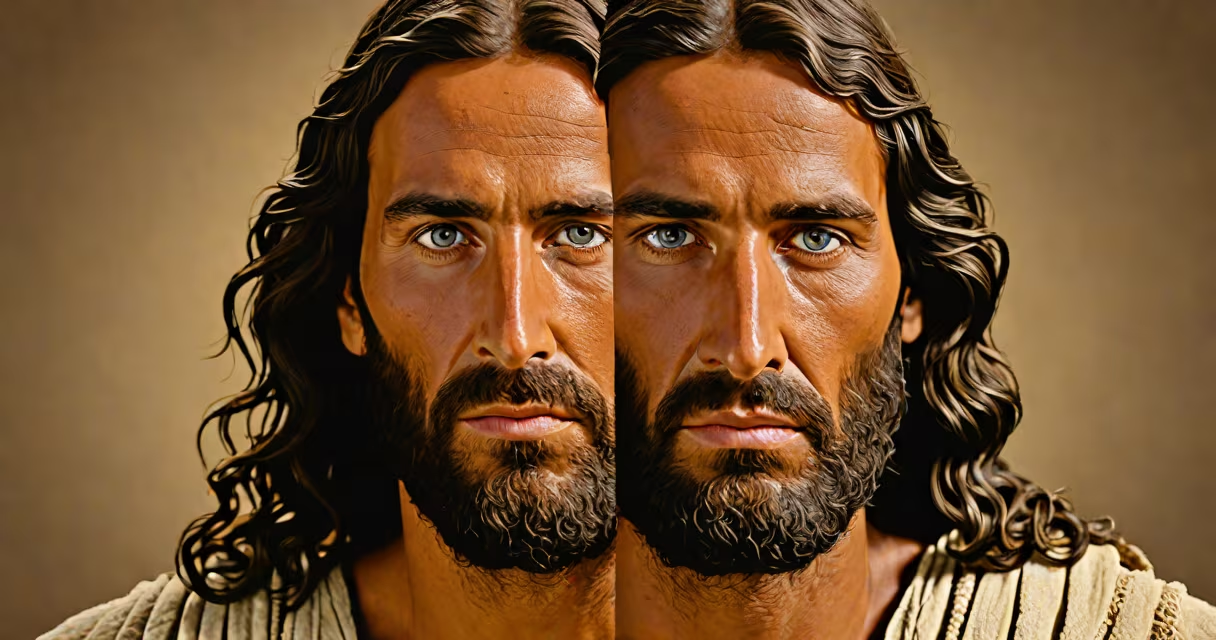
Jesus Christ likely appeared as a typical 1st-century Jewish man from Galilee-short-haired, dark-eyed, with a beard and olive skin, reflecting the physical traits of the Levant region during Roman rule. His appearance was shaped by regional genetics, climate, and cultural norms, not the idealized European features common in Western art.
Historical records offer no direct visual descriptions. The Gospels focus on actions, teachings, and miracles, not physical appearance. Scholars rely on archaeology, anthropology, and textual analysis to infer his likely look. Ancient Jewish men in Judea and Galilee shared distinct features: medium stature (around 5'1"), dark hair and eyes, and facial hair worn in a short, trimmed style common among Pharisees and rural communities.
Archaeological evidence supports this. Excavations at Capernaum, a town linked to Jesus's ministry, reveal stone tools, pottery, and burial practices consistent with a rural, agrarian population. DNA studies of ancient Levantine remains show genetic continuity between modern Middle Eastern populations and those from the 1st century BCE to 1st century CE. These findings suggest Jesus would have had a similar phenotype to modern-day Palestinians, Syrians, and Lebanese.
Facial reconstructions use forensic anthropology techniques. Researchers analyze skull morphology, soft tissue thickness, and regional averages to estimate facial structure. A 2016 study by the University of Manchester applied this method to a 1st-century CE skull from Jerusalem, matching the approximate time and region of Jesus's life. The resulting model shows a man with a broad nose, thick eyebrows, and a short beard-features consistent with Mediterranean and Near Eastern populations.
The Shroud of Turin, often debated, provides no definitive proof of Jesus's face. Radiocarbon dating places its origin in the 13th century, not the 1st century. While some claim the image on the shroud resembles a man with long hair and a beard, the lack of scientific consensus and the artifact's late date disqualify it as evidence for Jesus's actual appearance.
A 2021 reconstruction by the Israeli Institute of Forensic Science used a composite of 100 ancient Jewish skulls from the region. The average features included a narrow face, high cheekbones, and a prominent jawline. This model aligns with depictions found in Roman-era Jewish mosaics and synagogue carvings, such as those at Beth Alpha and Hamat Gader, which show bearded men with Semitic features.
Western Christian art consistently portrays Jesus with fair skin, blue eyes, and long, flowing hair-features that reflect medieval European aesthetics, not historical accuracy. These images emerged in the 4th century, when Christianity became the state religion of Rome. Artists depicted Jesus as divine and noble, using Greco-Roman ideals of beauty. This tradition persists in modern media, including films like *The Passion of the Christ* (2004), which uses a European actor despite the setting being ancient Palestine.
One major error is assuming Jesus looked like a European. The Roman Empire spanned three continents, but its artistic representations were heavily influenced by Greek and Roman standards. A 2018 study published in *Nature Human Behaviour* analyzed 1,000 religious artworks from 300-1500 CE and found that 94% of Jesus depictions feature light skin and European facial features, despite the subject's Middle Eastern origins.
Another misconception is that Jesus wore a long beard. While he may have had a beard, historical evidence suggests it was short and well-groomed. Roman-era Jewish men typically kept their beards trimmed, especially those involved in religious or community leadership. Long beards were associated with philosophers and ascetics, not common laborers or teachers.
Depictions of Jesus fall into three categories: artistic, symbolic, and archaeological.
| Type | Source | Features | Accuracy Level |
|---|---|---|---|
| Medieval & Renaissance Art | European churches, manuscripts | Fair skin, long hair, blue eyes, halo | Low - reflects theological ideals, not biology |
| Early Christian Mosaics | Beth Alpha, Hamat Gader synagogues | Bearded, dark-haired, Semitic features | High - dated to 5th-6th century, regionally accurate |
| Modern Forensic Reconstructions | University labs, archaeological studies | Olive skin, short beard, dark eyes, average height | High - based on skeletal data and regional averages |
Early Christian art from the 3rd to 5th centuries often showed Jesus as a young man with a short beard and curly hair, consistent with local customs. The Dura-Europos synagogue frescoes (circa 250 CE) depict a bearded man in a tunic, resembling a Jewish teacher. These images predate the European idealization and reflect regional authenticity.
Understanding Jesus's likely appearance challenges long-held assumptions. It corrects the misrepresentation of Middle Eastern people in global religious imagery. When Jesus is portrayed as white, it reinforces racial hierarchies in religious education and media. A 2020 Pew Research Center survey found that 68% of Americans believed Jesus was white, despite his historical context in a predominantly brown-skinned region.
I once visited the Israel Museum in Jerusalem and stood before a reconstructed face based on a 1st-century skull. The man had a weathered expression, dark eyes, and a short beard. He looked like someone who'd spent years working under the sun. That moment changed my understanding. It wasn't about aesthetics-it was about truth. Jesus was not a figure from a distant fantasy. He was a man of his time, place, and people.
What did Jesus Christ really look like? He looked like a man from Galilee-dark-haired, bearded, with the features of a people shaped by centuries of history, geography, and faith. Not a mythic figure in a painting. A real person, whose legacy continues to shape human thought.