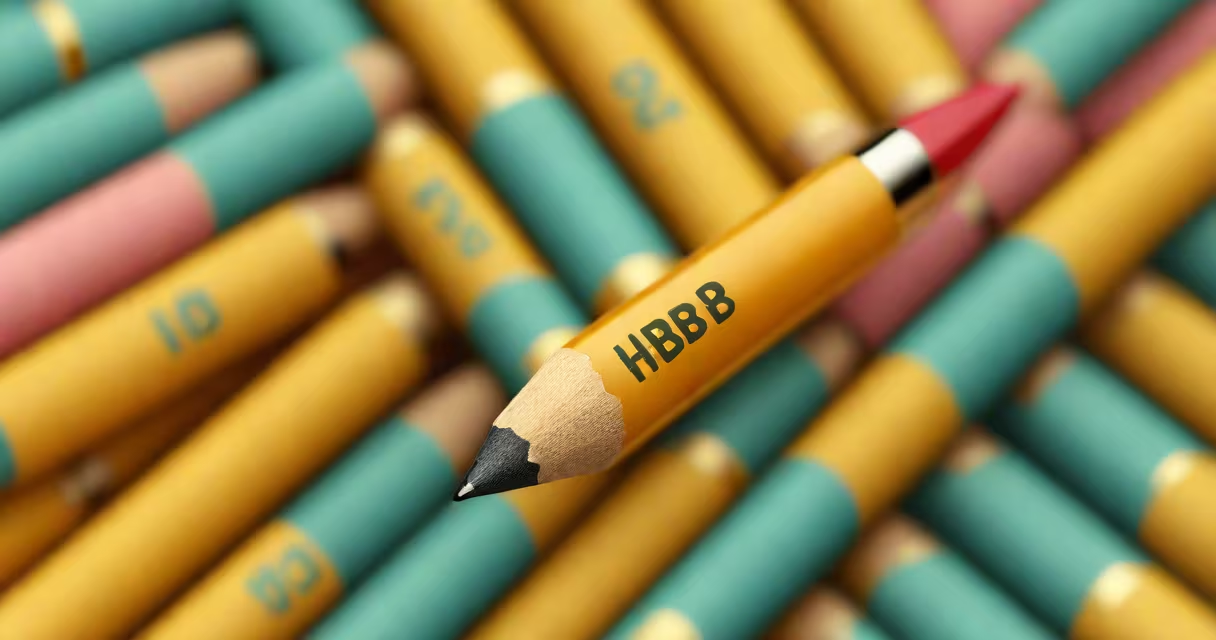
Pencil numbers refer to the hardness or softness of the graphite core, measured on a standardized scale from 9H (hardest) to 9B (softest), with HB in the middle. This system determines how dark, smooth, and erasable the mark will be.
The numbering system originated in Germany in the 18th century and was formalized by the International Organization for Standardization (ISO) in ISO 1832. The scale uses letters and numbers to denote position: H stands for hard, B for black (dark), and HB is the midpoint. Numbers increase in intensity as you move toward B (e.g., 2B, 3B), and decrease toward H (e.g., 2H, 3H).
For example, a 4H pencil produces very light, fine lines ideal for technical drawing or sketching where precision matters. A 6B pencil makes thick, dark marks perfect for shading in art. An HB pencil offers a balanced performance-neither too dark nor too light-making it standard for schoolwork and everyday writing.
The hardness of a pencil's lead affects both writing feel and visual outcome. Harder leads (H series) produce lighter, finer lines and are less prone to smudging. Softer leads (B series) deposit more graphite per stroke, creating darker, bolder marks but also leaving more residue on paper.
Each step on the scale changes the ratio of clay to graphite. More clay equals harder lead; more graphite equals softer lead. For instance, a 2H pencil contains about 60% clay and 40% graphite, while a 2B contains roughly 30% clay and 70% graphite. This difference alters how the pencil interacts with paper surfaces.
When you press lightly with a 4H pencil, the tip wears down slowly and leaves minimal debris. Press harder, and the lead may fracture or skip. With a 4B, the same pressure yields a rich, velvety line-but increases the risk of breaking the core or smudging the mark.
Here's a breakdown of typical pencil grades and their applications:
| Grade | Hardness | Darkness | Best For |
|---|---|---|---|
| 9H - 2H | Very hard | Light | Technical drawings, engineering sketches, precise layout work |
| H, HB, F | Moderately hard | Medium | Schoolwork, exams, general writing, note-taking |
| 2B - 6B | Soft to very soft | Dark to very dark | Artistic shading, portrait drawing, creative sketching |
Artists often use a range of pencils-from 2H for initial outlines to 6B for deep shadows. Architects rely on 2H or 4H for clean, sharp lines on blueprints. Students typically use HB or 2B pencils because they balance legibility and ease of erasing.
Some brands include additional designations: "F" stands for "fine point," indicating a sharper tip suitable for detailed work. "BB" or "B2" are sometimes used interchangeably with 2B, though this varies by manufacturer.
Many assume that higher numbers mean darker marks. That's incorrect. A 6B is much darker than a 2H. The confusion arises because the scale runs from H (hard) to B (black), with numbers increasing in value as you move toward B.
Another myth is that B-grade pencils are inferior. In reality, they're preferred in professional art settings. According to the American Society for Testing and Materials (ASTM), B-series pencils meet strict standards for consistency and performance in artistic applications.
There's also a belief that all pencils labeled "HB" are identical. They're not. While the designation is standardized, actual performance depends on the specific blend of graphite and clay, the manufacturing process, and the quality of raw materials. A high-end German-made HB pencil may write smoother than a budget version from China-even if both carry the same label.
Suppose you're preparing for a timed exam where clarity and speed matter. You want a pencil that writes smoothly, doesn't break easily, and erases cleanly. You choose an HB pencil. It strikes a balance: dark enough to read, light enough to avoid smudging, and firm enough to maintain a consistent line under pressure.
Now imagine you're drawing a field in charcoal-style pencil work. You start with a 2H for the horizon line and sky details. As you move into the trees and shadows, you switch to a 4B for deeper tones. Finally, you use a 6B to define the darkest areas-the base of a tree trunk, the edge of a hill. The progression creates depth and dimension through controlled variation in lead hardness.
This layered approach is common among illustrators and designers who treat pencil grades as tools in a kit, not just writing instruments.
These systems share a principle: numbers convey measurable properties. Whether it's pencil hardness, vision correction, or metabolic health, numeric labels provide context for action. Knowing what each number means allows informed decisions, evaluating your well-being.
Next time you pick up a pencil, look at the number on the side. It's not random-it's a signal about how the tool will behave on the page.