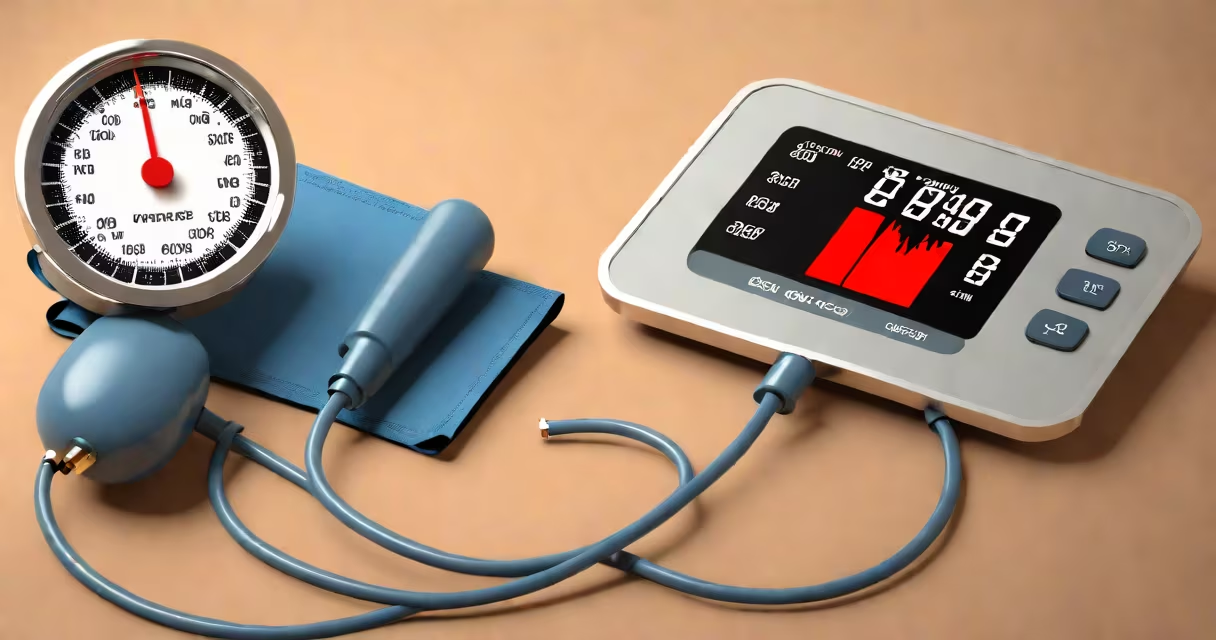
High blood pressure, or hypertension, occurs when the force of blood pushing against artery walls remains consistently elevated. This condition increases strain on the heart and blood vessels, raising the risk of stroke, heart attack, and kidney disease. It affects nearly half of U.S. adults, often without symptoms.
Blood pressure is measured in millimeters of mercury (mmHg) and recorded as two numbers: systolic (top number) and diastolic (bottom number). A reading of 130/80 mmHg or higher qualifies as high blood pressure according to guidelines from the American Heart Association (AHA).
The heart pumps blood through arteries with each beat. Systolic pressure measures the force during contraction, while diastolic pressure records the force between beats. Over time, consistently high values damage arterial linings, leading to plaque buildup and reduced blood flow.
For example, a reading of 145/90 mmHg indicates systolic pressure above the recommended threshold. Even slightly elevated levels-like 125/80 mmHg-can signal increased risk, especially if sustained over months.
Long-term uncontrolled hypertension forces the heart to work harder. This leads to left ventricular hypertrophy, a thickening of the heart muscle that reduces efficiency and raises the chance of heart failure.
High blood pressure isn't a single entity-it's categorized into two main types based on cause. Primary hypertension develops gradually over years and accounts for about 90-95% of cases. Its root causes include genetics, aging, obesity, and lifestyle factors such as high sodium intake and physical inactivity.
Secondary hypertension results from an underlying medical condition. It appears suddenly and may be caused by kidney disease, adrenal gland tumors, or certain medications like NSAIDs or decongestants. For instance, a patient taking prednisone for rheumatoid arthritis may develop elevated readings due to fluid retention and increased vascular resistance.
| Type | Prevalence | Common Causes | Onset |
|---|---|---|---|
| Primary hypertension | 90-95% | Genetics, diet, sedentary lifestyle | Gradual |
| Secondary hypertension | 5-10% | Kidney disease, sleep apnea, medications | Sudden |
One non-obvious fact: many people with high blood pressure have no symptoms. A 2021 study published in JAMA Internal Medicine found that 38% of individuals with stage 1 hypertension were unaware of their condition. This lack of warning signs makes regular screening essential.
Healthcare providers measure blood pressure during routine visits to assess cardiovascular health. It's a standard important sign used in primary care, emergency rooms, and cardiology clinics.
For example, a 52-year-old man with a history of smoking and diabetes presents with a reading of 150/95 mmHg. His doctor confirms the diagnosis after two separate measurements taken over several days. This triggers further evaluation for organ damage, including urine tests for protein and echocardiograms to check heart function.
Screening is critical because untreated hypertension contributes to 7.5 million deaths annually worldwide, according to the World Health Organization (WHO). Early intervention reduces complications by up to 40%, per data from the National Institutes of Health (NIH).
High blood pressure is often mistaken for anxiety-related spikes in blood pressure. While stress can cause temporary increases-such as a reading of 160/100 mmHg during a panic attack-these fluctuations don't meet diagnostic criteria unless they persist.
Another common error is equating high blood pressure with high cholesterol. Both contribute to heart disease, but they're distinct conditions. Cholesterol builds plaques in arteries, while high blood pressure damages vessel walls. One doesn't cause the other, though both increase cardiovascular risk.
I once observed a patient who believed his occasional dizziness was due to high blood pressure. After multiple checks, his readings averaged 128/82 mmHg-within normal range. The issue was orthostatic hypotension, a drop in pressure upon standing. Correct diagnosis prevented unnecessary medication.
Understanding what constitutes high blood pressure is important. According to the AHA, a reading of 130/80 mmHg or higher defines hypertension. This replaced the older threshold of 140/90 mmHg in 2017 to catch earlier stages of risk.
Consider a 45-year-old woman with a baseline reading of 126/78 mmHg. Her doctor notes this as elevated and recommends dietary changes, exercise, and follow-up in four weeks. If her next reading is 134/84 mmHg, she meets the criteria for hypertension and may begin treatment.
Even mild elevations matter. A 2020 analysis in The Lancet showed that systolic pressures above 120 mmHg correlate with a 20% higher risk of stroke over ten years, independent of other factors.
High blood pressure is not a single event-it's a chronic state requiring consistent monitoring and management. Early recognition prevents irreversible damage to the heart, brain, kidneys, and eyes.