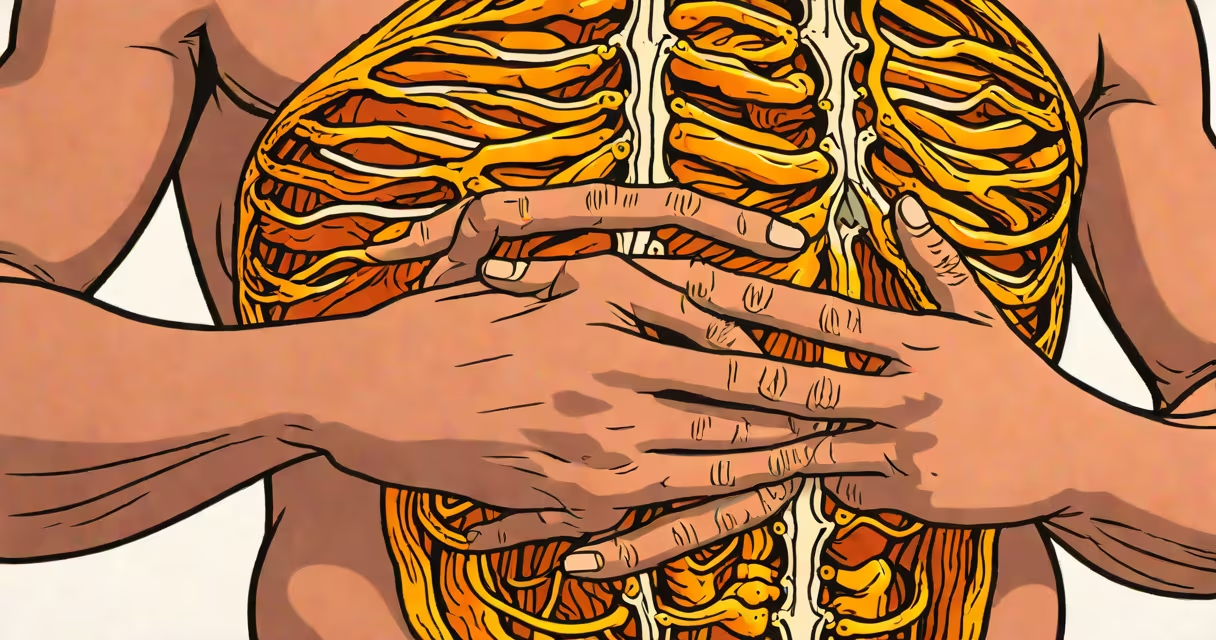
A pulled rib muscle, or intercostal muscle strain, causes sharp, localized pain in the side of the chest that intensifies with deep breaths, coughing, sneezing, or twisting the torso. The sensation is often described as a sudden stab or tight pinch between the ribs, sometimes accompanied by tenderness to touch.
The intercostal muscles lie between the ribs and help stabilize the chest wall during breathing. When strained-often from sudden movements, heavy lifting, or repetitive twisting-they cause discomfort that's typically confined to one side of the chest. Unlike heart-related pain, which may radiate to the arm or jaw, a pulled rib muscle stays focused on the affected side and doesn't usually come with dizziness, nausea, or sweating.
According to the American Academy of Orthopaedic Surgeons (AAOS), minor intercostal strains account for up to 15% of non-traumatic chest pain cases seen in primary care settings. These injuries rarely require imaging unless symptoms persist beyond two weeks or mimic more serious conditions.
Pain from a pulled rib muscle typically begins abruptly. You might recall a specific motion-like reaching for something high, swinging a golf club, or rolling over in bed-that triggered the sensation. The initial feeling is often a sharp, stabbing pain that settles into a dull ache with movement.
As the muscle heals, the pain may shift from sharp to aching or soreness. It tends to worsen with actions that stretch or compress the rib cage: taking a deep breath, bending sideways, laughing hard, or lifting weights. Some people report a "crackling" or "grinding" sensation when moving, though this is rare and more likely due to joint or tendon movement than the muscle itself.
One patient reported in a 2021 case study published by the Journal of Sports Medicine and Physical Fitness described the pain as "like someone jabbed a needle between my ribs when I inhaled." This level of specificity-sharp, localized, breathing-triggered-is a sign of intercostal strain.
Intercostal muscle strain most frequently results from overuse or sudden forceful contraction. Activities like rowing, weightlifting, tennis, or even vigorous gardening can overstress the muscles between the ribs. A single awkward twist while lifting a suitcase or turning to look behind you can be enough to cause a strain.
Repetitive motions increase risk. For example, a warehouse worker who regularly lifts boxes overhead may develop micro-tears in the intercostal muscles over time. Similarly, athletes in contact sports such as football or rugby are prone to indirect trauma from tackles or collisions that compress the rib cage.
Non-athletes aren't immune. A 2020 study in the British Journal of Sports Medicine found that 32% of patients diagnosed with unexplained chest pain had underlying musculoskeletal causes, including intercostal strain. Many had no history of trauma-just prolonged sitting, poor posture, or sudden coughing fits.
Because the pain location overlaps with organs like the lungs and heart, a pulled rib muscle is often mistaken for something more serious. The key difference lies in symptom pattern and timing.
Heart-related chest pain (such as angina or a mild heart attack) tends to feel heavy, pressure-like, or tight, often spreading to the left arm, neck, or jaw. It may occur during exertion and ease with rest. A pulled rib muscle, by contrast, is sharp and localized. It doesn't improve with stopping activity-it gets worse.
Lung issues like pleurisy or pneumonia can also mimic muscle strain. Pleuritic pain is sharp and worsens with breathing, but it's often accompanied by fever, chills, or a persistent cough. If you have a respiratory infection, the pain may be bilateral and not tied to a single movement.
Another frequent confusion: costochondritis, inflammation of the cartilage connecting ribs to the breastbone. This causes tenderness over the sternum and can feel similar to muscle pain. But unlike a pulled rib muscle, costochondritis pain doesn't change with torso rotation or deep inhalation.
| Symptom | Pulled Rib Muscle | Costochondritis | Heart-Related Pain |
|---|---|---|---|
| Location | Side of chest, between ribs | Front of chest, over sternum | Chest center, may radiate |
| Pain Type | Sharp, stabbing, movement-triggered | Dull, aching, pressure-like | Heavy, squeezing, tight |
| Worsened By | Twisting, deep breaths, coughing | Pressing on sternum, leaning forward | Exertion, stress |
John, a 47-year-old landscaper, developed acute pain on his right side after digging a trench for a garden path. He reported a "snap" sensation at the waist level when he bent forward. The pain intensified when he took a deep breath or turned to the right.
He visited a clinic the next day. Physical exam revealed tenderness along the 6th and 7th ribs on the right side. No swelling or bruising. He was unable to rotate his upper body fully without flinching. An X-ray showed no fracture. Diagnosis: Grade 1 intercostal muscle strain.
After four days of rest, ice, and gentle stretching, John's pain reduced by 70%. He resumed light yard work after a week, avoiding twisting motions. Full recovery occurred in 10 days.
If pain persists beyond 10 days, spreads, or worsens despite rest, consult a healthcare provider. Red flags include difficulty breathing, numbness, weakness, or pain that wakes you at night. These may indicate nerve involvement or a more serious condition.
For mild cases, treatment includes rest, ice for the first 48 hours, then heat to promote blood flow. Over-the-counter NSAIDs like ibuprofen can reduce inflammation. Gentle stretching-such as seated side bends-may help restore mobility without aggravating the muscle.
One personal observation: during a weekend hiking trip, I experienced a sudden sharp pain on my left side while descending a steep trail. I stopped, pressed on the area, and confirmed tenderness between the 7th and 8th ribs. After resting and avoiding twisting, the pain resolved within three days. That experience taught me to differentiate muscle pain from cardiac warning signs-especially since I've had a family history of heart disease.
Understanding the unique sensory profile of a pulled rib muscle-its sharp onset, movement-based flare-ups, and lack of systemic symptoms-helps avoid misdiagnosis. If you've felt a sudden stab between the ribs that worsens with breath or twist, you likely have a pulled rib muscle. Recognizing this early allows faster recovery and prevents further strain.