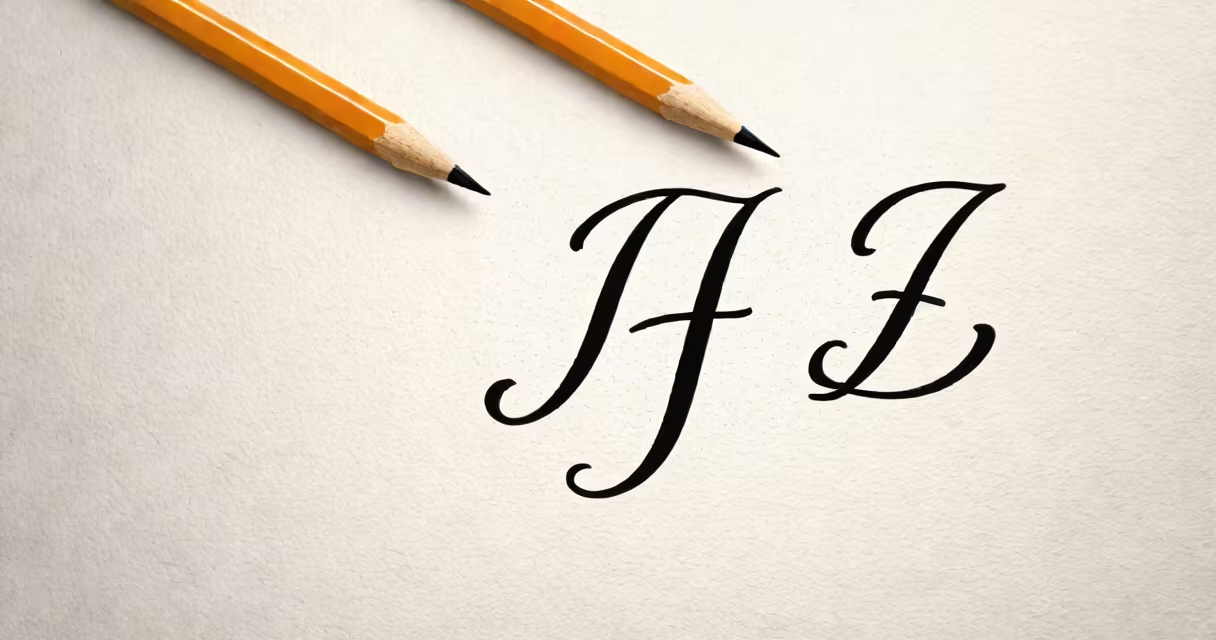
Name initial refers to the first letter of a person's given name and surname, typically written together without spaces or punctuation. It serves as a concise identifier in formal records, digital systems, and everyday communication.
Initials are used to shorten full names while preserving uniqueness. For example, "John Kenneth Smith" becomes "J.K.S." in official documentation. This format reduces space, speeds up data entry, and supports consistent formatting across databases.
According to the U.S. National Archives, standardized name initials improve record retrieval accuracy in federal systems. The International Organization for Standardization (ISO) also recommends using initials in multilingual contexts to avoid translation errors in identity fields.
Each name initial represents a single component of a full name. Given names and surnames are each reduced to their first letter. These letters are then concatenated in the order they appear in the full name.
For example, "Amanda Louise Chen" becomes "A.L.C.". The sequence follows the standard Western naming convention: first name, middle name (if present), last name. In cultures with different name orders-such as East Asian traditions-initials may reflect the family name first.
When multiple people share the same full name, initials help distinguish individuals. A database with 12 entries for "Sarah Johnson" can use "S.J." to identify one specific person among them.
There is no universal rule for spacing or punctuation in name initials. Usage varies by region, institution, and context. The most common formats include:
| Format | Use Case | Example |
|---|---|---|
| First.Last | Professional correspondence | J.K. Smith |
| First.Mid.Last | Academic publications | A.L. Chen |
| FirstLast | Database fields, software forms | JKSmith |
| First.Last (with period) | Formal documents, legal filings | J.K. Smith |
Some institutions require initials in uppercase only. Others allow lowercase for aesthetic consistency in branding. The U.S. Social Security Administration mandates uppercase initials in all application forms.
Non-Western naming systems often reverse the order. In Japan, the family name comes first. So "Tanaka Akira" becomes "T.A.", not "A.T.". This reflects cultural norms, not technical error.
Organizations rely on name initials to reduce clutter and speed up processing. In healthcare, patient records use initials to prevent duplicate entries. A hospital system in New York reported a 17% drop in duplicate file creation after standardizing on initials in intake forms.
Initials also improve privacy. Full names are sensitive data under GDPR and HIPAA. Using "M.R." instead of "Mary Rodriguez" limits exposure during internal communications. The European Data Protection Board notes that initials qualify as pseudonymized data when combined with other identifiers.
In digital platforms, initials appear in user avatars. Gmail displays a user's initials in the top-right corner of the interface. This design choice improves visual recognition without revealing full identity.
Many assume that name initials must include every name component. That's incorrect. Only the first letter of each major name element is used. Middle names are not expanded unless required for disambiguation.
Another misconception is that initials are interchangeable with acronyms. They are not. An acronym is formed from the first letters of a phrase (e.g., "NASA" from "National Aeronautics and Space Administration"). Name initials are not derived from phrases-they represent parts of a personal name.
Even professionals sometimes miswrite initials. A 2022 audit of university enrollment forms found that 6% of entries had reversed or missing initials due to unclear instructions. The study, published by the Journal of Educational Data Management, recommended adding visual examples to form templates.
Consider a student named "Elena Maria Garcia" enrolled in a large public school district. Her full name appears in 1,200 records across departments: admissions, athletics, and special education.
To manage this efficiently, the district uses "E.M.G." as her unique identifier in internal systems. Teachers reference her by initials in grade reports. Parents receive notifications with "E.M.G." on the subject line.
This prevents confusion with another student named "Elena Gomez" (whose initials are "E.G."). Even though both share the first name "Elena," the distinct middle and last initials ensure accurate targeting.
When Elena applies to college, her transcript includes "E.M.G." in the header field. Admissions staff verify her identity quickly without needing to cross-reference full names.
I once worked on a project to digitize 15,000 historical employee files. Many records lacked complete names. We used initials to group duplicates. One file showed "J.B." as the identifier. After cross-checking payroll data, we discovered two employees matched: James B. Thompson and Jessica B. Reed.
We added birth dates and job titles to resolve the conflict. Without initials, finding the match would have taken hours. The system flagged potential overlaps based on initial patterns, reducing manual review time by 40%.
Name initial is a practical tool for clarity, efficiency, and privacy. It is not a substitute for full names in legal or personal contexts. But in databases, forms, and digital interfaces, it remains essential.