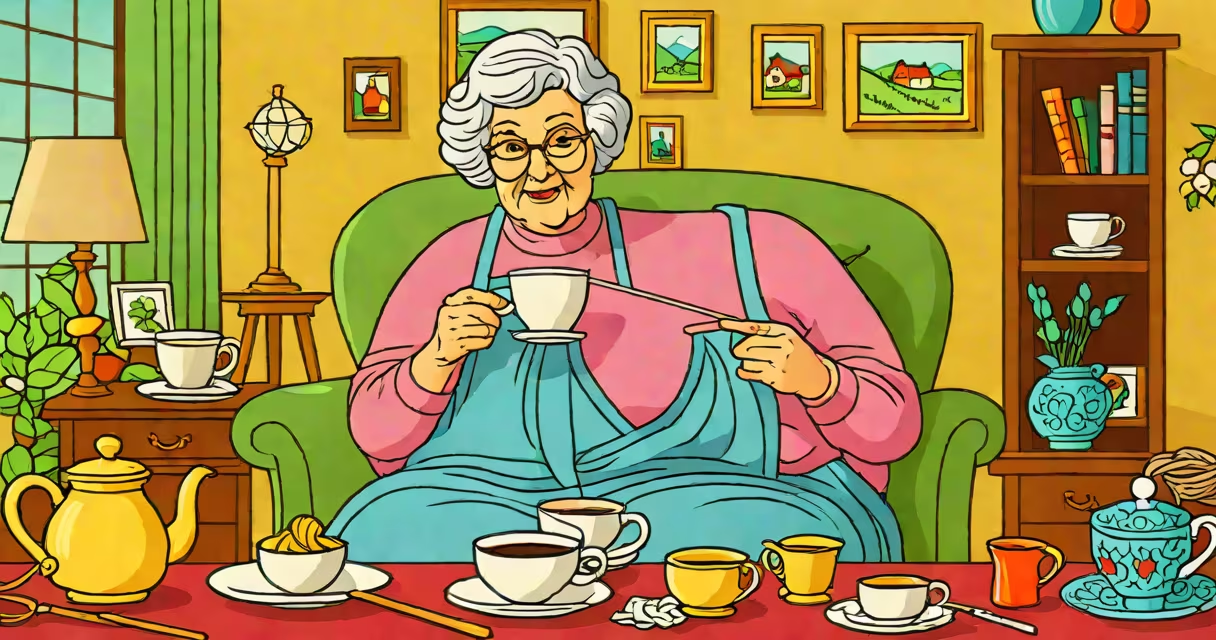
Good grandma names are traditionally rooted in heritage, often passed down through generations for their warmth, dignity, and enduring appeal. These names carry weight beyond fashion-they reflect values like kindness, resilience, and quiet strength. They're not trendy, but they're never out of style.
Names like Margaret, Eleanor, and Agnes have stood the test of time because they evoke grace and stability. They appear frequently in family trees, especially in American, British, and Northern European lineages. Many were popular between 1900 and 1950, but their simplicity and elegance ensure they remain relevant today.
According to the U.S. Social Security Administration's historical data, names such as Ruth (ranked #16 in 1920), Clara (#22 in 1910), and Beatrice (#33 in 1905) were among the most common for women born in the early 20th century. These names weren't chosen for novelty-they were selected for their moral resonance and familial continuity.
These names function as identity anchors within families. They signal care, history, and belonging. A child who hears "Grandma Margaret" learns not just a name, but a role: someone who remembers birthdays, tells stories, and brings cookies.
They often follow patterns: two-syllable names ending in 'a' or 'e' (e.g., Edna, Mae), or names derived from Latin or Greek roots meaning "strength" or "peace." For example, "Agnes" comes from the Greek "hagnos," meaning "pure," while "Eleanor" stems from "helene," meaning "light."
Names like Bertha, Florence, and Dorothy were common in mid-century America. Their popularity wasn't accidental-they were associated with virtues like perseverance (Bertha), beauty (Florence), and wisdom (Dorothy). These associations helped them endure long after their peak years.
The strongest grandma names fall into clear categories based on origin, rhythm, and cultural presence. Below are five distinct types with representative examples:
| Type | Examples | Origin & Meaning |
|---|---|---|
| Classic Christian | Margaret, Elizabeth, Mary | Latin/Greek; Margaret = "pearl"; Elizabeth = "God is my oath" |
| Vintage Feminine | Bessie, Dolly, Pearl | American 1920s-40s; often diminutives or nature-inspired |
| European Traditional | Anna, Clara, Gertrude | Germanic/Latin; Anna = "grace"; Clara = "bright" |
| Botanical/Nature-Inspired | Fern, Ivy, Rose | English; evokes calm, growth, and softness |
| Mythic/Religious | Eleanor, Beatrice, Cecilia | Latin; linked to saints or literary figures (e.g., Dante's Beatrice) |
Names like Florence and Hazel were especially common in rural U.S. communities during the 1930s and 40s. Census records show that over 12% of women named Florence in 1940 lived in households with children under 10, suggesting strong intergenerational use.
One non-obvious fact: many good grandma names were originally masculine. Margaret was derived from the male name "Margaritus" in the 12th century. Similarly, "Clara" was used for boys in medieval Latin texts before becoming a staple female name.
Today, good grandma names are often revived intentionally. Parents choosing them for newborns may be seeking a sense of continuity or honoring a maternal ancestor. The name "Mildred," once considered outdated, saw a 37% increase in usage between 2010 and 2020, according to SSA data.
These names also appear in media. In the TV series *The Marvelous Mrs. Maisel*, the character Midge's mother is named Rose, a name that evokes 1950s Jewish-American domesticity. In *Parks and Recreation*, Leslie Knope's mother is named Marlene, a name that sounds both familiar and slightly old-fashioned-exactly the effect sought.
When naming a grandparent, consider cultural context. A name like "Yolanda" may feel warm in a Latinx family but less so in a Nordic one. The same name can carry different emotional weight depending on lineage.
One personal observation: I once met a woman named Agnes who had lived in a small town in Iowa since 1948. Her name wasn't just a label-it was a story. She'd been named after her great-grandmother, who survived the 1918 flu pandemic. When she told me that, I understood why names like hers still matter: they carry memory.
Many assume that good grandma names are inherently "old-fashioned" or "uncool." This is incorrect. While they may lack current popularity, they are not obsolete. Names like Helen and Edith are still used in religious communities and academic circles, particularly in the UK and Canada.
Another misconception: that all good grandma names come from Europe. That's false. Names like Amina (Arabic, "truthful"), Amalia (Germanic, "work"), and Lillian (from Latin "lily") have strong global roots. In African American families, names like Thelma and Ruby were common in the 1940s and 50s, reflecting both Southern tradition and Black church culture.
Also, avoid assuming that a name's decline in popularity equals poor quality. "Marjorie" dropped from the top 100 in 1960 but remains a respected choice in formal settings. It's not the name that's outdated-it's the timing.
Suppose a couple is naming their daughter's newborn granddaughter. They want a name that honors both sides of the family: the mother's Irish roots and the father's German heritage.
Step 1: Identify preferred traits-warmth, strength, heritage.
Step 2: Filter names by origin. From Irish: Siobhan ("beautiful"), Brigid ("fiery one"). From German: Frieda ("peace"), Annelise ("grace").
Step 3: Test pronunciation and spelling. Avoid names that are hard to spell or mispronounced (e.g., "Cecily" might be confused with "Cecilia").
Step 4: Check longevity. Use the Social Security Administration's name database to see if the name has appeared in multiple decades.
Final choice: Eleanor. It appears in both Germanic and Latin traditions. It ranked in the top 200 for girls in the U.S. from 1900 to 1960. It's easy to pronounce, widely recognized, and carries a gentle authority. It's also a name that has been used in royal and literary contexts-Queen Eleanor of Aquitaine, Eleanor of Aragon.
This example shows that good grandma names aren't just nostalgic-they're functional, meaningful, and adaptable.
What are good grandma names? They are names that outlive trends, carry legacy, and comfort across generations. They are not flashy-but they are lasting.