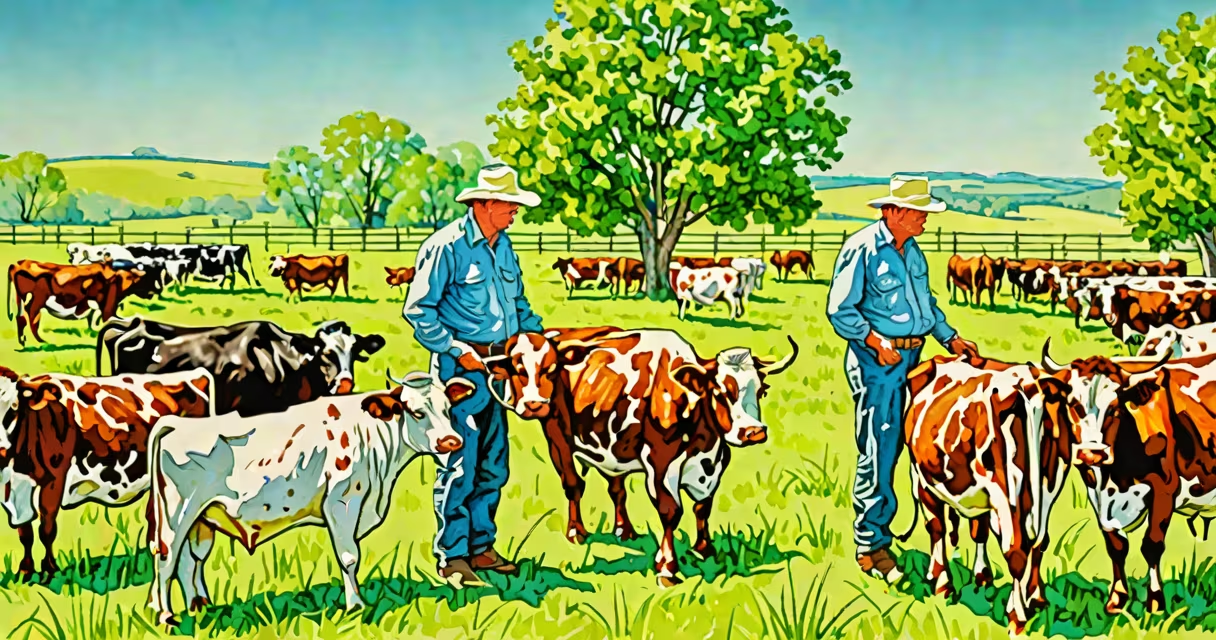
Animal husbandry is the science and practice of breeding, raising, and managing domesticated animals for food, fiber, labor, or other human uses. It involves systematic care, nutrition, health monitoring, reproduction control, and environmental management to ensure productivity and welfare.
This discipline combines biology, veterinary science, and agricultural engineering. It applies to species like cattle, sheep, goats, pigs, poultry, and even bees. Modern animal husbandry prioritizes efficiency, sustainability, and ethical treatment, balancing economic output with ecological and animal well-being standards.
The term originates from Latin roots: *homo* (man) and *agricola* (farmer), evolving into the concept of managing animals under human guidance. Today, it encompasses everything from small-scale family farms to industrial feedlots and organic pastures.
At its core, animal husbandry operates through four interdependent systems: nutrition, health, reproduction, and environment. Each system influences the others, creating a feedback loop that determines success.
Nutrition begins with formulating diets based on species, age, purpose (dairy, meat, egg production), and growth stage. For example, dairy cows require high-energy rations rich in protein and minerals to sustain milk yields above 30 liters per day. Feed formulations are adjusted seasonally and based on local forage availability.
Health management includes vaccination schedules, parasite control, disease surveillance, and prompt treatment. The USDA's National Animal Health Monitoring System reports that routine health checks reduce mortality rates in beef herds by up to 40% compared to unmonitored operations.
Reproduction is controlled through artificial insemination, selective breeding, and estrus synchronization. In commercial pig farming, sows are bred every 6 months using AI to maintain consistent litter sizes averaging 10-12 piglets per farrowing.
Environmental design ensures proper housing, ventilation, waste disposal, and space allocation. Research from the University of California, Davis shows that reducing stocking density in broiler houses by 20% lowers stress markers and increases weight gain by 8% over 6 weeks.
Animal husbandry varies widely by scale, region, and cultural context. The following table outlines major categories:
| Type | Scale | Key Practices | Example |
|---|---|---|---|
| Subsistence | Small-scale | Family-based, mixed farming, minimal inputs | West African village goat herding |
| Commercial | Large-scale | Automated feeding, AI, intensive confinement | US Midwest corn-fed beef feedlot |
| Organic | Mixed | Grass-only diet, no antibiotics, outdoor access | European pasture-raised free-range eggs |
| Extensive | Regional | Low-density grazing, seasonal migration | Sahel pastoralism in Niger |
Each model reflects different priorities: subsistence focuses on survival and resilience; commercial emphasizes yield and cost-efficiency; organic targets consumer demand for ethically produced goods; extensive systems preserve land and support biodiversity.
A non-obvious distinction often missed is that animal husbandry is not synonymous with factory farming. While industrial systems fall under the umbrella, they represent only one approach. The FAO defines sustainable animal husbandry as systems that maintain soil health, water quality, and genetic diversity while meeting animal welfare standards.
Many assume animal husbandry is purely about maximizing output. This view overlooks its foundational role in food security and climate adaptation. According to the World Bank, livestock contribute 14.5% of global greenhouse gas emissions-but well-managed systems can sequester carbon in pasture soils, offsetting up to 30% of emissions.
Another misconception is that animal husbandry ignores animal sentience. On the contrary, the Five Freedoms established by the UK Farm Animal Welfare Council-freedom from hunger, discomfort, pain, fear, and the ability to express normal behavior-are central to modern protocols. Farms certified under the Global Animal Partnership (GAP) Level 5 require continuous behavioral enrichment and group housing for pigs.
Some confuse animal husbandry with wildlife conservation. The two differ: conservation protects wild populations in their native ecosystems; animal husbandry manages domesticated animals in human-controlled environments for utility. A deer in a national park is managed by conservationists; a deer raised for venison is managed under animal husbandry principles.
In Vermont, a 120-cow dairy farm uses rotational grazing, composting manure, and solar-powered milking equipment. They follow a 45-day calving interval, ensuring consistent milk supply. Each cow receives a custom ration based on blood tests and body condition scoring.
They track individual health via wearable sensors that detect early signs of mastitis. When a cow shows elevated temperature or reduced activity, the system alerts staff within 15 minutes. This reduces antibiotic use by 60% compared to traditional methods.
For reproduction, they use AI with genetics selected for heat tolerance and low methane output. Over five years, this reduced methane emissions per liter of milk by 18%. The farm sells directly to local markets and schools, bypassing centralized processing.
This example illustrates how animal husbandry integrates science, ethics, and economics. It's not just about producing more-it's about producing responsibly.
When you consider the full scope of animal husbandry, it becomes clear that this practice shapes food systems, landscapes, and economies worldwide. From rural villages to urban supermarkets, its influence is embedded in every meal containing meat, milk, or eggs.
Understanding what animal husbandry means allows better choices in consumption, policy, and farming. planning a farm, knowing the principles behind animal husbandry helps identify sustainable and ethical practices.
For those exploring related topics, the basics of engine oil specifications offer another layer of technical understanding in a different domain.