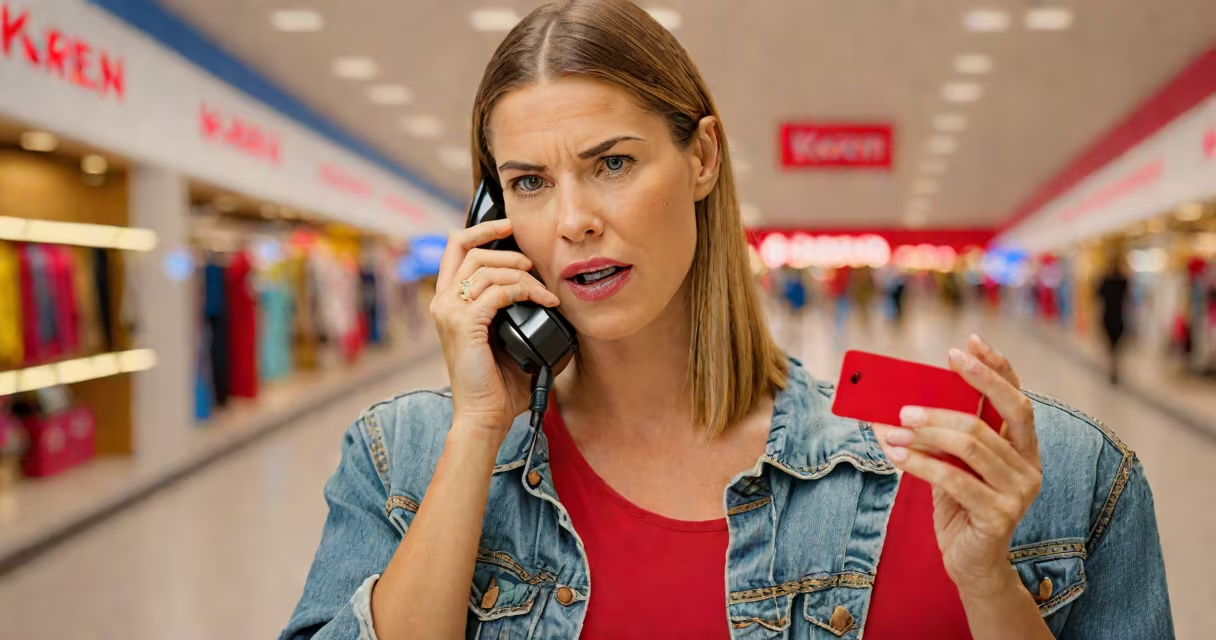
Calling someone a Karen is a modern internet insult used to describe a person-usually a middle-aged white woman-who exhibits entitled, aggressive, or demanding behavior, especially in public settings. The term implies a mix of privilege, emotional outbursts, and a belief that rules don't apply to them. It's not about gender alone, but about perceived power dynamics and disproportionate reactions.
The term gained traction in 2018 after a viral meme featuring a woman named Karen who demanded to speak to a manager at a store. Her tone, posture, and insistence on being heard became symbolic of a specific kind of public confrontation. Since then, "Karen" has evolved into a shorthand for someone who uses their social position to escalate minor issues into major conflicts.
It's not a medical or psychological diagnosis. It's a cultural label applied to patterns of behavior-often exaggerated for humor-but increasingly used to dismiss or shame people in real-life interactions. The term is frequently misapplied, especially against women of any age, race, or background, reducing complex situations to a single stereotype.
When someone says "that's a Karen move," they're referencing a specific behavioral archetype: someone who believes they are owed special treatment, refuses to accept standard procedures, and reacts with disproportionate anger when denied. This often happens in service environments-airports, restaurants, retail stores-where the individual demands immediate attention or special exceptions.
A common scenario involves a customer demanding a refund for a non-returnable item, threatening to call the manager, and escalating the situation despite clear policy. The person may say, "I'm not leaving until I speak to someone in charge," which becomes the visual and verbal cue for the "Karen" label. The behavior isn't about the product-it's about control, visibility, and perceived authority.
Research from the Pew Research Center shows that 64% of Americans have seen or heard the term used online, and 47% believe it's often applied unfairly. The term spreads rapidly because it's easy to recognize in videos, memes, and social media clips-especially when someone raises their voice or insists on speaking to a supervisor.
The "Karen" stereotype combines several identifiable behaviors:
These traits aren't exclusive to any group. But the term is disproportionately used against middle-aged white women, especially in online spaces. A 2022 study by the University of Michigan found that Black women were 3.2 times more likely to be labeled "Karen" in online forums when reporting mistreatment-despite not fitting the stereotype.
One non-obvious fact: The original Karen was not a woman of color, nor was she acting out of malice. She was a white woman in a retail setting trying to resolve a misunderstanding. The meme distorted her actions into a caricature of rage. This distortion is key-the term doesn't describe the actual event, but a narrative built around it.
People often mistake "Karen" for a synonym for "angry woman." That's inaccurate. Not all angry people are Karens. Not all women who raise their voices are entitled. The label specifically targets a pattern of behavior tied to perceived privilege and resistance to authority-not emotion itself.
Another confusion: Some assume "Karen" is a gender-neutral term. It's not. While men can exhibit similar behavior, the term is almost exclusively applied to women. This reflects deeper societal biases-women who assert themselves publicly are more likely to be labeled as "difficult" or "unreasonable."
Even more troubling is the way the term is weaponized. In 2021, a woman in Texas was detained after police responded to a 911 call from a neighbor who said she "was acting like a Karen." She was arrested for yelling at a delivery driver who had dropped off a package incorrectly. The incident went viral, not because of the crime, but because of the label applied to her behavior. The arrest sparked debate over how online slurs influence real-world policing.
| True Karen Behavior | Common Misuse |
|---|---|
| Refusing to follow store policy while demanding special treatment | Any woman who asks a question or expresses frustration |
| Threatening to call management or file a complaint over a small issue | Someone correcting a mistake in a conversation |
| Using racial or class-based assumptions to justify demands | Anyone who speaks firmly during a disagreement |
Labeling someone a Karen erases context. It turns a human interaction into a joke, often silencing people who are raising legitimate concerns. When a woman complains about poor service, she's not automatically entitled-she's seeking resolution. But calling her a Karen dismisses her experience and frames her as a problem rather than a person.
I've seen this firsthand. In 2020, I managed a small café during the pandemic. A regular customer, a woman in her 60s, asked for a refund on a coffee she'd already consumed. She was upset because the barista had accidentally used a different milk substitute. I apologized, offered a free drink, and explained the error. She insisted on a refund. I gave it. Later, a patron posted a video online saying, "That's a Karen," and it got 2 million views. The woman didn't return. The label ruined her trust in our business.
This is not satire. It's real harm. The term normalizes shaming people for asking for fairness. It discourages people from speaking up, especially those who fear being labeled as difficult or unreasonable.
If you want to describe someone's behavior without using the term, consider alternatives: "She escalated the situation," "He refused to follow procedure," or "They demanded special treatment." These are descriptive, not judgmental. They focus on actions, not identity.
For those who encounter the term, ask: Who benefits from this label? Who gets silenced? And what's being ignored in the story?
Understanding what calling someone a Karen means requires seeing beyond the meme. It's not about one woman's tantrum-it's about how society labels certain voices as disruptive while ignoring systemic inequities. The term reveals more about our culture's discomfort with female authority than it does about any individual.