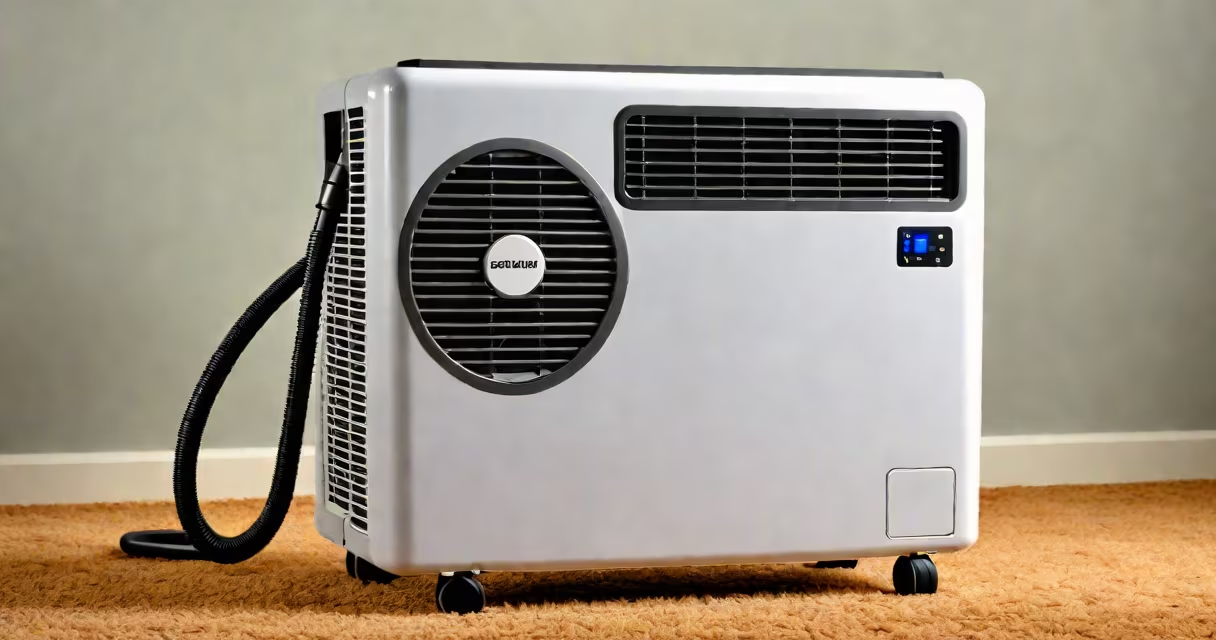
A portable air conditioning unit is a self-contained cooling device designed to cool a single room without ductwork or permanent installation. It draws in warm indoor air, cools it using a refrigerant cycle, and expels hot exhaust air through a flexible exhaust hose. Units typically include wheels, a control panel, and a timer function.
These devices operate independently of home HVAC systems. They don't require professional installation or modifications to walls or windows. Instead, they rely on a window adapter kit to vent hot air outdoors. Most models consume between 500 and 1,500 watts of power and have cooling capacities ranging from 6,000 to 12,000 BTUs.
Portable ACs are ideal for renters, temporary setups, or rooms where installing a window unit isn't feasible. They're not intended for whole-home cooling but excel at spot-cooling high-heat zones like bedrooms, home offices, or basements during summer months.
Inside a portable air conditioner, a compressor pressurizes refrigerant, which flows through coils to absorb heat from indoor air. A fan pulls warm air across the cold evaporator coils, cooling it before blowing it back into the room. The heated refrigerant then moves to the condenser coils, where a second fan pushes hot air out through the exhaust hose.
The exhaust hose must be routed through a window or wall vent. Without proper venting, the unit cannot release heat and will fail to cool effectively. Some models include a "recirculation mode" that uses the exhaust hose to vent indoors temporarily, but this reduces cooling performance by 30-50%.
For example, a 10,000 BTU portable AC running in a 150 sq ft bedroom with a ceiling height of 8 feet can lower the temperature from 85°F to 72°F in under 30 minutes when set to high fan speed. This assumes the room is sealed from external airflow and the outdoor temperature is below 90°F.
Portable air conditioners consist of four core parts: the compressor, evaporator and condenser coils, a blower fan system, and a control interface. The compressor is the most critical component-it determines how quickly the unit can cool and how much noise it generates.
Units are categorized by cooling capacity (BTU), energy efficiency ratio (EER), and portability features. Higher BTU ratings suit larger spaces. For example, a 6,000 BTU model handles up to 150 sq ft, while a 12,000 BTU unit manages up to 550 sq ft.
| Type | BTU Range | Room Size | Energy Efficiency Ratio (EER) | Best For |
|---|---|---|---|---|
| Small | 6,000-8,000 | up to 150 sq ft | 9.0-10.5 | bedrooms, small offices |
| Medium | 9,000-10,000 | 150-300 sq ft | 10.0-11.0 | living rooms, home gyms |
| Large | 11,000-12,000 | 300-550 sq ft | 10.5-12.0 | basements, large studios |
Some models feature dual-hose designs that draw in outside air to cool the condenser coils. This improves efficiency by up to 15% compared to single-hose units, which pull in room air for cooling and reduce indoor pressure. Single-hose units are simpler and cheaper but less effective in high-temperature environments.
Many users assume a portable air conditioning unit can cool multiple rooms or entire homes. This is incorrect. These units are designed for localized cooling. Attempting to cool a 400 sq ft living area with a 6,000 BTU unit results in poor performance and excessive runtime.
Another misconception is that portable ACs are inherently inefficient. While older models had low EER values, modern units meet ENERGY STAR standards. According to the U.S. Department of Energy, ENERGY STAR-certified portable ACs use 10-15% less energy than non-certified models of similar capacity.
Portability doesn't mean convenience. Units weigh between 50 and 100 pounds. Moving one across a carpeted floor requires effort. I once tested a 10,000 BTU model with casters on a textured vinyl floor-the wheels jammed after 15 feet due to uneven surface tension. Always check floor type and clearance space before moving.
Choose a portable air conditioning unit when you need temporary cooling without drilling holes or modifying the space. Renters often prefer them because they don't violate lease agreements. Unlike window units, they don't block views or require permanent mounting brackets.
However, they're not suitable for continuous use in hot climates. In Phoenix, Arizona, where average July highs reach 105°F, a portable AC may struggle to maintain 75°F in a 200 sq ft apartment. In such cases, a central air system or high-capacity window unit performs better.
Compare with fixed systems: a window unit typically costs $200-$500 and lasts 10-15 years. A portable AC averages $400-$800 and lasts 8-10 years. Both have similar annual operating costs when used under typical conditions. But portable units offer mobility, while window units provide higher cooling efficiency and lower noise levels.
A portable air conditioning unit is a practical solution for targeted cooling in spaces where permanent installations aren't possible. Its effectiveness depends on correct sizing, proper venting, and realistic expectations about cooling range and energy use.