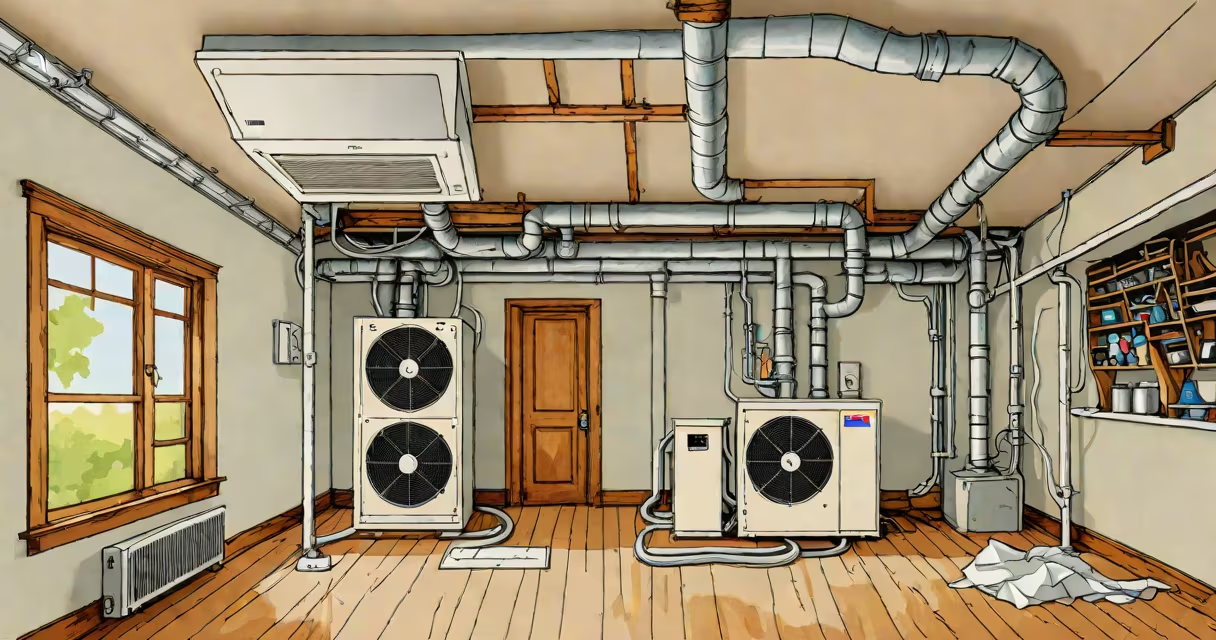
HVAC stands for Heating, Ventilation, and Air Conditioning-a system that controls indoor temperature, humidity, and air quality in residential buildings. It maintains comfort through climate regulation and ensures air remains clean and safe to breathe.
The HVAC system operates by drawing in indoor air, conditioning it, and distributing it throughout the home via ducts. It uses a combination of mechanical, electrical, and thermal processes to cool or heat spaces based on thermostat settings. Modern systems integrate smart controls and energy-efficient components to reduce power consumption.
According to the U.S. Department of Energy, HVAC systems account for nearly half of a home's energy use. Proper sizing and maintenance are critical-over 30% of homes have improperly sized units, leading to inefficiency and higher utility bills. A correctly installed system can cut energy costs by up to 20%.
A typical residential HVAC system begins with a thermostat that detects room temperature. When the temperature deviates from the set point, the thermostat signals the furnace or air conditioner to activate. The furnace heats air using gas, oil, or electricity, while the air conditioner cools it via refrigerant cycles.
Once conditioned, air travels through a network of supply ducts into rooms. Return ducts pull stale air back to the central unit for reconditioning. This closed-loop process continuously adjusts to maintain consistent indoor conditions. Ventilation components introduce fresh outdoor air to prevent carbon dioxide buildup and reduce airborne pollutants.
For example, during summer, a 3-ton air conditioner removes heat from indoor air by passing it over cold evaporator coils. The refrigerant absorbs heat, then releases it outside through the condenser coil. This cycle runs until the indoor temperature stabilizes at the thermostat setting.
Residential HVAC systems consist of several interconnected parts:
Systems fall into three main categories:
| Type | Best For | Efficiency Rating (SEER) | Typical Home Size |
|---|---|---|---|
| Split System (Furnace + AC) | Cold climates with distinct heating/cooling needs | 14-26 | 1,500-3,500 sq ft |
| Heat Pump | Moderate climates with balanced heating and cooling demands | 16-25 | 1,200-3,000 sq ft |
| Package Unit | Small homes, apartments, or additions | 13-20 | 800-2,000 sq ft |
Heat pumps are often misunderstood as ineffective in winter. However, modern models operate efficiently down to -15°F. The U.S. Environmental Protection Agency notes that heat pumps can reduce heating energy use by 50% compared to electric resistance heaters.
Many homeowners assume that larger HVAC units deliver better performance. In reality, oversized systems short-cycle-turning on and off rapidly-which reduces efficiency and increases wear. A 2022 study by the National Institute of Standards and Technology found that 44% of newly installed systems were oversized, leading to uneven temperatures and higher repair rates.
Another error is neglecting duct sealing. Leaky ducts can lose 20-30% of conditioned air before reaching rooms. Sealing joints with mastic or metal tape improves airflow and cuts cooling costs by up to 15%, according to the U.S. Department of Energy.
I once replaced a failing furnace in a 2,200-square-foot home where the previous owner had installed a 60,000 BTU unit-too large for the space. After recalculating load requirements using Manual J calculations, we installed a 40,000 BTU model. The homeowner reported consistent temperatures and lower monthly bills within one season.
Proper HVAC function impacts health, safety, and long-term savings. Poor ventilation contributes to indoor air quality issues-volatile organic compounds (VOCs), mold spores, and dust accumulate without regular filtration. The American Lung Association recommends replacing filters every 1-3 months to reduce respiratory risks.
System failure can lead to dangerous situations. A cracked heat exchanger in a gas furnace may release carbon monoxide into living areas. The Consumer Product Safety Commission reports over 400 annual carbon monoxide poisonings linked to faulty furnaces.
Knowing what HVAC means in a house isn't just technical-it's practical. It affects daily comfort, health, and financial stability. A well-maintained system lasts 15-20 years. Regular servicing, filter changes, and professional inspections extend lifespan and prevent breakdowns during peak seasons.