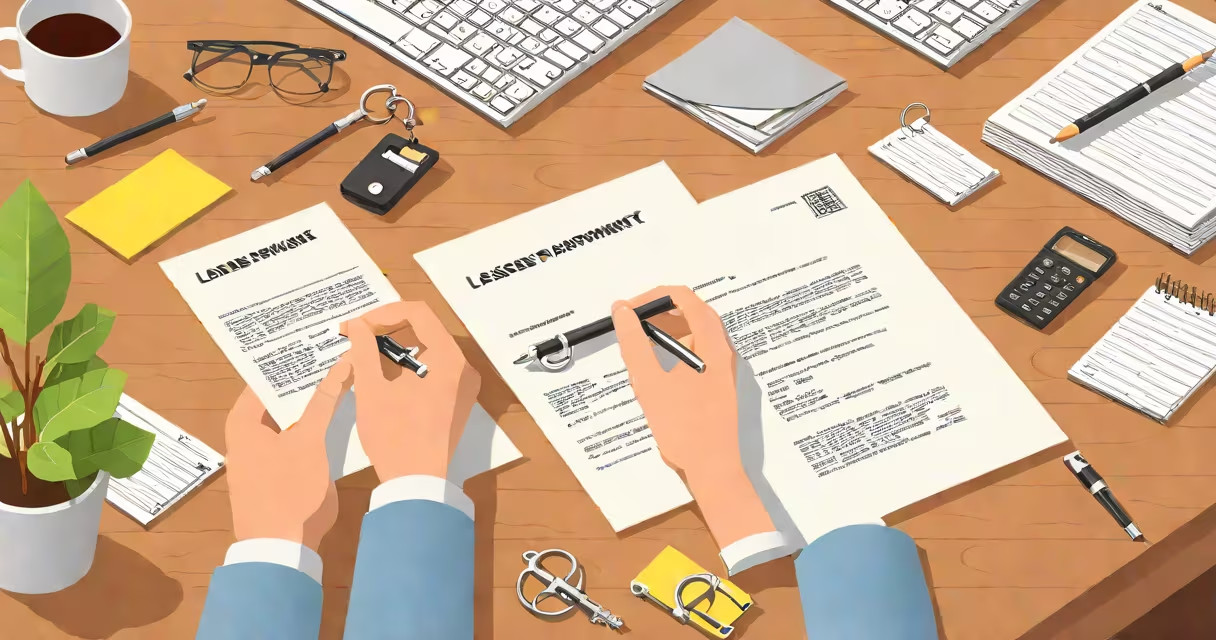
Leasing an apartment means entering into a legally enforceable contract with a landlord to occupy a residential unit for a fixed term, typically six months or one year, in exchange for regular rent payments. This agreement outlines responsibilities, payment schedules, and conditions governing the tenancy.
The lease establishes mutual obligations. You agree to pay rent on time, maintain the unit, and follow house rules. The landlord agrees to provide habitable living conditions, make necessary repairs, and respect privacy rights. Breaking the lease can result in eviction or financial penalties.
Leases differ from month-to-month rentals, which automatically renew each month unless terminated with notice. A lease locks in terms, including rent amount and duration, offering stability for both parties. Most leases require a security deposit, often capped at one month's rent in many U.S. states.
A lease begins when both parties sign a written agreement. The document specifies the start and end dates, rent amount, due date, late fees, and rules about guests, pets, and alterations. It may include clauses about subletting, maintenance responsibilities, and consequences for violating terms.
Landlords typically conduct credit checks, verify income, and review rental history before approving applicants. A formal application process ensures tenants can afford the rent and have a track record of timely payments. In New York City, for example, landlords must provide a copy of the lease within 30 days of signing, per local housing law.
If you fail to pay rent or breach other terms, the landlord can serve a notice to cure or quit. If unresolved, they may file for eviction. Conversely, if the landlord fails to fix major issues like no heat or running water, you may withhold rent or seek legal remedies under state law.
Every lease includes essential elements. The most common are:
Some leases include additional clauses. For example, a "quiet enjoyment" clause guarantees your right to live undisturbed. Others may restrict subletting or require approval for roommates. Always read the entire document carefully before signing.
Leases also define how disputes are resolved. Many include arbitration clauses requiring mediation before court action. In California, landlords must return deposits within 21 days after move-out, with an itemized list of deductions if applicable.
People often mistake a lease for a rental application or a verbal agreement. A lease is a binding contract. Even if you've lived in the unit for months without a signed document, you may still be subject to the terms implied by local law.
Another misconception is that a lease gives unlimited control to the landlord. In reality, tenants have rights. Under the Fair Housing Act, landlords cannot discriminate based on race, religion, gender, disability, or familial status. In rent-controlled cities like Los Angeles, rent increases are limited annually.
Leasing is not the same as buying property. You do not gain equity or ownership. You're renting space for a fixed period. If you want to stay beyond the lease term, you must negotiate a renewal or switch to a month-to-month arrangement.
Consider Maria, who signs a 12-month lease for a two-bedroom apartment in Chicago. The lease states:
After six months, Maria wants to leave early. Her lease requires 60 days' notice and a penalty equal to one month's rent. She contacts the landlord and offers to find a replacement tenant. The landlord agrees to accept a new applicant, reducing her liability.
If she had left without notice, the landlord could sue for unpaid rent and damages. The lease protects both sides by setting clear expectations and consequences.
Leasing differs from being a tenant in a rent-stabilized unit. Rent stabilization limits annual rent increases and provides stronger eviction protections. In New York City, a rent-stabilized apartment may see a 3% cap on rent hikes, while a standard lease can increase by 7% annually.
Compare this to a lease in a non-regulated building. There, rent can rise between leases. In Seattle, landlords can raise rent by up to 10% annually under current laws, but only after giving 90 days' notice.
| Feature | Standard Lease | Rent-Stabilized Lease |
|---|---|---|
| Rent increase limit | Varies by city; often unregulated | Set by local law (e.g., 3% in NYC) |
| Eviction protection | Based on lease violations | Stronger; requires valid cause |
| Lease renewal | Requires negotiation | Automatic renewal unless terminated |
A non-obvious fact: Some leases include automatic renewal clauses. If not explicitly canceled, the lease continues month-to-month. In Texas, this is known as a "holdover tenancy," and the landlord can charge higher rates unless the original terms are renewed.
During my first apartment search in Boston, I signed a lease without noticing the auto-renewal clause. After 12 months, my rent increased by 15% because the landlord hadn't sent a termination notice. I learned to review every clause, especially those about duration and renewal.
Leasing an apartment means accepting a legal commitment with clear terms. You gain stable housing, predictable costs, and defined rights. But you also assume responsibility for timely payments, property care, and compliance with rules.
Before signing, confirm the lease covers all agreed-upon terms. Ask for a copy in writing. Review state and local laws-some cities require specific disclosures, such as lead paint warnings or energy efficiency reports.
Leasing an apartment is not just about paying rent. It's about managing a shared agreement that defines your living situation for months or years. Knowing what you're signing is the first step toward a secure, stable home.