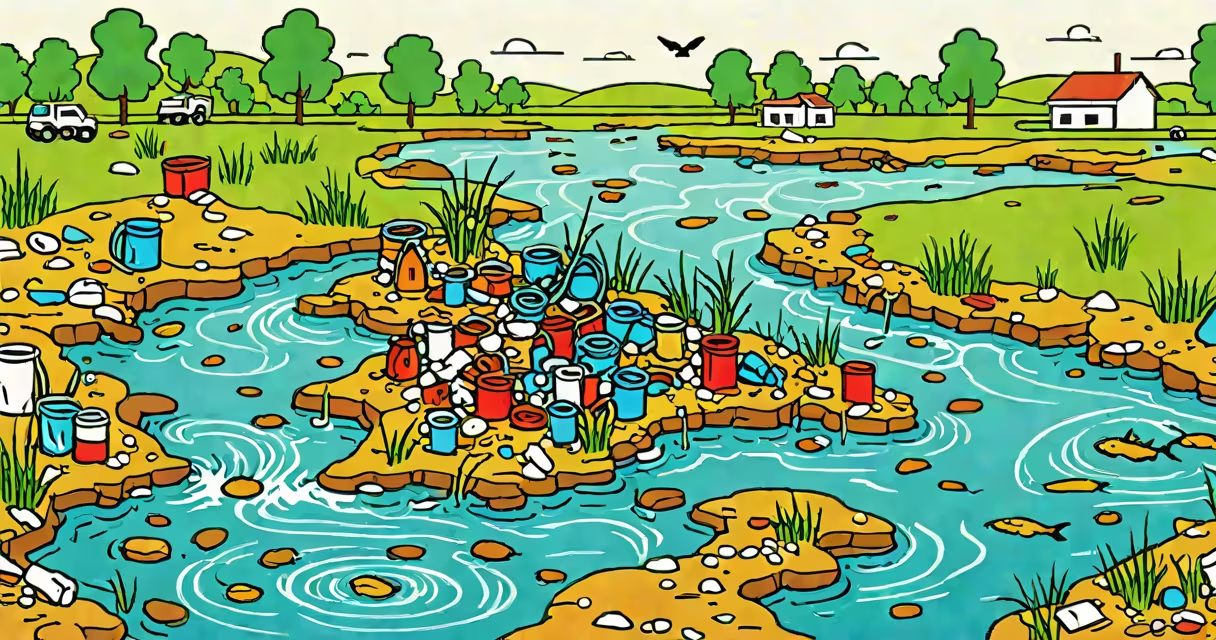
Water pollution degrades aquatic environments, contaminates drinking water sources, and causes disease, birth defects, and death in humans and wildlife. It alters natural water chemistry through industrial discharge, agricultural runoff, and untreated sewage.
When pollutants enter rivers, lakes, or oceans, they disrupt biological processes. Microorganisms break down organic waste, consuming oxygen in the process. This leads to hypoxia-low oxygen levels-that suffocates fish and other aquatic species. A single spill of untreated wastewater can kill thousands of fish within hours.
Industrial facilities release heavy metals like lead, mercury, and cadmium into waterways. These substances bioaccumulate in food chains. Predatory fish such as bass or tuna absorb toxins over time. Humans who eat contaminated fish ingest these poisons, which can cause neurological damage, kidney failure, and developmental disorders in children.
Water pollution triggers algal blooms when excess nutrients-especially nitrogen and phosphorus-enter water bodies. These nutrients come from fertilizers, detergents, and animal waste. Algae grow rapidly, then die and decompose, using up dissolved oxygen. The resulting dead zones lack enough oxygen to support most marine life.
The Gulf of Mexico's dead zone spans over 6,000 square miles annually due to nutrient runoff from the Mississippi River Basin. This area supports almost no fish or shellfish, destroying local fisheries and harming coastal economies. According to NOAA, the size of this dead zone correlates directly with spring fertilizer application rates upstream.
Another effect is habitat degradation. Oil spills coat birds' feathers, preventing flight and insulation. Plastic debris entangles animals or is ingested, blocking digestive tracts. Sea turtles often mistake plastic bags for jellyfish, their primary food. A 2021 study published in *Marine Pollution Bulletin* found that 52% of sea turtles examined had ingested plastic.
Contaminated drinking water transmits pathogens like E. coli, Salmonella, and Vibrio cholerae. In developing regions, unsafe water causes over 1 million deaths annually, primarily among children under five. The World Health Organization reports that 2 billion people globally drink water from sources contaminated with feces.
Long-term exposure to chemical pollutants increases cancer risk. Arsenic in groundwater-common in parts of Bangladesh, India, and Chile-leads to skin lesions, cardiovascular disease, and various cancers. The WHO estimates that arsenic exposure contributes to over 100,000 premature deaths each year.
Neurotoxic chemicals such as PCBs (polychlorinated biphenyls) persist in water and fat tissues. They were banned in the U.S. in 1979 under the Clean Water Act, yet still appear in fish from Great Lakes and Hudson River. A 2018 EPA study found elevated PCB levels in women of childbearing age near industrial sites, raising concerns about fetal development.
Many assume pollution only affects visible areas like beaches or rivers. But groundwater contamination is equally dangerous-and harder to detect. Pollutants seep through soil and reach aquifers, which supply 90% of the world's drinking water. Once polluted, these underground sources take decades to clean, if出门 is impossible.
Another misconception is that "natural" means safe. Some naturally occurring substances, like arsenic or fluoride, become hazardous at high concentrations. Fluoride in water above 4 mg/L causes dental fluorosis. In endemic areas, it leads to skeletal fluorosis, causing joint pain and bone deformities.
Also, pollution isn't limited to urban centers. Agricultural runoff from rural farms accounts for nearly 70% of nutrient pollution in U.S. rivers, according to the Environmental Protection Agency. This disproves the idea that only cities contribute to water degradation.
| Pollutant Type | Source | Primary Impact |
|---|---|---|
| Pathogens | Sewage, animal waste | Disease outbreaks (cholera, typhoid) |
| Nutrients (N, P) | Fertilizers, detergents | Algal blooms, dead zones |
| Heavy Metals | Mineral mining, industrial discharge | Neurotoxicity, cancer risk |
| Plastics | Single-use packaging, microfibers | Entanglement, ingestion, leaching chemicals |
| Organic Chemicals | Oil spills, pesticides | Habitat destruction, reproductive harm |
For example, the 2010 Deepwater Horizon oil spill released 4.9 million barrels into the Gulf of Mexico. It killed over 100,000 birds and thousands of marine mammals. Dolphins born after the spill showed lung abnormalities and weakened immune systems, evidence of long-term ecological harm.
In 2014, Flint, Michigan switched its water source to the Flint River to cut costs. The river water was highly corrosive and lacked proper treatment. As a result, lead from aging pipes leached into tap water. Blood tests later revealed that 4% of children in Flint had elevated blood lead levels-above the CDC's threshold of 5 µg/dL.
Lead poisoning impairs cognitive development. Children exposed during early childhood show lower IQ scores, attention deficits, and increased risk of behavioral problems. The crisis lasted years, with residents relying on bottled water and filters. The city eventually reverted to Detroit's water system, but long-term health impacts remain.
I witnessed the aftermath firsthand while volunteering with a nonprofit providing water testing kits. Families reported discolored water, foul smells, and rashes. One mother told me her son stopped growing after moving to Flint. That moment confirmed how deeply water pollution undermines human well-being.
Some confuse water pollution with water scarcity. While both are global issues, they differ fundamentally. Scarcity means too little water; pollution means usable water is degraded. A region can have abundant rainfall but still suffer from polluted water sources.
Another error is assuming regulation eliminates risk. The Clean Water Act of 1972 reduced major point-source pollution in the U.S., but non-point sources-like stormwater runoff-remain unregulated at the federal level. These account for over half of remaining water quality violations.
Finally, pollution isn't always visible. Microplastics smaller than 5mm are undetectable to the naked eye but accumulate in fish and eventually enter human diets. A 2022 study in *Environmental Science & Technology* found microplastics in 93% of tap water samples across 11 countries.