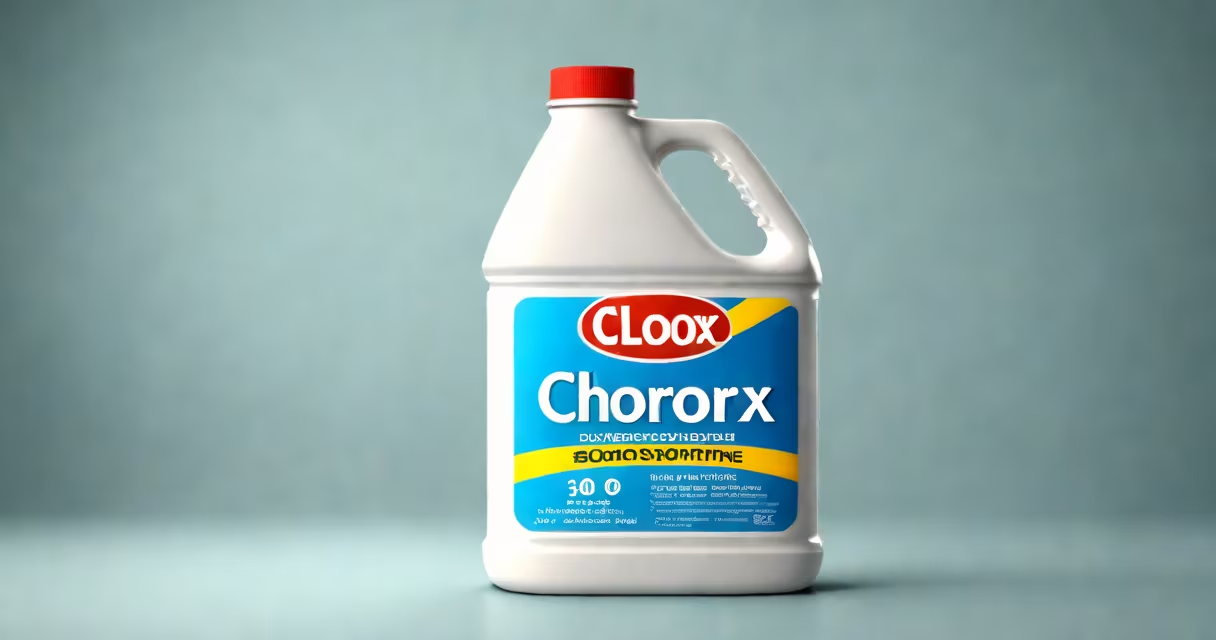
Yes, chlorine is in Clorox, but not as elemental chlorine gas. Clorox bleach contains sodium hypochlorite, a compound formed when chlorine gas reacts with sodium hydroxide. This chemical is responsible for the product's disinfecting and stain-removing power.
Sodium hypochlorite is the active ingredient in most household bleach products, including Clorox. It is manufactured by bubbling chlorine gas through a solution of sodium hydroxide. The resulting mixture contains hypochlorite ions (OCl⁻), which release free chlorine under acidic conditions. This free chlorine disrupts microbial cell walls and oxidizes organic stains.
The concentration of sodium hypochlorite in Clorox Regular Bleach is 5.25% by weight. This level is regulated by the U.S. Environmental Protection Agency (EPA) and must be labeled on the container. The EPA confirms that properly diluted bleach is effective against bacteria, viruses, and fungi, including SARS-CoV-2, when used according to instructions.
Sodium hypochlorite breaks down in water to form hypochlorous acid (HOCl), a weak acid that readily penetrates cell membranes. Once inside, HOCl oxidizes proteins and enzymes essential to microbial survival. This process kills pathogens within minutes at recommended concentrations.
For stain removal, the same oxidative action breaks down chromophores-molecules that absorb visible light and give color to fabrics. For example, a red wine stain on cotton becomes colorless after exposure to diluted bleach because the pigment molecules are degraded into smaller, transparent compounds.
When mixed with acids-such as vinegar or toilet bowl cleaner-sodium hypochlorite rapidly releases chlorine gas. This reaction is dangerous and can cause respiratory distress. The CDC warns against mixing bleach with ammonia or acidic cleaners due to the risk of toxic gas formation.
Many assume "chlorine" in Clorox means pure chlorine gas. That is incorrect. Elemental chlorine (Cl₂) is a toxic yellow-green gas used in industrial water treatment. It is not present in household bleach bottles.
Another misconception is that bleach is safe to use undiluted. The label on Clorox states: "Do not use undiluted." Concentrated bleach causes skin burns, eye damage, and respiratory irritation. The EPA requires warning labels for corrosive materials, and Clorox complies with these standards.
A third error is believing bleach removes all odors. While it neutralizes many organic smells-like mildew or food residue-it cannot eliminate volatile compounds such as smoke or pet urine. These require specialized cleaning agents or air filtration.
Bleach products vary in formulation. Clorox offers multiple variants, each with different active ingredients and intended uses.
| Product Type | Active Ingredient | Use Case | Chlorine Content |
|---|---|---|---|
| Regular Clorox Bleach | Sodium hypochlorite (5.25%) | Laundry, disinfection, surface cleaning | High (contains chlorine) |
| Clorox Plus 2X Stain Remover | Sodium hypochlorite (6.25%) + surfactants | Stain treatment on colored fabrics | Higher than regular |
| Clorox Zero Chlorine Bleach | Oxygen-based (sodium percarbonate) | Fabric-safe bleaching, sensitive skin | None (no chlorine) |
Only the first two contain chlorine. The third uses oxygen-releasing compounds that break down stains through oxidation without releasing chlorine gas. This variant is marketed for people with asthma or chemical sensitivities.
To demonstrate how chlorine in Clorox functions, consider cleaning a kitchen sink contaminated with raw chicken residue. The sink harbors Salmonella and other bacteria.
Step 1: Dilute 1/4 cup of Clorox Regular Bleach in 1 gallon of water. This creates a 0.13% sodium hypochlorite solution, well below the maximum recommended concentration of 0.5% for surface disinfection.
Step 2: Apply the solution to the sink surface using a cloth. Let it sit for 5 minutes. During this time, hypochlorous acid forms and attacks bacterial cell membranes.
Step 3: Rinse with clean water. The sink is now sanitized. The EPA validates this method for reducing pathogen load on hard, non-porous surfaces.
This process relies entirely on the chlorine-containing compound in Clorox. Without sodium hypochlorite, the solution would lack germ-killing efficacy.
In my home, I once left a Clorox bottle open near a bathroom sink. After a few hours, the smell intensified. Upon checking, I found the cap was loose. The fumes were sharp and irritated my eyes. I moved the bottle outdoors and ventilated the room.
This incident confirmed that even sealed bleach containers can off-gas slightly. The American Chemistry Council notes that proper storage-cool, dry, away from sunlight-is critical to prevent degradation and vapor release. Always store bleach in its original container with the lid tightly closed.
"Chlorine in Clorox" is often misunderstood as meaning the product contains free chlorine. It does not. Free chlorine (Cl₂) is unstable and hazardous. Instead, Clorox delivers controlled, stable chlorine via sodium hypochlorite.
Chlorine in this context refers to the element, not the substance. Sodium hypochlorite contains chlorine atoms bonded to oxygen and sodium. The chlorine is chemically bound and only released in small amounts during reactions.
For comparison, swimming pools use chlorine gas or calcium hypochlorite to maintain water clarity. These are similar in function but differ in delivery and concentration. Pool chlorine levels are measured in parts per million (ppm), while household bleach is measured in percentage by weight.
Understanding this distinction prevents misuse. Using pool chlorine in a home laundry machine would cause irreversible fabric damage and health risks. Conversely, using Clorox in a pool can lead to excessive chlorination and skin irritation.