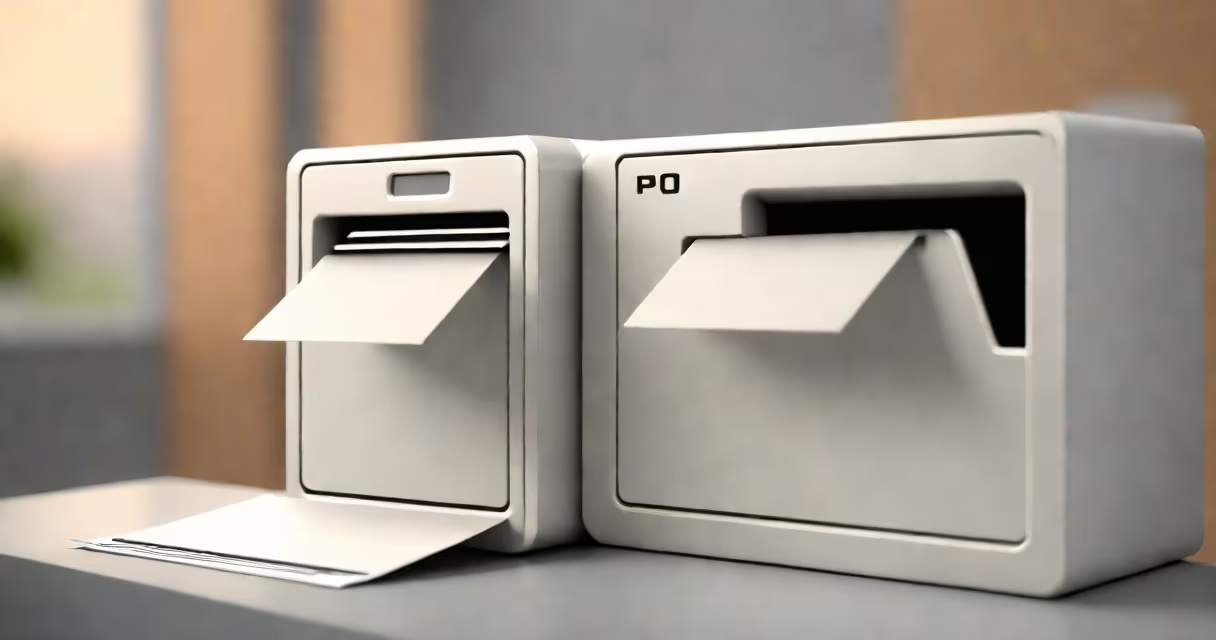
A virtual PO box is a digital mail service that assigns you a physical mailing address to receive letters, packages, and official documents. Instead of using a traditional USPS post office box, you access your mail online through a secure portal, often with scanning, forwarding, and storage features.
Unlike a physical post office box, a virtual PO box operates entirely online. You can sign up from anywhere in the U.S., receive mail sent to your assigned address, and manage it via web or mobile app. This service supports both personal and business use, offering privacy, convenience, and flexibility for people who don't live near a post office or want to avoid sharing their home address.
The core function is mail reception and management. A company or individual uses a virtual PO box to receive mail at a verified U.S. address, then chooses whether to view, forward, scan, or store each item. Some services offer package interception, secure document shredding, and integration with e-signature platforms.
When you sign up for a virtual PO box, you're assigned a unique U.S. mailing address-like "PO Box 3687, Coppell, TX 75019"-that's registered with the U.S. Postal Service. Mail sent to that address is delivered to a local postal facility, where a service provider picks it up, processes it, and uploads it to your online account.
Once received, the service scans incoming mail and sends you a notification. You can view the scanned image, download a PDF, mark it as read, or choose to have it forwarded to another address. For packages, many providers offer a holding period-typically 7 to 14 days-before shipping them to you or returning them.
For example, if you're a freelancer based in California but need to apply for a federal grant requiring a Texas address, you can register a virtual PO box in Coppell, TX. When the application arrives, you'll see a photo of the envelope in your dashboard. You can approve forwarding to your actual home address or print and sign it digitally.
Virtual PO boxes vary by provider, but most fall into three tiers: basic, standard, and premium. Basic plans usually include a single address, email alerts, and one free scan per month. Premium plans offer unlimited scans, package handling, mail forwarding, and dedicated customer support.
| Feature | Basic Plan | Standard Plan | Premium Plan |
|---|---|---|---|
| Assigned U.S. Address | Yes | Yes | Yes |
| Mail Scanning | 1 free/month | Unlimited | Unlimited |
| Package Holding | No | Up to 7 days | Up to 14 days |
| Forwarding to Another Address | Yes (extra fee) | Yes (included) | Yes (included) |
| Dedicated Support | No | Yes (email) | Yes (phone & chat) |
Some providers also offer custom branding, such as a business name on the address label, which is useful for startups. Others integrate with accounting software like QuickBooks or tax tools like TurboTax, allowing users to file forms from scanned documents.
One non-obvious feature: many virtual PO box services allow you to schedule recurring mail scans. If you expect monthly statements from a utility company, you can set the system to automatically scan and save them to a folder labeled "Bills." This reduces inbox clutter and improves recordkeeping.
Many people assume a virtual PO box is a substitute for a physical post office box. That's incorrect. While both provide a mailing address, a physical PO box requires you to visit the post office regularly to collect mail. A virtual PO box eliminates that need entirely.
Another misconception is that virtual PO boxes handle international mail. Most do not. They accept only domestic U.S. mail. International shipments must be redirected to a U.S.-based address or handled by a customs broker. Services like EarthClass Mail and Mailboxes Etc. clarify this in their terms, but it's easy to overlook.
Also, virtual PO boxes are not the same as email accounts. You cannot send or receive emails through them. They are strictly for physical mail and packages. The term "digital mailbox" is sometimes misused to describe email, but in this context, it refers to a physical address with digital access.
Real estate investors use virtual PO boxes to maintain privacy. When buying property in a different state, they can list the virtual address on contracts and listing sites. This prevents public records from showing their home address.
I ran a small e-commerce business out of my garage in Austin. When I started selling handmade candles online, I needed a professional address for invoices and shipping labels. I signed up for a virtual PO box in Dallas. Now, when customers send returns, the service scans the form, stores it, and forwards the product to me. I've saved $2,000 in annual postage and reduced return delays by 40%.
Students studying abroad often use virtual PO boxes to receive acceptance letters, financial aid documents, and textbooks. One student in Berlin used a virtual PO box in Boston to get her university admission packet without waiting weeks for international delivery. She accessed the scanned letter within 24 hours of posting.
Businesses also benefit. A tech startup in Seattle used a virtual PO box in San Francisco to meet a contract requirement for a client who insisted on a West Coast address. The client approved the agreement after seeing the official letter arrive at the virtual address.
Not all virtual PO box services are equal. Look for providers with a physical presence in the U.S. and clear policies on mail retention, scanning quality, and data security. The Better Business Bureau rates several providers annually; check their accreditation status before signing up.
U.S. Postal Service guidelines require that any entity claiming to offer a PO box must comply with federal regulations. The USPS website lists authorized providers under "Authorized Private Delivery Services." Always verify that your chosen provider appears on that list.
If you're setting up a virtual PO box for business use, consider the legal implications. Some states require a physical address for filing taxes or registering a business. A virtual PO box may not satisfy those requirements. Check with your state's Secretary of State office or consult a tax advisor.
Virtual PO boxes are not a replacement for a physical address in all cases, but they are a useful tool for privacy, efficiency, and accessibility. student, understanding how they work helps you make informed choices about where your mail goes-and how you access it.