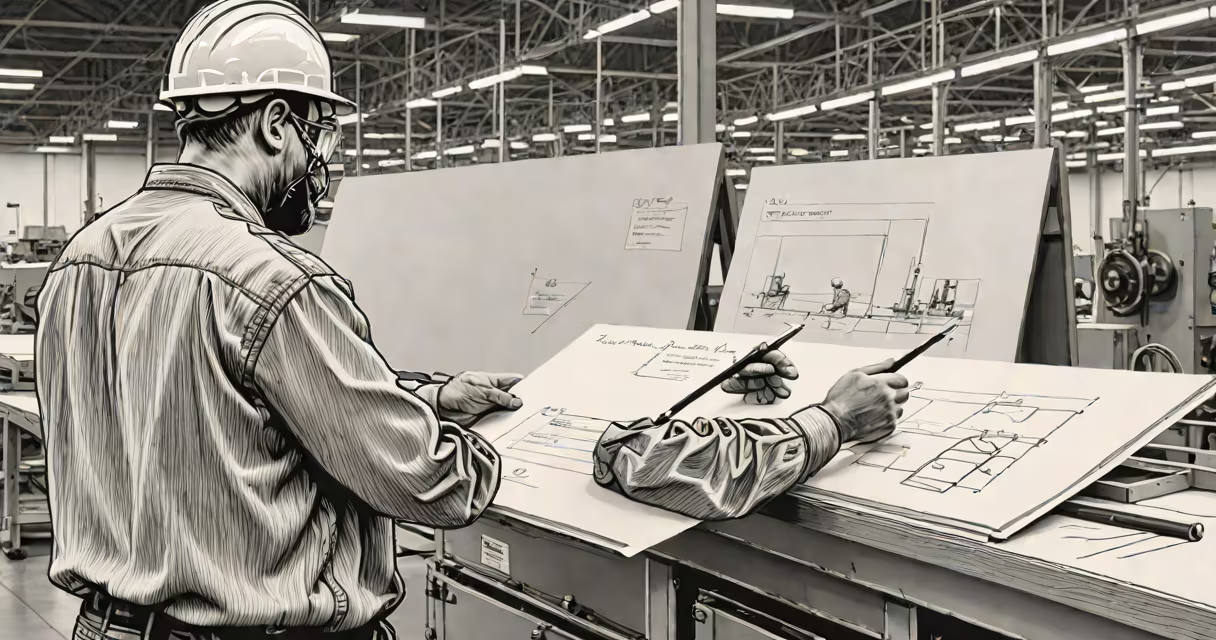
An EHS specialist is a professional responsible for ensuring workplace environments meet environmental, health, and safety regulations. They prevent accidents, reduce exposure to hazards, and maintain compliance with federal and state laws such as OSHA standards and EPA guidelines.
EHS specialists analyze workplace conditions, conduct audits, develop safety protocols, and train employees. Their work spans industries including manufacturing, construction, healthcare, and energy. A single oversight can lead to fines, injuries, or operational shutdowns, making their role critical to organizational continuity.
The term EHS stands for Environmental, Health, and Safety-three domains that collectively protect people, property, and ecosystems. These professionals don't just enforce rules; they design systems that embed safety into daily operations.
They begin by identifying potential risks-chemical exposures, machinery malfunctions, ergonomic strain, or poor air quality. Using tools like hazard checklists, incident reports, and site inspections, they document findings and prioritize interventions.
Once risks are mapped, EHS specialists create or update policies. For example, in a chemical plant, they may require personal protective equipment (PPE) for handling solvents, establish spill response procedures, and mandate regular ventilation checks. These measures are documented in standard operating procedures (SOPs).
They also lead training sessions. A 2022 study by the National Institute for Occupational Safety and Health (NIOSH) found that workplaces with structured safety training saw a 43% reduction in reportable incidents over 12 months. EHS specialists deliver this training, often using simulations or scenario-based learning to reinforce retention.
EHS specialists typically focus on one or more of these areas:
| Specialization | Primary Responsibility | Industry Examples |
|---|---|---|
| Environmental Compliance | Managing waste disposal, emissions, and pollution control | Oil refineries, wastewater treatment plants |
| Occupational Health | Monitoring worker exposure to toxins, noise, or repetitive motion | Factories, mining sites, laboratories |
| Safety Management | Preventing slips, falls, and equipment-related injuries | Construction, warehousing, food processing |
Some EHS specialists specialize further-e.g., a radiation safety officer in a hospital's imaging department or a confined space entry coordinator in a utility company. These roles demand advanced certifications, such as Certified Safety Professional (CSP) or Occupational Health and Safety Technologist (OHST).
A non-obvious distinction: EHS specialists are not the same as industrial hygienists, though both assess workplace hazards. Industrial hygienists focus narrowly on airborne contaminants and exposure levels. EHS specialists take a broader view, integrating health, safety, and environmental goals into a unified structure.
Regulatory bodies like OSHA require employers with 11 or more employees to have a designated safety program. Larger organizations often assign EHS specialists to each site or department. In high-risk sectors-such as chemical production or offshore drilling-companies may deploy multiple EHS staff per shift.
For example, at a semiconductor fabrication plant in Arizona, an EHS specialist identified a recurring issue with nitrogen gas leaks in cleanroom zones. After analyzing airflow patterns and sensor logs, they redesigned ventilation controls and updated emergency evacuation routes. This change reduced near-misses by 68% within six months.
Smaller businesses may outsource EHS functions. A small auto repair shop in Texas hired a freelance EHS consultant to audit oil storage practices. The review uncovered improper containment methods and led to a $2,400 investment in secondary containment trays-preventing a potential EPA violation.
Many assume EHS specialists only respond to accidents. In reality, their primary function is prevention. According to OSHA, 80% of workplace injuries result from unaddressed root causes, not random events. EHS specialists identify these early through proactive monitoring.
Another myth: EHS roles are administrative. While documentation is part of the job, the role demands fieldwork. A specialist might spend hours inspecting scaffolding on a construction site, testing air quality in a warehouse, or observing assembly-line ergonomics.
I once observed an EHS specialist at a food packaging facility wearing a hard hat, goggles, and gloves while checking conveyor belt guards. She paused to adjust a misaligned sensor, then noted the fix in her digital log. Her presence wasn't symbolic-it was operational. That moment clarified how hands-on the role truly is.
Most EHS specialists hold a bachelor's degree in occupational safety, environmental science, or engineering. Certifications like CSP, OHST, or NEBOSH International General Certificate improve credibility. Some employers prefer candidates with 3-5 years of field experience.
Entry-level roles include EHS technician or safety coordinator. Advancement leads to senior EHS specialist, EHS manager, or director positions. Salaries vary by region and industry: the U.S. Bureau of Labor Statistics (BLS) reports median annual pay of $77,000 for EHS managers in 2023.
An EHS specialist prevents harm by managing environmental, health, and safety risks in the workplace. They assess threats, implement controls, train teams, and ensure compliance. Their work protects workers, reduces liability, and supports business resilience. Understanding this role is essential for any organization committed to safe, sustainable operations.