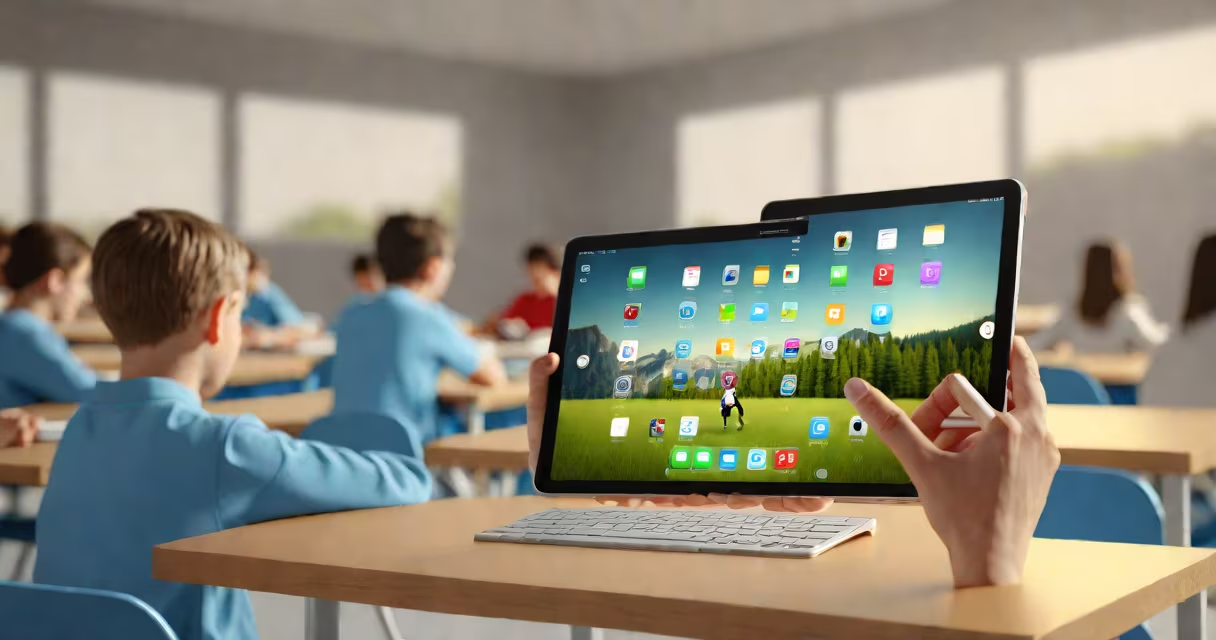
Apple Education is a program that provides discounted Macs, iPads, and software licenses to eligible students, teachers, and school staff. It includes access to special pricing, volume purchasing, and educational tools tailored for learning environments.
The program operates under Apple's institutional licensing model, offering reduced rates on hardware and software for schools, colleges, and individual learners. Eligibility is based on enrollment status, employment at an educational institution, or verification through an approved academic email address.
Apple Education is not a standalone service but a set of integrated offerings designed to support teaching, learning, and innovation in classrooms and campuses worldwide. It includes bulk device procurement, free apps like iBooks and GarageBand, and access to Apple's Teacher Tools and Learning Resources.
Eligible users gain access to Apple Education pricing through Apple's official website or authorized resellers. To qualify, individuals must verify their affiliation with an educational institution via a school-issued email address ending in .edu, .ac.uk, or similar domain, or through direct enrollment verification.
Once verified, users can purchase Macs, iPads, and Apple Pencils at a discount. For example, a MacBook Air may be available at $100 less than retail for qualifying students. Schools can also enroll in the Apple School Manager portal to manage device deployment, app distribution, and device tracking at scale.
Teachers and administrators can assign apps and books to student devices remotely using Apple Configurator 2 or Mobile Device Management (MDM) systems. This enables schools to standardize learning environments across thousands of devices, ensuring consistent access to curriculum-aligned tools.
Apple Education delivers four core components: discounted hardware, educational software, institutional licensing, and support resources.
| Component | Details | Examples |
|---|---|---|
| Hardware Discounts | Reduced prices on Macs, iPads, and accessories for students and educators. | MacBook Pro at 10% off; iPad with Apple Pencil bundle at $300 instead of $400. |
| Software & Services | Free or discounted access to Apple's creative and productivity apps. | iMovie, Final Cut Pro, Logic Pro, and Apple Books for Education. |
| Institutional Licensing | Volume licensing for schools to deploy apps and content across devices. | App Store for Education, iCloud for Education, and Classroom app. |
| Support & Training | Free training sessions, lesson plans, and educator guides. | "Today at Apple" workshops, "Everyone Can Code" curriculum. |
A university IT department might use Apple School Manager to distribute 500 iPads preloaded with math and science apps, assign unique Apple IDs for each student, and enforce screen time limits during exams-all managed through a single dashboard.
Many assume Apple Education is only for K-12 schools. In reality, it covers higher education institutions, vocational programs, and even homeschooling families with verified enrollment documents.
Another misconception is that Apple Education requires a school to buy devices in bulk. While volume purchases are common, individual students can still apply for discounts using their school email-even if they're buying one device.
Some confuse Apple Education with Apple's free online courses. While both serve educators, Apple Education focuses on hardware and software access, whereas Apple's free courses (like "Everyone Can Code") are standalone learning modules hosted on Apple's website.
A key distinction: Apple Education does not provide free devices. All products are sold at reduced rates. For example, a student who qualifies for a 10% discount on a $1,200 MacBook Air pays $1,080-not $0.
In 2023, Lincoln High School in Oregon implemented a 1:1 iPad program using Apple Education. The district purchased 1,200 iPads at a 15% discount through Apple's education portal, saving approximately $180,000 compared to retail pricing.
Using Apple School Manager, the IT team assigned each iPad a unique profile tied to a student's Apple ID. They deployed 12 educational apps-including Khan Academy, Notability, and Adobe Fresco-via automated push updates. Teachers accessed lesson templates from Apple's Education Resource Center, which includes standards-aligned activities for math, science, and language arts.
After six months, 94% of teachers reported improved student engagement. The school also saved $45,000 annually in software licensing fees by switching from third-party platforms to Apple's native tools.
I managed a district-wide rollout of 800 iPads for middle school students in 2022. Using Apple School Manager and Apple Configurator 2, we created a standardized setup with pre-installed apps, restricted web access during class, and automatic backups to iCloud. The process took 14 days for 800 devices-without requiring individual configuration.
Without Apple Education's volume licensing, we'd have paid nearly $200,000 more for the same software set. The program made large-scale integration feasible for a public school system with limited IT staffing.
Apple Education is used in over 180 countries. Major adopters include public school districts in the U.S., universities in Canada, and technical colleges in Germany. It's especially popular in STEM-focused curricula due to smooth integration with coding tools like Swift Playgrounds and robotics kits.
Why schools choose it: Apple's system offers consistency across devices, strong security features, and long-term software support. A 2023 report from the National Center for Education Statistics found that schools using Apple Education programs had 23% higher rates of digital tool adoption among teachers compared to those using mixed-device environments.
For students, the program reduces financial barriers to accessing modern learning tools. A 2022 study by the University of Michigan showed that low-income students using Apple Education devices were 30% more likely to complete digital assignments on time than peers using older or non-Apple devices.
Apple Education does not cover internet access, printer supplies, or physical textbooks. It also doesn't offer grants or scholarships-only discounted pricing.
Be cautious of third-party sellers claiming to offer Apple Education deals. Only purchases through Apple's official site or authorized resellers qualify. Scammers often mimic Apple's branding to collect payment for unverified discounts.
Also, discounts expire after 30 days unless renewed. A student who verifies eligibility in September must complete their purchase within that window or lose the rate.