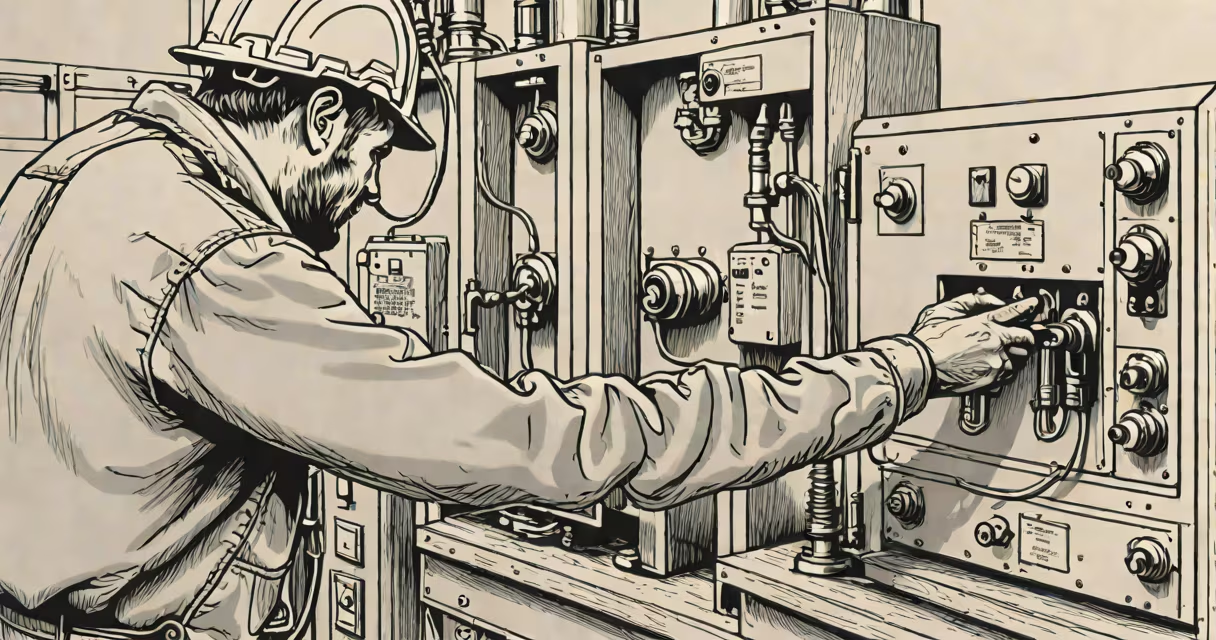
A hazardous energy control program is a structured safety protocol designed to prevent unexpected startup or release of stored energy during equipment maintenance or servicing. It ensures workers are protected from injuries caused by energized machines, tools, or systems through systematic isolation and verification of energy sources.
This program is required under U.S. Occupational Safety and Health Administration (OSHA) standards, specifically 29 CFR 1910.147, which mandates that employers establish procedures to control hazardous energy during servicing or maintenance. Failure to comply can result in serious injury or death, as well as regulatory penalties.
The core principle is simple: isolate energy sources before work begins, verify isolation, and maintain protection until work is complete. This applies to electrical, mechanical, hydraulic, pneumatic, chemical, thermal, and other forms of energy that can cause harm.
The hazardous energy control program follows a five-step sequence: preparation, notification, shutdown, isolation, and verification. Each step is mandatory and must be documented.
Preparation involves identifying all energy sources associated with the equipment. For example, a conveyor belt may have electric power, hydraulic pressure, and gravity potential energy. A trained employee must assess each source and determine the correct isolation method.
Notification requires informing all affected employees that maintenance is about to begin. This prevents accidental activation by others who may not know work is underway. In practice, supervisors often use work orders or digital alerts to confirm awareness.
Shutdown is the physical act of turning off the equipment using standard operating procedures. This is not the same as switching off a light-it means stopping all motion and energy flow. For a large industrial pump, this includes cutting power at the main disconnect and closing isolation valves.
Isolation uses physical barriers such as locks, tags, or blocks to prevent re-energization. A lockout device is placed on a circuit breaker or valve handle. Only the authorized employee who applied the lock can remove it. Tags are used to communicate the reason for isolation and the name of the person responsible.
Verification confirms that energy is truly isolated. This is done by attempting to start the equipment or checking for residual pressure or charge. If any energy remains, the process restarts. For example, testing a motor's circuit with a voltage detector ensures no live current exists.
Hazardous energy control programs address multiple energy types. Not all are electrical-some are less obvious but equally dangerous.
| Type of Energy | Source Example | Control Method |
|---|---|---|
| Electrical | Motor, switchgear, wiring | Disconnect switch, lockout device on breaker |
| Mechanical | Spinning shafts, springs, flywheels | Blocking with wedges, locking rotating parts |
| Hydraulic/Pneumatic | Pressurized lines, air tanks | Draining fluid, venting air, locking valves |
| Chemical | Reactive materials, pressurized gases | Isolating supply lines, purging system |
| Thermal | Hot surfaces, steam lines | Cooling down, verifying temperature |
Each energy type demands specific controls. For instance, draining a hydraulic system takes time-operators must wait for pressure to drop below safe levels before touching components. Skipping this step led to a 2018 incident at a steel mill where a worker was crushed by a press after assuming pressure had dissipated.
OSHA defines "energy" broadly. It includes stored energy-like a compressed spring in a press-that can release suddenly. Even gravity counts: a lifted platform can fall if not secured. These are not intuitive risks, yet they account for nearly 10% of all maintenance-related injuries, according to NIOSH.
Many people confuse hazardous energy control with general safety training or personal protective equipment (PPE). But PPE protects after exposure; lockout/tagout prevents exposure entirely.
Another mistake is thinking that a single lockout is enough. In reality, multiple energy sources often exist. A boiler system may require electrical disconnection, steam valve closure, and drain line isolation-all simultaneously. Failing to address all sources creates a false sense of security.
There's also confusion between "lockout" and "tagout." Lockout physically prevents operation. Tagout is a warning sign. You can tag a machine without locking it-but that's insufficient for high-risk tasks. OSHA requires lockout for all energy isolation unless a documented exception applies.
One non-obvious fact: energy can reappear unexpectedly. A capacitor in a motor control panel can hold a lethal charge for minutes after power is cut. In 2021, a technician died at a manufacturing plant after touching a capacitor that hadn't been discharged. The facility had a written program but failed to train staff on capacitive discharge hazards.
Consider a maintenance team replacing a drive belt on a 50-horsepower industrial fan in a paper mill. The fan is powered by a 480V motor and connected to a 200 PSI air compressor.
Step 1: Preparation - The lead mechanic identifies all energy sources: electrical (motor), pneumatic (air line), and mechanical (rotating shaft).
Step 2: Notification - The supervisor informs all shifts that the fan will be out of service for 4 hours. A work permit is issued and posted.
Step 3: Shutdown - The operator shuts down the fan via the central control panel. The motor stops.
Step 4: Isolation - The maintenance team goes to the electrical room and opens the main disconnect switch. They apply a lockout device to the switch handle. On the air line, they close the shutoff valve and attach a lockout tag. They also place a mechanical block between the pulley and shaft to prevent rotation.
Step 5: Verification - Using a multimeter, they test the motor terminals and confirm no voltage. They open the air line valve and listen for hissing-none. They try to rotate the shaft manually-no movement. All checks pass.
Only then do they begin work. After completion, they reverse the steps: remove blocks, reopen valves, restore power, and remove locks. The entire process took 37 minutes. Without the program, the risk of sudden startup would have been unacceptably high.
When implemented correctly, this procedure eliminates nearly all risk of injury during maintenance. According to OSHA, facilities with consistent lockout/tagout programs report 90% fewer incidents involving unexpected equipment startup.
Failure to implement a hazardous energy control program violates OSHA's General Duty Clause and specific regulations. Employers face fines up to $14,500 per violation, with repeat offenses reaching $145,000. In cases resulting in death, criminal charges may follow.
One notable case involved a meatpacking plant in Iowa. An employee was killed when a conveyor belt restarted during cleaning. OSHA cited the company for failing to enforce lockout procedures. The settlement included $1.2 million in penalties and mandatory safety overhaul.
Internally, the program reduces downtime by preventing accidents that halt production. A study by the National Institute for Occupational Safety and Health (NIOSH) found that plants with effective energy control programs reduced unplanned stoppages by 30% due to fewer injury-related delays.
Every worker involved in maintenance must be trained annually. Training covers identifying energy sources, applying locks, verifying isolation, and responding to emergencies. Documentation must be kept for at least three years, per OSHA recordkeeping rules.
A hazardous energy control program is not a checklist-it's a culture of safety. It demands discipline, accountability, and continuous review. When properly executed, it saves lives, prevents injuries, and keeps operations running safely.