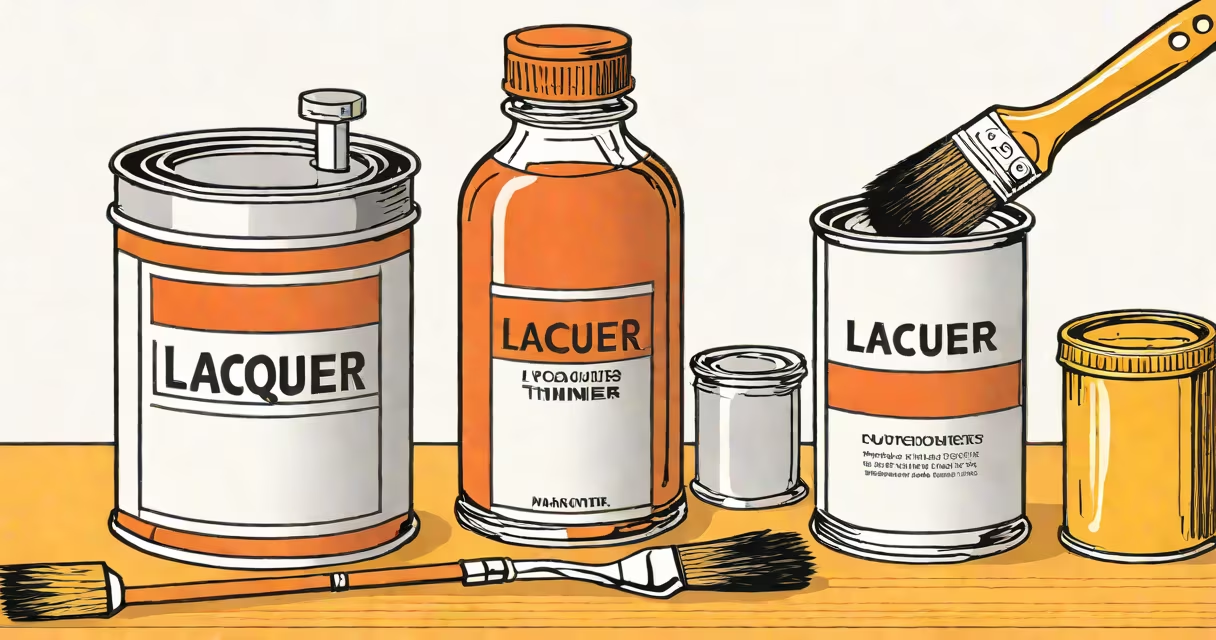
Lacquer thinner is a solvent blend primarily composed of acetone, toluene, xylene, and ethyl acetate. These chemicals dissolve nitrocellulose-based lacquers and remove dried finishes from tools and surfaces. The mixture evaporates quickly, enabling fast-drying coatings.
Each component contributes specific properties. Acetone dissolves resins rapidly and is effective at low temperatures. Toluene and xylene improve flow and leveling during application. Ethyl acetate balances evaporation speed and reduces surface tension. Together, they form a solution that thins lacquer to the ideal viscosity for spraying or brushing.
Manufacturers adjust ratios based on intended use. For example, automotive refinishing requires faster evaporation than furniture finishing. A typical formulation contains 30-40% acetone, 20-30% toluene, 10-20% xylene, and 5-10% ethyl acetate. The remainder includes additives like stabilizers and odorants.
The primary solvents in lacquer thinner serve distinct functions. Acetone is a ketone that attacks polar bonds in resins, breaking down film-forming materials. Its low boiling point (56°C) allows rapid drying, but it also increases flammability risk.
Toluene, a benzene derivative, acts as a strong dissolver for high-molecular-weight polymers. It remains liquid at room temperature and evaporates slowly compared to acetone. This slower rate prevents premature skinning during application. However, toluene exposure exceeds occupational limits set by OSHA and the EPA.
Xylene, another aromatic hydrocarbon, improves wetting and adhesion. It enhances gloss and durability in finished films. Like toluene, xylene is classified as a hazardous air pollutant under the Clean Air Act. Both aromatics contribute to volatile organic compound (VOC) emissions.
| Solvent | Boiling Point (°C) | Primary Function | Risk Level |
|---|---|---|---|
| Acetone | 56 | Fast resin dissolution | High flammability |
| Toluene | 111 | Resin compatibility, flow control | Neurotoxic, regulated VOC |
| Xylene | 138 | Improved adhesion, reduced surface tension | Respiratory irritant, carcinogen suspect |
| ethyl acetate | 77 | Balance evaporation rate, reduce haze | Mild irritant, moderate VOC |
Some formulations include alcohols like isopropyl alcohol for cleaning brushes. Others add inhibitors to prevent oxidation. These additives are minor but affect shelf life and performance.
Lacquer thinner is often mistaken for mineral spirits or denatured alcohol. Mineral spirits are less aggressive and used for oil-based paints. Denatured alcohol lacks the strength to dissolve nitrocellulose lacquers. Using the wrong solvent leads to poor adhesion and finish defects.
A critical error is assuming all lacquer thinners are interchangeable. Industrial-grade thinners differ from hobbyist versions. The latter may contain fewer aromatics due to consumer safety regulations. For example, California's Air Resources Board restricts aromatic content in consumer products to below 15%.
Health hazards are significant. The CDC reports that prolonged inhalation of toluene and xylene causes dizziness, headaches, and long-term neurological damage. Skin contact leads to dryness, cracking, and dermatitis. The National Institute for Occupational Safety and Health (NIOSH) recommends using lacquer thinner only in well-ventilated areas with gloves and eye protection.
In a professional auto body shop, a technician mixes 3 parts lacquer with 1 part lacquer thinner to achieve sprayable consistency. The ratio ensures even atomization through the spray gun. After spraying, the finish dries in under 10 minutes due to rapid solvent evaporation.
After use, the technician cleans the gun with fresh thinner. He pours a small amount into a container, submerges the nozzle, and flushes it repeatedly. This removes residual lacquer before storage. The used thinner is collected in a sealed container for disposal as hazardous waste.
I once observed a worker in a factory who used lacquer thinner to clean a mold cavity. He applied it with a lint-free cloth, then wiped it off. The residue evaporated completely within 30 seconds. The surface was ready for the next batch. This process prevented cross-contamination between product runs.
Under the U.S. Environmental Protection Agency (EPA) guidelines, lacquer thinner is classified as a hazardous air pollutant due to its VOC content. Facilities using large volumes must report emissions annually. The Clean Air Act Amendments limit total VOC emissions from coating operations to 150 grams per liter of product.
Many manufacturers now offer low-VOC alternatives. These replace 50% of toluene and xylene with less toxic solvents like methyl ethyl ketone (MEK) or cyclohexanone. While effective, these blends require longer drying times and may not perform as well in high-humidity environments.
For disposal, never pour lacquer thinner down drains or onto soil. It contaminates groundwater and violates federal regulations. Instead, collect it in a sealed, labeled container and take it to a hazardous waste facility. The EPA estimates that improper disposal accounts for 12% of accidental chemical spills in manufacturing zones.
When selecting a thinner, verify the SDS (Safety Data Sheet) for ingredient details. Look for CAS numbers and hazard statements. Always store in a cool, dry place away from ignition sources. Use only in areas with proper ventilation and personal protective equipment.