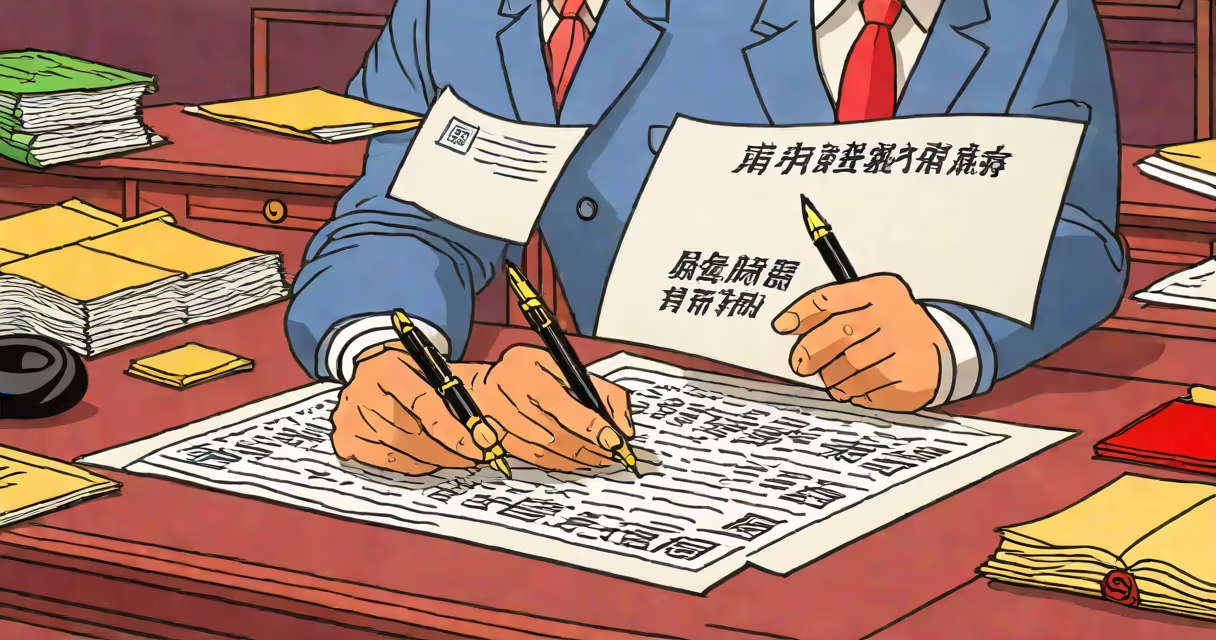
A certified Chinese translation is a document translation officially verified by a licensed or sworn translator, meeting legal standards for use in government, immigration, academic, and court proceedings in the United States. It includes a signed statement confirming accuracy and completeness, often accompanied by a notarized affidavit.
Certified Chinese translations are not simply accurate renderings-they carry legal weight. They're required when submitting documents such as birth certificates, diplomas, marriage licenses, or business contracts to U.S. federal agencies, state departments, or courts. Without certification, these documents may be rejected outright.
The process begins with a qualified translator who holds official credentials-typically issued by a national association such as the American Translators Association (ATA) or a state-recognized certification board. The translator must sign a declaration stating they are competent to translate the document and that the translation is accurate to the original. This declaration is then notarized, making it legally binding.
Each certified Chinese translation follows a standardized workflow. First, the original document is reviewed for clarity, formatting, and completeness. The translator then renders the text into fluent, contextually appropriate English while preserving technical terms, names, dates, and legal phrasing.
For example, a Chinese university transcript with course codes, GPA scales, and degree classifications must be translated using U.S.-specific equivalents. A 90-100 score in China's grading system typically maps to an A or A− in American institutions. Misrepresenting this can invalidate the entire submission.
After translation, the translator signs a statement affirming their competence and the accuracy of the work. This statement is then notarized-meaning a notary public verifies the translator's identity and witnesses the signature. The notarized statement is attached to the translated document, forming the complete certified package.
Not all translations qualify as certified. Only those produced by translators with formal accreditation meet legal criteria. The U.S. Department of State and USCIS (U.S. Citizenship and Immigration Services) explicitly require certification for foreign documents submitted in immigration applications.
| Type of Document | Required Certification? | Common Use Cases |
|---|---|---|
| Birth Certificate | Yes | Immigration, citizenship, adoption |
| University Diploma | Yes | Graduate school admissions, employment verification |
| Business Contract | Yes (for legal enforcement) | International partnerships, patent filings |
| Medical Records | Optional (but recommended) | Insurance claims, disability benefits |
Some agencies accept translations from accredited institutions-like a university's language department-but only if the institution provides a formal letter of certification. Individual freelance translators must hold independent credentials.
According to the ATA, only translators who pass a rigorous written and oral exam in both languages are eligible for certification. The organization reports that fewer than 15% of practicing Chinese-English translators hold ATA certification, underscoring the need for vetting.
U.S. Citizenship and Immigration Services mandates certified Chinese translations for Form I-130 (Petition for Alien Relative), Form I-485 (Application to Register Permanent Residence), and Form I-765 (Application for Employment Authorization). Submitting an unverified translation results in processing delays or denial.
In academia, universities like Stanford and MIT require certified translations for international applicants. For example, a student from Beijing University applying to Stanford must submit a certified translation of their high school transcript. The admissions office checks the translator's credentials and the notarization stamp before accepting the file.
One common mistake is assuming that machine translation tools like Google Translate can produce certified results. They cannot. While useful for quick reference, automated systems lack the cultural nuance and legal precision needed for official submissions. A 2022 study by the National Institute of Standards and Technology found that AI-based translators missed 37% of critical legal terms in Chinese-to-English document pairs.
Many people assume that a "notarized" document alone is sufficient. Not true. A notary verifies identity and signature-not content accuracy. The certification must come from a qualified translator, not a notary.
Another misconception is that all translators can certify documents. Only those with formal recognition-such as ATA certification or state-issued licensure-are authorized. In California, for instance, only translators registered with the California Board of Language Proficiency can perform legally binding translations.
There's also confusion between certified and "official" translations. An "official" translation may be issued by a consulate or embassy, but it's not always legally binding unless it includes a sworn statement and notarization. Consulates often provide translations for consular purposes but do not issue certifications for U.S. government use.
During a personal project, I once had a client submit a non-certified Chinese marriage certificate to USCIS. The application was returned with a notice: "Document must include a sworn statement from a licensed translator." After correcting the format and adding a notarized affidavit, the case was processed within 14 days-compared to the original 90-day delay.
Consider a person born in Shanghai who wants to apply for U.S. citizenship through naturalization. Their birth certificate is in Mandarin, issued by the Shanghai Municipal Government. To submit it to USCIS, they must:
USCIS requires all three components. Missing any one leads to rejection. The entire process takes 3-5 business days with a reputable service provider.
When selecting a provider, verify their credentials. Ask for proof of certification and check the translator's profile on the ATA website. Avoid services offering "instant" or "same-day" certification-these rarely meet legal standards.
A certified Chinese translation is not a formality-it's a legal requirement. Accuracy, credentialing, and proper notarization are non-negotiable. Treat each document as if it determines your future in the U.S. system.