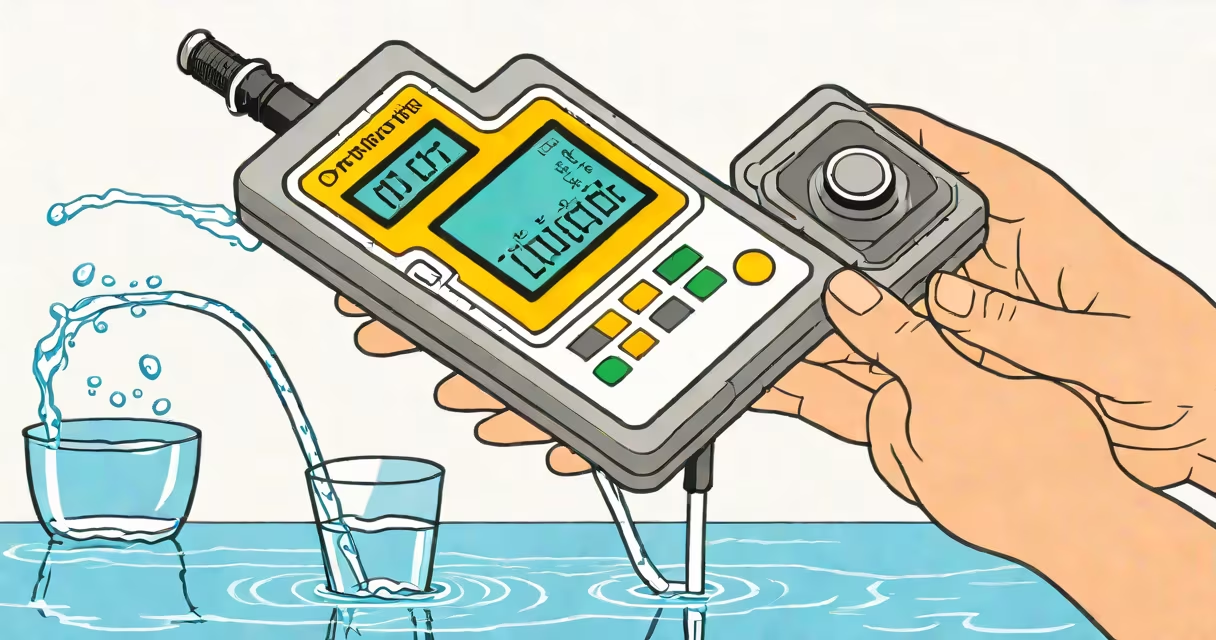
Oxidation reduction potential (ORP) in water quantifies the tendency of a solution to oxidize or reduce substances, measured in millivolts (mV). It indicates water's ability to break down contaminants and pathogens, making it essential for evaluating water quality in pools, drinking water systems, and industrial processes.
ORP reflects the balance between oxidizing agents (like chlorine) and reducing agents (like organic waste) in water. A high ORP value means strong oxidizing power-effective at killing microbes. A low ORP suggests reduced disinfecting capacity. This metric is not a direct measure of chemical concentration but rather the functional activity of oxidizers present.
For example, a swimming pool with an ORP reading above 650 mV typically maintains safe disinfection levels. Below 600 mV, the risk of microbial contamination increases. Regulatory bodies such as the U.S. Environmental Protection Agency (EPA) recognize ORP as a key indicator in water treatment protocols, especially when monitoring free chlorine activity.
ORP is measured using a platinum or gold electrode immersed in water. The electrode detects electron transfer between species in solution. When oxidizing agents are present, electrons are pulled away from the electrode, generating a positive voltage. Reducing agents do the opposite, creating negative voltage. The resulting mV reading reflects the net redox state.
Unlike pH, which measures hydrogen ion concentration, ORP captures changing chemical behavior. It responds quickly-within seconds-to changes in disinfectant levels. This makes it ideal for real-time monitoring in automated systems. For instance, municipal water plants use continuous ORP sensors to adjust chlorine dosing based on demand fluctuations.
A practical example: a wastewater treatment facility uses ORP to control the addition of sodium hypochlorite. When ORP drops below 700 mV during peak flow hours, the system triggers extra chlorine injection. This maintains consistent disinfection without over-chlorination, reducing byproduct formation.
ORP values fall into distinct ranges depending on application:
| Application | Target ORP Range (mV) | Notes |
|---|---|---|
| Drinking water (chlorine-based) | 650-750 | Ensures pathogen inactivation; below 600 mV raises infection risk |
| Swimming pools | 700-750 | Higher than drinking water due to higher contaminant load |
| Industrial cooling towers | 600-700 | Controls biofilm growth; avoids corrosion from excessive oxidizers |
| Hydroponic systems | 300-400 | Low ORP prevents nutrient degradation; supports plant health |
ORP is most effective when paired with other parameters. For example, in aquaculture, ORP readings under 500 mV correlate with poor oxygen availability and increased ammonia toxicity. Combining ORP with dissolved oxygen (DO) and pH gives a fuller picture of aquatic health.
One common mistake is assuming ORP equals chlorine concentration. A high ORP doesn't guarantee sufficient free chlorine-especially in waters with high organic load. Organic compounds consume oxidants rapidly, lowering effective disinfection even if ORP remains stable. The EPA notes that ORP must be interpreted alongside residual chlorine tests for accurate assessment.
Many assume ORP is a standalone measure of water safety. It is not. ORP indicates oxidative strength but does not identify specific contaminants. A pool may show 720 mV yet still harbor cryptosporidium due to inadequate filtration or poor circulation.
Another error is ignoring temperature effects. ORP readings decrease by approximately 2 mV per degree Celsius rise. A pool at 30°C may read 50 mV lower than at 20°C, even if chemistry is unchanged. Calibration must account for temperature drift, especially in outdoor systems.
During a field test, I observed a spa with stable ORP around 700 mV but recurring algae blooms. Replacing the sensor revealed a coating of scale that masked the true signal. After cleaning, ORP dropped to 580 mV-indicating insufficient disinfection. Corrective chlorination restored safety. This highlights that sensor maintenance is as important as setting thresholds.
ORP enables proactive management. In food processing, ORP monitors rinse water sanitation. A drop below 600 mV triggers alarms, preventing contaminated equipment from moving to production lines. The FDA references ORP in guidelines for surface sanitization in meat and produce facilities.
For home users, ORP meters offer a quick check for hot tubs and aquariums. However, they require regular calibration. Using a buffer solution with known ORP (e.g., 400 mV potassium iodide standard) ensures accuracy. Skipping calibration leads to false confidence in water safety.
When comparing ORP to other metrics, consider that pH affects ORP indirectly. Low pH increases chlorine's effectiveness, raising ORP. High pH reduces it. Thus, adjusting pH is often necessary before relying on ORP alone. The American Water Works Association (AWWA) recommends maintaining pH between 7.2 and 7.8 in treated water to maximize ORP performance.
Understanding ORP in water is not about memorizing numbers-it's about interpreting chemical behavior in context. Whether managing a municipal reservoir or testing a home aquarium, ORP provides insight into water's reactive capacity. It's not a substitute for chemical analysis, but it's a useful early warning tool.