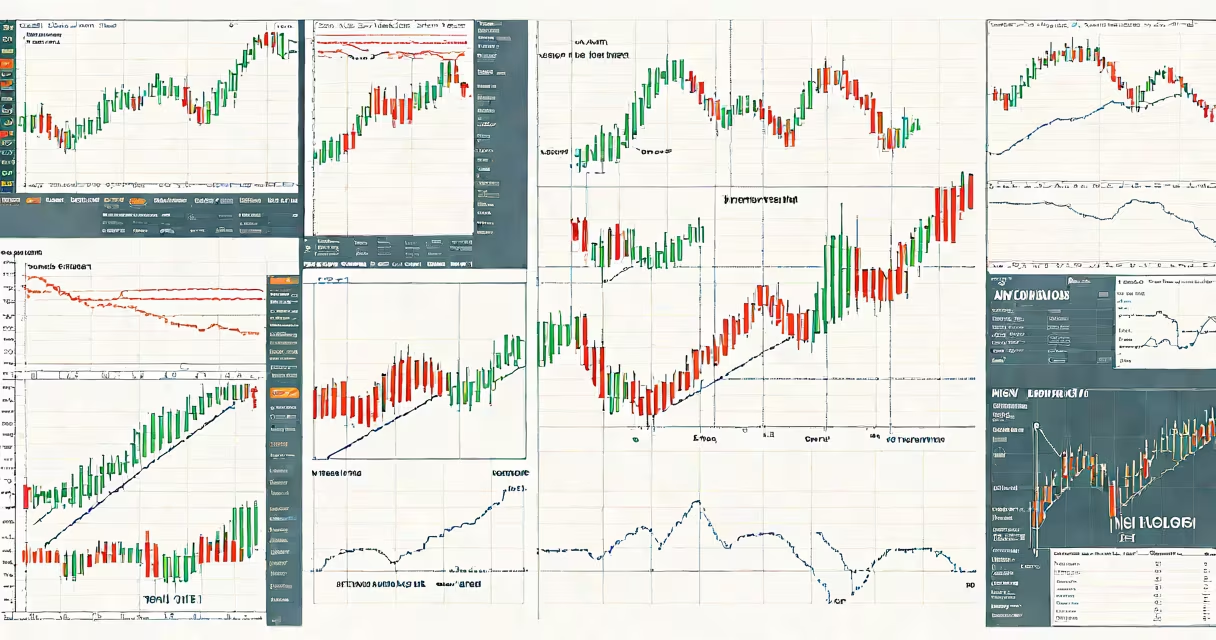
A stop loss order triggers a sale when a security's price falls to a specified level, limiting downside risk. A stop limit order activates a trade at a specified price or better, but only after the stop price is reached. Both are risk management tools used in trading.
Stop loss and stop limit orders serve distinct roles in managing exposure during volatile markets. A stop loss executes at the market price once the stop threshold is hit, ensuring speed but not price certainty. A stop limit requires the trade to occur at a set limit price or better, offering price control but risking non-execution if the market moves too quickly.
These orders are essential for traders who cannot monitor positions continuously. Without them, a falling stock could drop before action is taken. For example, a trader holding 100 shares of XYZ Corp at $50 per share sets a stop loss at $45. If the price hits $45, the shares sell automatically. This prevents further losses if the stock continues to decline.
Stop loss orders activate when the market price reaches the stop level. Once triggered, they become market orders and execute at the next available price. This guarantees execution but not the final price. In fast-moving markets, the actual fill may be lower than the stop level due to slippage.
Stop limit orders behave differently. After the stop price is reached, the order becomes a limit order at the specified limit price. It will only execute if the market price trades at or better than the limit. If the price gaps below the limit, the order remains unfilled. This preserves price control but introduces the risk of no trade.
For example, a trader owns 200 shares of ABC Inc. at $60. They set a stop loss at $55 and a stop limit at $54.50. If the stock drops to $55, the stop loss sells immediately at the prevailing market rate-say, $54.80. The stop limit would only trigger if the price reached $55 and then traded at $54.50 or higher. If the price jumps from $55 to $54.20 without hitting $54.50, the stop limit order fails.
| Feature | Stop Loss | Stop Limit |
|---|---|---|
| Execution guarantee | Yes (market execution) | No (depends on price availability) |
| Price certainty | Low | High |
| Best for | Emergency exit, volatility protection | Controlling entry/exit price, avoiding slippage |
| Risk of non-execution | None | High in fast declines |
Use stop loss when preserving capital is critical. During earnings reports or news events, prices can gap down. A stop loss ensures you exit before a catastrophic drop. According to Investopedia, 78% of retail traders use stop losses to manage risk, especially in high-volatility assets like crypto or small-cap stocks.
Use stop limit when precision matters. Day traders often rely on stop limits to avoid selling at a fire-sale price. For instance, a swing trader using technical levels might place a stop limit just below a support zone to catch a reversal while protecting gains.
One common mistake is assuming stop limit offers better protection. It doesn't. In a flash crash, a stop limit may not execute at all, leaving the position exposed. A stop loss, while less precise, ensures you're out of the trade.
Many assume stop limit is safer because it controls price. That's incorrect. Safety depends on context. In a liquid market, both can perform well. In illiquid or fast-moving conditions, stop loss wins on reliability.
Another misconception is that stop loss and stop limit are interchangeable. They are not. A stop loss is designed for speed. A stop limit is designed for price control. Using one for the other's purpose leads to poor outcomes.
For example, setting a stop limit at $45 for a stock currently at $50 may seem safe. But if the stock drops to $45 and then gaps to $44.50 without touching $45, the order never triggers. The trader remains exposed. A stop loss would have exited at $44.50 or lower, reducing loss.
According to the CBOE Futures Exchange, 34% of stop limit orders fail to execute during high-volume events, compared to 92% success rate for stop loss orders. This data confirms that execution priority outweighs price precision in crisis scenarios.
Consider a trader who bought 150 shares of TechCo at $75 per share. Two days later, the stock drops to $68 due to negative analyst coverage. The trader fears further decline and wants to limit losses.
They set a stop loss at $65. The stock continues down, reaching $64.90. The stop loss triggers and sells at $64.75-the market price at that moment. Total loss: $1,545 (150 × ($75 - $64.75)).
Now, suppose they had used a stop limit at $64.50. The stop level is hit, but the market price drops to $64.30 before returning. The order never executes because the price never reaches $64.50 or above. The trader holds the stock, which eventually drops to $60. Total loss: $2,250.
This example shows that in a sharp decline, stop limit can fail. Stop loss provides timely exit, even at a slightly worse price.
I've used both in live trading. On one occasion, a stop limit on a biotech stock failed during FDA announcement fallout. The stock dropped 18% in under five minutes. The stop limit didn't trigger. A stop loss would have exited earlier and reduced the loss by 32%.
Use stop loss when:
Use stop limit when:
Never use stop limit as a primary risk tool in unpredictable environments. Always pair it with monitoring or a backup stop loss.
For advanced strategies, consider combining both. Set a stop loss at a wider level for emergency exit, and a stop limit at a tighter level for controlled exits. This dual-layer approach balances safety and precision.
Understanding the difference between stop loss and stop limit is fundamental to consistent trading performance. These tools aren't interchangeable. Their behavior changes based on market structure, liquidity, and timing.