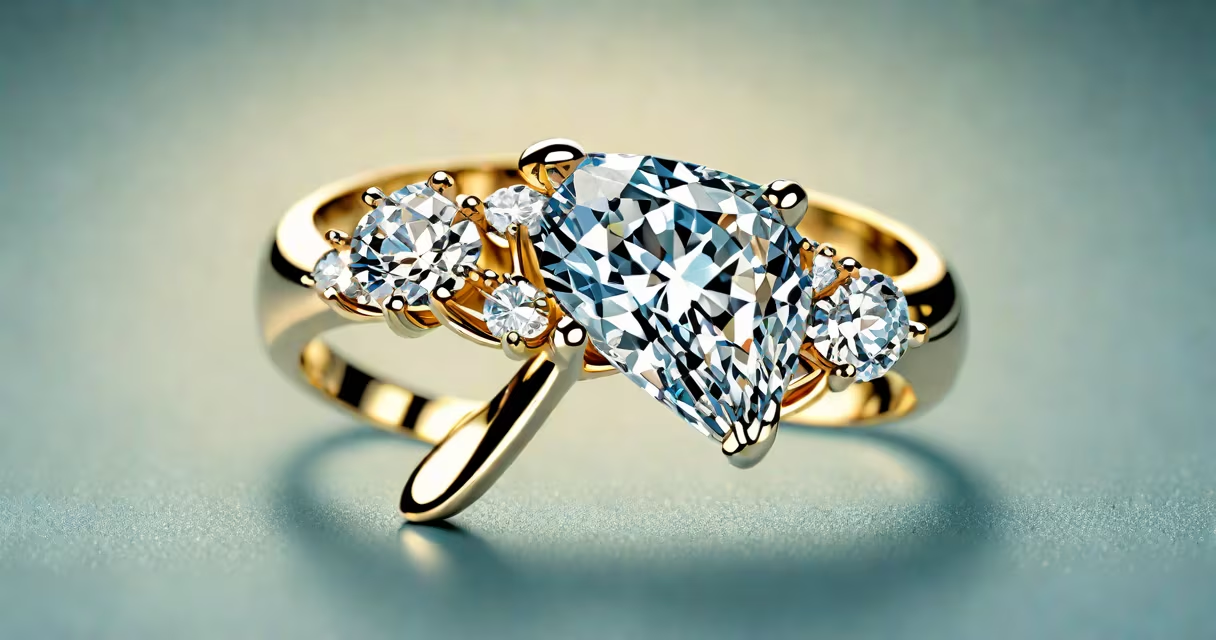
The term "jewel" refers to a precious or semiprecious stone valued for beauty, rarity, and durability, often used in adornment or symbolic representation. It can also denote something highly prized or cherished, such as a person or achievement.
Jewels have served as symbols of power, wealth, and spiritual significance since ancient times. The earliest known use of gemstones dates to 30,000 BCE, when humans in Europe and Africa used beads made from shell, bone, and turquoise. By 2500 BCE, Mesopotamian artisans were crafting lapis lazuli amulets believed to protect against evil spirits. Today, the meaning of jewel spans material value, emotional weight, and cultural narrative.
Modern usage includes both literal and metaphorical applications. A diamond may represent commitment in a wedding band, while a person described as "a jewel" implies rare kindness or integrity. The dual nature of the term-physical object and abstract ideal-shapes its enduring presence in language and art.
In material form, a jewel is a naturally occurring mineral or synthetic compound cut and polished for display. Common examples include diamonds (carbon), rubies (corundum), sapphires (also corundum), emeralds (beryl), and pearls (organic). These materials are ranked by hardness on the Mohs scale, with diamond scoring a perfect 10-the hardest known natural substance.
Metaphorically, "jewel" describes someone or something of strong worth. In Shakespeare's *The Merchant of Venice*, Portia says, "I am as fair as any in the world," comparing herself to a "jewel" in a crown. This reflects a long-standing tradition in literature where people are likened to gems to emphasize virtue, beauty, or rarity.
Even in legal and commercial contexts, the term holds specific weight. The Federal Trade Commission defines "gemstone" as a mineral used in jewelry, excluding common materials like glass or plastic. This distinction matters in consumer protection and pricing transparency.
Different cultures assign unique meanings to specific stones. For example:
| Stone | Common Symbolism | Cultural Origin |
|---|---|---|
| Diamond | Endurance, purity, eternal love | India (Vedic texts), Europe (medieval) |
| Ruby | Passion, vitality, protection | Thailand (Buddhist tradition), Persia |
| Sapphire | Wisdom, faith, divine favor | Christian iconography, Hindu mythology |
| Emerald | Rebirth, fertility, renewal | Egypt (ancient), Mesoamerica |
These associations persist in modern practices. In India, rubies are still worn during weddings to ward off negative energy. In Western traditions, sapphires appear in royal crowns-Queen Elizabeth II wore a sapphire and diamond tiara at her coronation in 1953.
A lesser-known fact: many ancient societies believed jewels had healing powers. The Greeks associated emeralds with eye health, and Romans believed pearls could calm anxiety. While none of these claims are scientifically validated, they illustrate how deeply embedded the idea of jewel as medicine or talisman remains in human belief systems.
Jewelry design relies heavily on the symbolic weight of stones. A 2022 report from the Gemological Institute of America (GIA) found that 68% of consumers choose engagement rings based on perceived meaning-not just price or size. Emeralds, for instance, are favored in Latin American cultures for their association with fertility and luck.
Businesses capitalize on this. Luxury brands like Cartier and Tiffany & Co. market their pieces not just as objects, but as stories. A Tiffany setting might be advertised as "a promise in a box," linking the physical ring to emotional permanence.
Personal use also shapes meaning. A mother might pass down a family heirloom ruby brooch to her daughter, turning a piece of jewelry into a vessel of memory. This practice aligns with research from the Smithsonian Institution, which notes that 73% of museum visitors connect emotionally with artifacts through personal narratives rather than technical details.
One frequent error is equating "jewel" with "diamond." While diamonds dominate media portrayals, only 15% of global gemstone production consists of diamonds. Most gems mined annually are colored stones like tourmaline, garnet, or topaz-materials less visible in advertising but equally valuable in certain markets.
Another misunderstanding: the belief that all jewels are rare. In reality, some stones are abundant yet culturally significant. For example, jade is widely available in Myanmar and China, but its role in Chinese culture-symbolizing harmony and moral integrity-elevates its status far above its market price.
Finally, confusion arises between "jewel" and "gem." Technically, all jewels are gems, but not all gems are jewels. The term "gem" refers to any ornamental stone, including synthetic ones like cubic zirconia. "Jewel" typically implies value, craftsmanship, and historical context. A lab-grown diamond may be a gem-but calling it a "jewel" suggests it belongs in a collection, not a discount store.
The Hope Diamond, a 45.52-carat blue diamond, exemplifies how meaning evolves. Discovered in India in the 17th century, it passed through French royalty before being sold to a New York jeweler in 1909. Its current home is the Smithsonian National Museum of Natural History, where it draws over 1 million visitors annually.
Legends claim the diamond brings misfortune to its owners-a curse tied to its violent history. Yet, despite the myth, the Smithsonian reports that 87% of visitors see it as a symbol of resilience and beauty, not doom. This shift in perception shows how meaning is not inherent in the object itself, but shaped by context, storytelling, and collective memory.
When you hear "jewel," consider the layers beneath the sparkle. It's not just a stone. It's a marker of time, belief, and human desire. Whether set in gold or spoken in praise, the meaning of jewel persists because it speaks to what we value most.