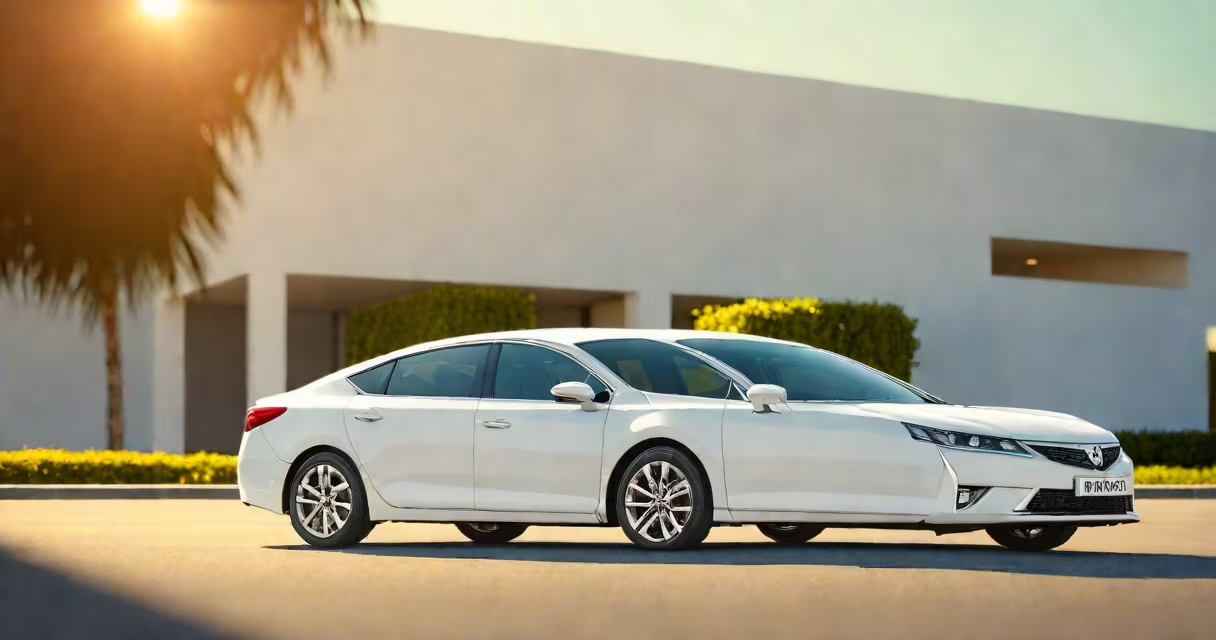
Zero financing is a car loan agreement where the lender charges no interest on the borrowed amount, effectively making the cost of borrowing free for the duration of the loan. This term specifically refers to promotional financing offers from automakers or banks that waive interest on auto loans for a set period, typically 24 to 60 months.
These offers appear as "0% APR" on vehicle listings and are often tied to specific models, trim levels, or customer credit profiles. Unlike a standard auto loan, where interest accrues daily and increases the total repayment amount, zero financing keeps the principal balance unchanged by interest. The borrower repays only the original loan amount, resulting in lower monthly payments compared to a traditional loan with interest.
For example, a $30,000 car financed at 0% APR over 60 months results in a fixed payment of $500 per month. With a 5% APR loan, the same car would require $560 per month-$60 more each month. Over five years, that's $3,600 in extra payments due to interest. Zero financing eliminates that cost entirely.
Lenders and automakers use zero financing as a marketing tool to attract buyers who may otherwise hesitate due to high interest rates. The promotion is usually time-limited and available only to qualified applicants-those with good or excellent credit scores. Even if a buyer qualifies, they still undergo a credit check, and approval depends on income, debt-to-income ratio, and credit history.
The offer is applied at the time of purchase. If a buyer chooses a zero financing deal, the lender sets the interest rate to 0% for the full term. The loan is structured so that the monthly payment remains constant, with all payments going toward principal reduction. No interest accumulates, so the total amount paid equals the vehicle's price minus any down payment.
For instance, a $28,000 SUV with a $3,000 down payment leaves a $25,000 loan balance. A 60-month zero financing deal results in exactly $416.67 per month for five years. Total repayment: $25,000. No additional interest is added.
Zero financing is not universal. It appears most frequently on new vehicles and certain used models through manufacturer-backed programs. These deals are often limited to specific models, model years, and regions. Automakers such as Toyota, Ford, and Hyundai frequently run zero percent financing campaigns during seasonal sales periods or to clear inventory.
Here's a breakdown of common types:
| Type | Duration | Typical Vehicle Type | Eligibility Requirements |
|---|---|---|---|
| New Car Promotions | 24-60 months | New sedans, SUVs, trucks | Credit score ≥ 700, stable income |
| Used Vehicle Programs | 12-36 months | Pre-owned certified models | Dealer-approved financing, limited availability |
| Lease-Back Deals | 36-48 months | High-demand models | Trade-in required, limited to select dealers |
Some offers are exclusive to employees, military members, or people buying through company fleets. Others are advertised nationally but only available through authorized dealerships. Always confirm the offer is valid at your local dealership before signing.
Many buyers assume zero financing means "free money" or that they're getting a discount on the car's sticker price. That's incorrect. The vehicle's MSRP (manufacturer's suggested retail price) remains unchanged. Zero financing only removes interest from the loan. The savings come from lower monthly payments, not reduced purchase price.
A critical mistake is ignoring the total cost of ownership. While the loan has no interest, the buyer still pays the full vehicle price. If the car depreciates quickly-like many new models do-the borrower may end up owing more than the car is worth after a few years. This is known as being "upside-down" on a loan.
Another misunderstanding is assuming all zero financing deals are equal. Some carry hidden fees, such as documentation or processing charges. Others require a large down payment. For example, a $35,000 car with 0% APR over 60 months requires a $5,000 down payment. The monthly payment drops to $500, but the buyer must pay $5,000 upfront-money that could have gone toward a better vehicle or lower interest rate elsewhere.
In January 2023, Ford offered 0% APR financing on the Ford Escape SEL for 60 months. The MSRP was $32,900. A buyer with a 720 FICO score qualified and put down $4,000. The remaining $28,900 was financed at 0% APR.
Monthly payment: $481.67. Total paid over five years: $29,000. No interest was charged. The buyer saved $7,500 in interest compared to a 5% APR loan, which would have totaled $36,500 in repayments.
However, the buyer also had to pay $1,200 in taxes and registration, bringing the total out-of-pocket cost to $30,200. The car's resale value dropped to $22,000 after three years. The buyer was still paying $481.67 monthly while the car was worth less than the outstanding loan balance.
This illustrates that zero financing reduces interest costs but doesn't eliminate risk. Buyers must assess their long-term financial position, not just monthly payments.
Automakers publish current financing promotions on their official websites. Ford's finance portal lists active 0% APR offers for eligible models. Toyota's website includes a "Financing & Leasing" section with filters for zero percent deals. These tools allow users to search by location, model, and credit tier.
Dealerships also advertise zero financing on vehicle listings. Always ask for the written terms. A 0% APR offer may last only 60 days and expire if the contract isn't signed within that window. Some dealerships require the buyer to finance through their in-house lender, which may charge higher fees than external banks.
I once visited a Honda dealership in Denver where a salesperson offered 0% APR on a CR-V. The fine print stated the offer was valid only for customers with credit scores above 740. My score was 725. The dealer refused to extend the offer. I later found the same deal online through Honda Financial Services, but only after contacting a regional manager.
Zero financing is not the same as rebates, cashback, or trade-in incentives. A $2,000 rebate reduces the purchase price. A $1,500 trade-in lowers the loan balance. Zero financing affects only the interest rate on the loan.
Also, zero financing doesn't apply to all loan types. It's rarely available on personal loans, home equity lines, or student debt. It's exclusive to auto financing, and even then, only under specific conditions.
Finally, zero financing does not mean the loan is interest-free forever. Most offers last between 24 and 60 months. After the promotional period ends, the interest rate resets to the standard rate-often 10% or higher. Borrowers must plan for this change. Refinancing before the rate adjusts can prevent a sudden spike in payments.