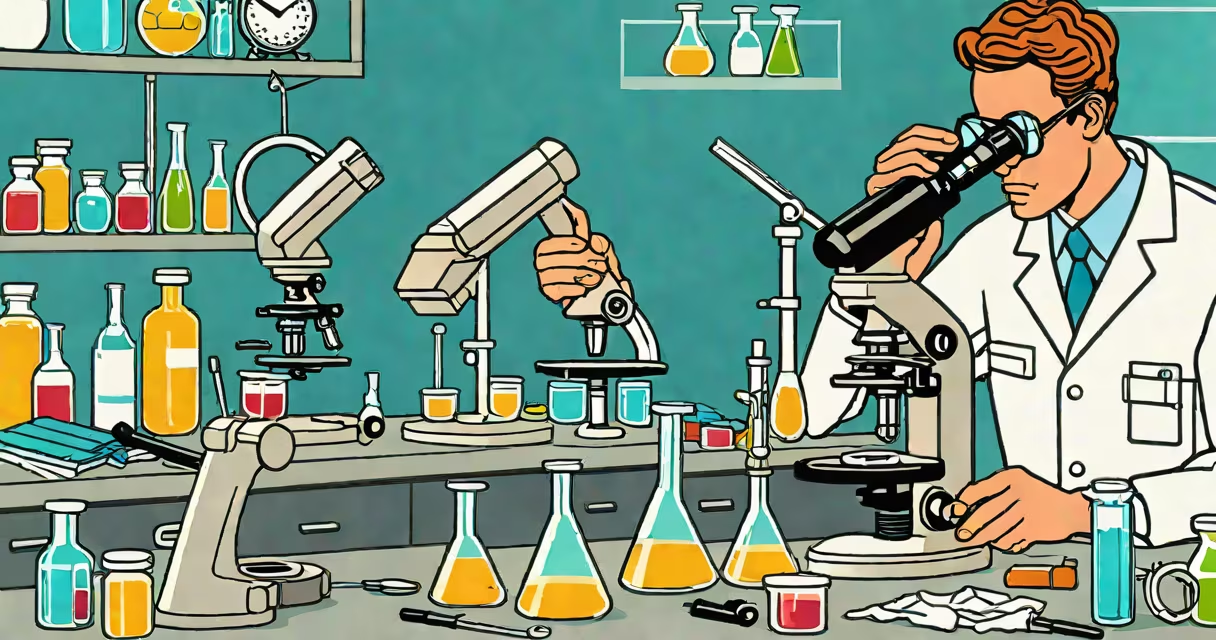
A bachelor's degree in forensic science, chemistry, biology, or a related STEM field is the standard educational requirement for most entry-level forensic scientist positions. This degree provides the scientific foundation needed to analyze physical evidence in criminal investigations.
Most employers require at least a four-year undergraduate degree. The curriculum includes laboratory techniques, crime scene documentation, toxicology, DNA analysis, and legal procedures. Graduates with a degree in forensic science are trained to apply scientific methods to real-world criminal cases.
According to the U.S. Bureau of Labor Statistics (BLS), 70% of forensic science technicians hold a bachelor's degree in a natural science such as chemistry or biology. The remaining 30% have degrees in forensic science specifically designed for the field. A degree in forensic science offers targeted training in evidence handling, courtroom testimony, and federal standards.
While many paths lead to a forensic science career, the most common degree types differ in focus and application. Choosing the right program depends on whether you want to work in a crime lab, at a crime scene, or in research.
| Degree Type | Focus Area | Typical Coursework | Best For |
|---|---|---|---|
| Bachelor of Science in Forensic Science | Applied science with criminal justice integration | DNA analysis, fingerprinting, trace evidence, legal ethics | Lab-based roles, state or federal agencies |
| Bachelor of Science in Chemistry | Advanced analytical techniques and instrumentation | Organic chemistry, spectroscopy, chromatography | Drug analysis, toxicology, fire debris testing |
| Bachelor of Science in Biology | Molecular and cellular processes | Genetics, microbiology, biochemistry | DNA profiling, serology, biological fluid analysis |
| Bachelor of Science in Criminal Justice (with science electives) | Legal system and investigative process | Criminal law, criminology, evidence collection | Crime scene investigator roles, policy work |
Forensic science programs often include internships with local police departments or medical examiners' offices. These experiences provide hands-on training in evidence packaging, chain-of-custody documentation, and courtroom preparation.
One non-obvious distinction: a degree in forensic science is not the same as a degree in criminal justice. While both involve crime-related work, forensic science emphasizes laboratory analysis, whereas criminal justice focuses on law enforcement, policy, and corrections. Mixing the two can lead to mismatched expectations in hiring.
In 2019, a cold case in Colorado was reopened after a suspect's DNA was matched to a semen sample collected at a 1998 burglary scene. The match came from a database search using STR (short tandem repeat) profiles generated during a forensic DNA analysis.
The analyst who processed the sample held a Bachelor of Science in Forensic Science from the University of Colorado Denver. Her training included 16 weeks of supervised lab rotations, including bloodstain pattern analysis and polymerase chain reaction (PCR) amplification of degraded DNA samples.
She used capillary electrophoresis to separate DNA fragments and software to compare the profile against the national database. The result led to an arrest and conviction after 21 years. This case demonstrates how a specialized degree enables precise, legally defensible results.
Many people assume that forensic scientists work exclusively on TV-style crime scenes, collecting fingerprints and solving murders in real time. In reality, most forensic scientists spend 80% of their time in laboratories analyzing evidence, writing reports, and testifying in court.
Another misconception is that a master's degree is required for employment. The BLS states that while advanced degrees can improve promotion chances, they are not mandatory for entry-level positions. Most federal jobs, such as those with the FBI or DEA, accept candidates with a bachelor's degree and relevant certifications.
Some applicants believe that a degree in psychology or sociology qualifies them for forensic work. While these fields contribute to understanding criminal behavior, they do not provide the technical skills needed for evidence analysis. A forensic scientist must understand chemical reactions, statistical probability, and instrument calibration.
After earning a bachelor's degree, aspiring forensic scientists often pursue certification through the American Board of Criminalistics (ABC) or the International Association for Identification (IAI). These credentials validate expertise in areas like drug analysis, fingerprint examination, or fire investigation.
For example, the IAI's Certified Latent Print Examiner (CLPE) program requires 3,000 hours of documented experience and passing a written exam. Certification enhances credibility and may be required for expert witness testimony.
If you're considering a career in forensic science, start with a program accredited by the Forensic Science Education Programs Accreditation Commission (FSEPC). As of 2023, 47 institutions in the U.S. met FSEPC standards. These programs ensure that coursework aligns with industry practices and prepares students for real-world challenges.
The right degree for a forensic scientist combines rigorous science training with practical application. A bachelor's in forensic science, chemistry, or biology remains the most direct route into the profession.