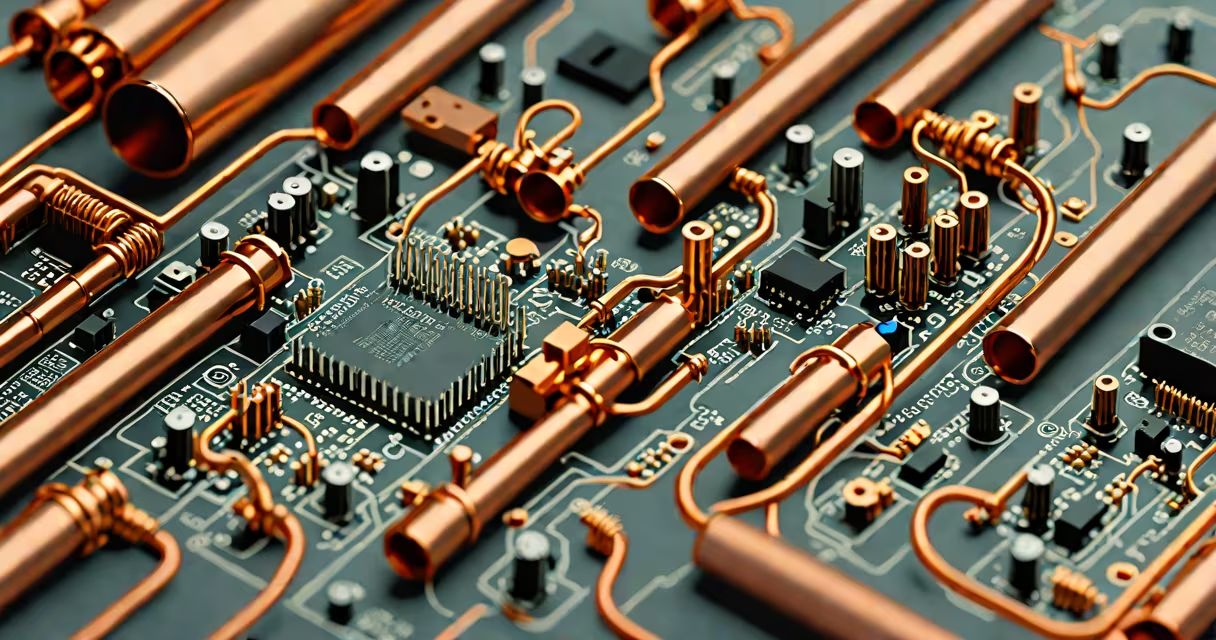
Copper is a metal found in thousands of everyday and industrial products due to its high electrical conductivity, corrosion resistance, and malleability. It appears in household wiring, plumbing systems, electronics, and machinery.
Copper is used in over 80% of electrical applications because it conducts electricity better than most metals. Its ability to carry current efficiently makes it indispensable in power transmission and consumer devices. The U.S. Geological Survey reports that copper is the second most used metal in electrical infrastructure after aluminum.
Manufacturers select copper for components that require heat dissipation, durability, and long-term reliability. For example, copper is standard in HVAC systems, motors, and transformers. In buildings, copper piping resists rust and maintains water purity over decades.
Every home contains multiple copper-based items. Electrical outlets, switches, and light fixtures rely on copper wiring to deliver power safely. Even small appliances like toasters and blenders use copper windings in their motors.
Plumbing systems often use copper tubing because it resists scale buildup and microbial growth. A 2022 study by the Centers for Disease Control and Prevention confirmed that copper pipes reduce Legionella bacteria levels in water by up to 99% compared to plastic alternatives.
Household electronics such as smartphones, laptops, and smart thermostats depend on copper traces on printed circuit boards. These thin conductive pathways route signals between microchips and sensors. A single smartphone may contain 1.5 grams of copper.
Large-scale infrastructure depends heavily on copper. Power grids use copper cables to transmit electricity over long distances with minimal energy loss. The International Copper Association notes that replacing aluminum lines with copper reduces transmission losses by 30%.
Renewable energy systems also rely on copper. Solar panels use copper wiring in inverters and connection boxes. Wind turbines contain up to 4 tons of copper per megawatt of capacity, primarily in generator windings and cabling.
Construction projects use copper for roofing, gutters, and flashing. Copper roofs last over 100 years and develop a protective green patina over time. This natural weathering process prevents degradation and reduces maintenance costs.
Copper is rarely used in pure form for structural or mechanical parts. Instead, it is alloyed with other metals to improve strength, hardness, or wear resistance. Common copper alloys include:
| Type | Composition | Primary Use |
|---|---|---|
| Brass | 60-70% copper, 30-40% zinc | Doorknobs, plumbing fittings, musical instruments |
| Bronze | 80-90% copper, 10-20% tin | Ship propellers, bearings, sculptures |
| Beryllium copper | 95-98% copper, 1-3% beryllium | High-stress springs, precision tools, aerospace components |
Many assume that copper is only found in wires and pipes. But copper is embedded in unexpected places. For example, copper sulfate is used in agriculture as a fungicide. Some antifouling paints on boat hulls contain copper compounds to prevent barnacle growth.
Another misconception is that all copper is recyclable in the same way. While copper is 100% recyclable without quality loss, recovery methods differ based on material form. Scrap wire is processed differently than copper from printed circuit boards, which require chemical separation.
A lesser-known fact: copper is naturally antimicrobial. The U.S. Environmental Protection Agency approved copper surfaces for use in healthcare settings in 2010. Studies show copper kills 99.9% of common pathogens within two hours, including MRSA and E. coli.
Consider a typical 2,000-square-foot U.S. home built in 2023. It contains approximately 250 pounds of copper. Breakdown:
This total exceeds the average copper content of a 1980s home by nearly 60%, reflecting increased electrification and digital integration. The home's copper load contributes to regional recycling streams, with scrap yards processing around 15% of U.S. copper demand annually.
When dismantling old electronics, professionals extract copper from motherboards and power supplies using controlled heating and acid baths. This process recovers over 95% of the copper content, minimizing waste and reducing reliance on mining.
Copper remains central to modern life. From the charger in your pocket to the pipes under your sink, it enables function, safety, and efficiency. Understanding what items have copper in them reveals how deeply integrated this metal is in daily infrastructure and technology.